Let's talk about what actually changes
Natural lubrication isn't constant across your lifetime. Most people notice shifts in their 40s, 50s, and beyond. It's not a switch that flips all at once. For some, it starts to feel less abundant around perimenopause. For others, it's gradual across the postmenopausal years. Either way, it's normal, and it's absolutely workable.
Here's the thing nobody mentions clearly: less lubrication doesn't mean less pleasure. It means your approach to pleasure has to shift slightly. And honestly? That shift often leads people to discoveries they wouldn't have made otherwise.
Why lubrication decreases (the actual biology)
Three main culprits are at play. First, estrogen levels drop. Estrogen keeps vaginal tissue thick and elastic, and it also triggers the glands that produce lubrication during arousal. When estrogen dips, those glands become less responsive.
Second, blood flow patterns change. Arousal depends partly on increased blood flow to the clitoris and vulva, which creates swelling and that familiar slickness. With age, that vascular response softens a little. It doesn't disappear. It just takes longer to build.
Third, the tissue itself transforms. The skin becomes thinner and more delicate. This is genitourinary syndrome of menopause (GSM) in clinical terms. For you, it might just feel like "things feel different down there." Both descriptions are true.
But here's what doesn't change: nerve density, arousal capacity, or your ability to climax. The neural hardware is still intact.
Why lemon vibrators (especially suction ones) are different
Most vibrators work through vibration or penetration, both of which rely on friction. If your tissue is thinner or more sensitive, friction can feel intense, uncomfortable, or like too much too soon.
A lemon clitoral vibrator like the Lem works through suction and micro-pulsations. Instead of rubbing across tissue, it creates a gentle seal and rhythmic pressure that stimulates the entire clitoral network without direct friction. This matters enormously when lubrication shifts.
Why? Because suction doesn't require the same lubrication setup that friction does. You still want water-based lube (more on that in a moment), but you need dramatically less of it. The suction creates its own sensation without dragging across delicate skin.
Many people in this stage of life tell me that lemon sexual toys feel revelatory specifically because they sidestep the friction problem entirely.
Lube is still your friend (but use it strategically)
Less natural lubrication doesn't mean no lube. It means you're adding external support. Water-based lubricant is your baseline. It's body-safe, it works with all toy materials, and it rinses clean.
Here's the strategic part: you don't need a huge amount. A dime-sized dollop on the Lem before you start is usually enough. Let it sit for 30 seconds so it warms up slightly. Apply a bit more as needed during use. You're topping up, not flooding.
Silicone-based lubricants feel thicker and richer, which many people prefer at this life stage. They glide differently and they last longer without reapplication. The trade-off: they can degrade silicone toys over time. Since the Lem is made of medical-grade silicone, stick with water-based.
If you want something that feels luxe, look for water-based lubes marketed as thick or creamy. Brands like Sliquid and Uberlube make formulas that feel premium without the silicone.
The warm-up window gets longer (and that's fine)
Arousability doesn't decline. Response time does. You might need 20-30 minutes of foreplay or solo touch before you're ready for the Lem, where previously 10 minutes felt like plenty. This is genuinely not a problem. It's an invitation to slow down.
Use that time to touch yourself, be touched by a partner, watch something that lands for you, or simply breathe and feel your body waking up. Extended foreplay isn't a consolation prize. It's often where the best sensation lives.
When you do introduce the Lem, start on the lowest pattern setting. Patterns 1 through 3 are your friend right now. Let yourself adjust. The temptation is to jump to higher intensity because you're used to needing more stimulus to feel something. Resist that urge for the first few sessions. Your body is sensitive in new ways. Find the sweet spot.
What to do if direct contact still feels uncomfortable
If even the gentlest suction feels too intense, you have options. First, try placing a thin piece of fabric between the Lem and your skin. A single layer of cotton (like the cuff of a soft sleep shirt) can diffuse sensation without blocking it completely. This lets you experience the suction without direct tissue contact.
Second, focus on the side or underneath the clitoris rather than the tip. The sides of the clitoral body are often less sensitive than the glans, and the suction will still ripple through the entire structure.
Third, if you're also experiencing pain (not just sensitivity, but actual pain), that's a signal to talk to a healthcare provider. Topical estrogen creams are available and genuinely transformative for GSM. They're not systemic, they work quickly, and they often resolve discomfort in weeks.
Partnered use when lubrication has shifted
If you have a partner, the Lem becomes a powerful communication tool. Using it together removes pressure for penetrative sex while keeping pleasure in the room. Many couples rediscover intimacy through external focus during this transition.
Talk openly about what you're experiencing. "My body is producing less natural lubrication, so friction feels different now" is a straightforward statement that separates physiology from desire. Your desire hasn't changed. Your tissue has.
Use the Lem while your partner touches you elsewhere, or while they're inside you without thrusting, or while you're both just present and connected. The toy becomes a bridge, not a replacement.
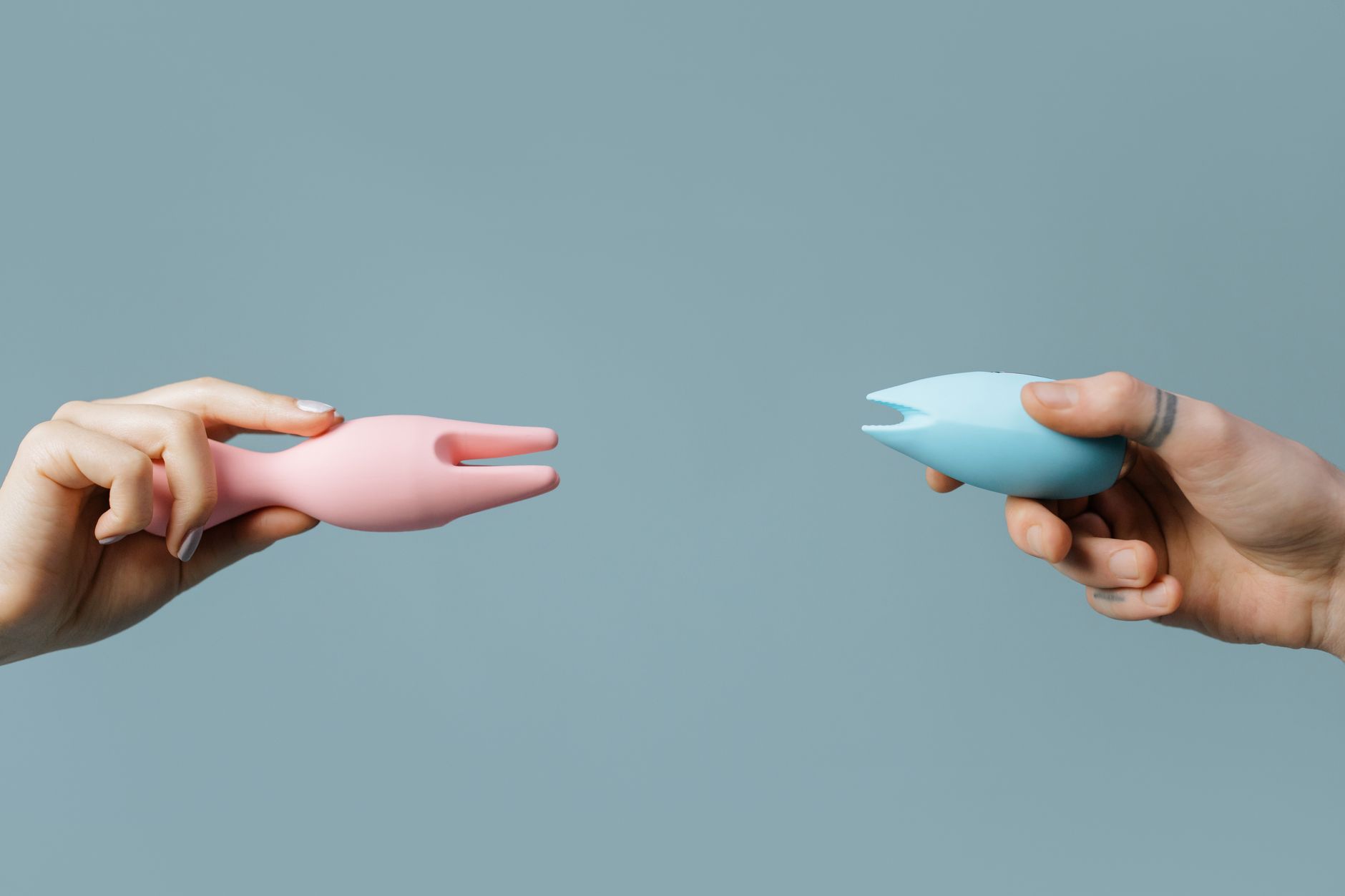
Photo by cottonbro studio on Pexels
The psychological piece (which is half the battle)
Here's what I see in my practice: people assume that less lubrication means less sexy, less desirable, less themselves. That's not true. It's just different.
The shift in lubrication is an invitation to rebuild your relationship with your own pleasure. You get to learn your body again, discover new patterns, and let go of old scripts about what arousal "should" look like. That's not a loss. That's a recalibration.
Some of the most satisfied clients I work with are in their 50s and 60s. They're not struggling through decreased lubrication. They're working with it skillfully and discovering that pleasure gets richer, not thinner, when you stop fighting your body's changes and start listening to them.
Maintenance and consistency matter
Your pelvic floor is still working, even if tissue has thinned. Kegels and reverse-Kegels (learning to relax the pelvic floor fully) support sensation and strength. Five to ten minutes a few times a week makes a real difference.
Consistency with the Lem matters too. Your body adapts and learns. The more regularly you use it, the faster you'll recognize what feels good and dial in your preferences. Twice a week is a reasonable baseline. More is fine if it works for your life.
When to bring in professional support
If decreased lubrication is paired with pain, burning, or persistent discomfort, see a menopause-trained gynecologist. GSM is highly treatable. Topical estrogen, DHEA suppositories, or vaginal moisturizers can all help, sometimes in combination.
If you're noticing desire has flattened along with lubrication, that's worth exploring with a therapist or coach. Hormonal changes can affect desire, yes. But so can relationship shifts, stress, body image changes, and grief about aging. Often it's multiple things at once. Professional support helps you untangle what's what.
The bottom line
Lubrication changes with age. Your capacity for pleasure doesn't. A lemon clitoral vibrator works brilliantly during this transition because suction-based stimulation sidesteps friction, requires minimal lubrication, and feels entirely different from toys you've used before. Add water-based lube, give yourself a longer warm-up window, and start low on the intensity settings. Your body will tell you what it needs from there.
Pleasure isn't something you lose. It's something you get to rediscover, on your terms, with better information.
People also ask
How much lubricant should I use with a lemon clitoral vibrator?
Start with a dime-sized amount applied to the Lem itself. Let it warm for 30 seconds before making contact. This is usually enough for a full session. Add a bit more if you feel any drag or if the sensation drops off. The suction design means you need far less lube than you'd use with a traditional vibrator or penetration. You're topping up, not saturating.
Can I use silicone-based lube with my lemon vibrator?
No. The Lem is made of medical-grade silicone, and silicone-based lubricants can degrade silicone over time. Stick with water-based lubes. High-quality water-based formulas (like Sliquid Organics or Uberlube) feel luxe and last longer than cheaper versions. The investment is worth it for comfort and toy longevity.
Should I see a doctor if lubrication has decreased significantly?
Yes, if the decrease is sudden, extreme, or paired with pain or burning. Genitourinary syndrome of menopause is common and treatable. A menopause-trained gynecologist can offer topical estrogen, DHEA suppositories, or vaginal moisturizers that work quickly and effectively. Don't assume it's just something to live with.
Does a lemon suction vibrator work the same way with less lubrication?
It works even better. Suction-based stimulation doesn't rely on friction the way traditional vibrators do. Your Lem will feel responsive and pleasurable with minimal external lubrication. You'll likely find it more comfortable than friction-based toys during this life stage, partly because it's gentler on thinner tissue.
Is it normal for arousal to take longer when lubrication decreases?
Completely normal. Your nervous system is still fully capable of arousal. It just takes longer for blood flow to build and for your body to shift into that state. Use this as permission to extend your foreplay, explore different types of touch, or shift to a longer solo session. Many people find that extended arousal time actually feels better than rushing.
What if the Lem feels too intense even at the lowest setting?
Try placing a single thin layer of soft fabric (like a sleep shirt cuff) between the Lem and your skin. This diffuses the sensation without blocking it. You can also focus on the side of the clitoris rather than the tip, which is often less sensitive. If sensitivity persists or pain appears, talk to a healthcare provider about topical treatments for genitourinary syndrome.
Next steps
Your body isn't broken. It's just entering a new chapter. If you're navigating lubrication changes and want to explore how a lemon clitoral vibrator might fit into your pleasure practice, start with the warmest lube you can find and give yourself permission to go slow.
Have questions or want to talk through what might work best for your body? Reach out at /contact and let's figure it out together. You deserve pleasure that works with your body, not against it.
Related reading
If you're working through physical changes and pleasure together, these posts might help: