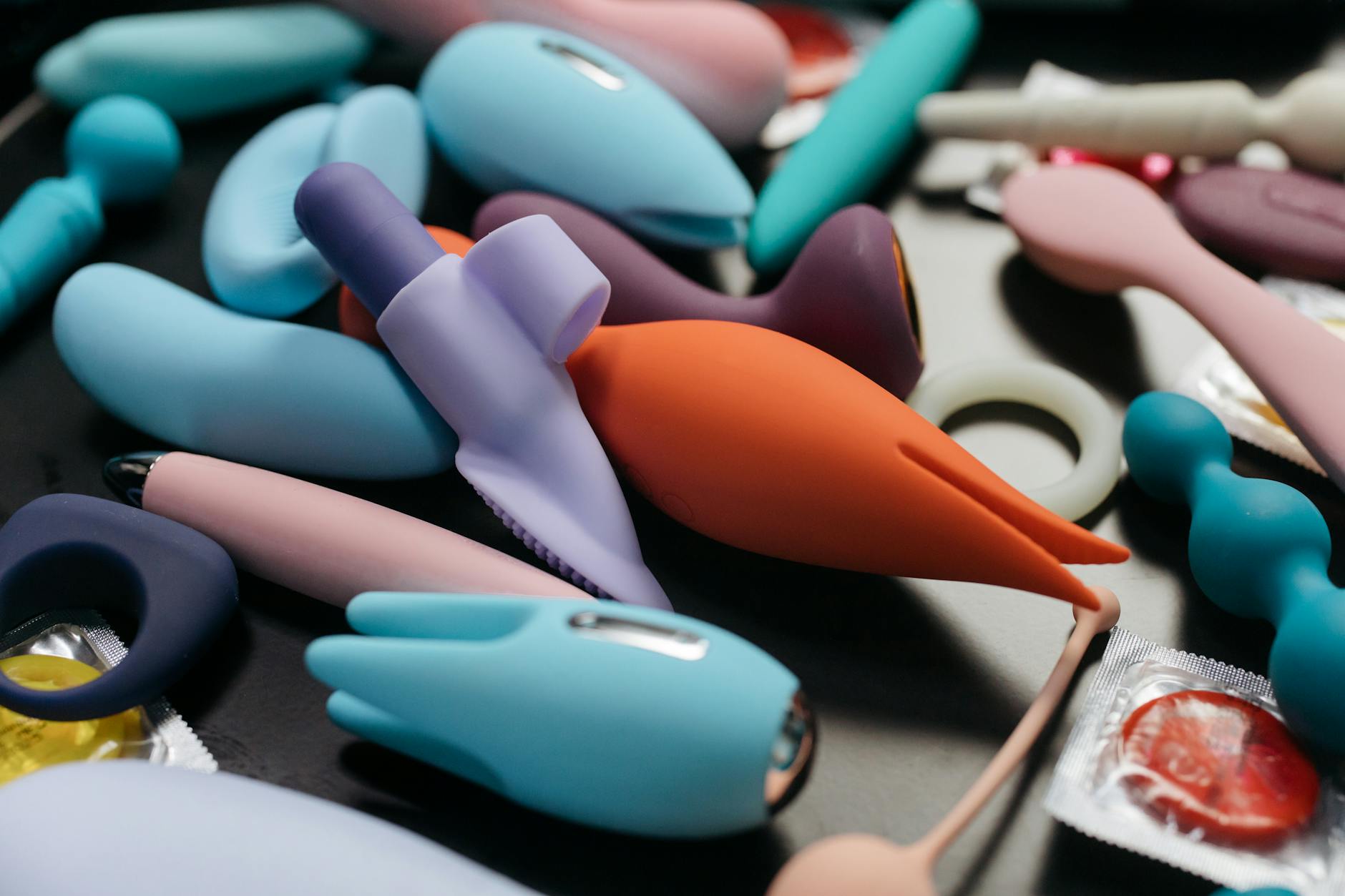
Let's start with what nobody tells you
You're not broken. Your body isn't slower or less responsive. What's actually happening is that arousal itself is changing, and the gap between initial desire and physical readiness is widening. This happens to people of all ages, and it's wildly common. What's less common is admitting it out loud.
Here's the thing: most people assume arousal should be a light switch. You want sex, and your body follows in five minutes. That's not how most bodies work, especially as you get older, more stressed, or move through different life chapters. And when that gap widens, it either becomes friction between you and your partner, or you internalize it as a problem with yourself. Neither has to be true.
A lemon clitoral vibrator actually fills that gap in a way nothing else does.
Why arousal is taking longer (and it's not what you think)
Let's separate the mechanics from the psychology, because they're fighting each other right now.
Physically, your body might need more time to increase blood flow to the clitoris, build lubrication, and shift into the arousal phase. This can happen because of stress, medication, hormonal changes, or just natural variation over time. A 2020 study in Sexual Medicine found that people in their 40s and 50s take 20-30 minutes to reach peak arousal, compared to 10-15 minutes in their 20s. That's not worse. It's just different.
Psychologically, you're also dealing with distraction. You're thinking about work, your body, whether you're taking too long, whether your partner is getting bored. Those thoughts are arousal killers. They're not a character flaw. They're just noise.
The combination of longer physical time plus mental clutter creates a loop: you're not aroused yet, so you get anxious, which makes arousal even harder to reach. A lemon suction vibrator breaks that loop because it gives your body something concrete to respond to while your brain catches up.
How suction changes the equation
Unlike regular vibrators, which rely on you being already somewhat aroused to feel good, suction toys like Nancy's Lem work differently. They create gentle negative pressure rather than direct vibration, which stimulates the clitoris without requiring as much initial responsiveness.
This matters enormously when you're in that slow-to-warm-up phase. You can introduce the Lem 10 minutes into foreplay, before you're fully aroused, and it actually helps bring you there. The sensation is different enough from partner touch that it breaks the mental loop. You stop thinking about whether you're taking too long and start feeling something new.
For people with slower arousal patterns, this is like having a second partner who gets what you need without judgment.
The timing strategy that works
If arousal is taking longer, don't try to fight it. Build it in.
Start earlier than you think you need to. If you used to start foreplay 15 minutes before sex and expect to be ready in 10 minutes, you're already frustrated. Instead, plan for 25-30 minutes of foreplay total. Use the first 10-15 for traditional touch. This gives your body time to wake up without pressure.
Introduce the Lem at the 10-minute mark. You don't have to be aroused yet. You might not even feel all that interested. Start on the lowest setting and let it work. This is not the endgame. It's part of the buildup. Most people find their arousal picks up within 3-5 minutes of consistent sensation.
Alternate between partner touch and the toy. Don't leave the Lem running the whole time. Use it for 3-5 minutes, then switch back to your partner's hands or mouth for 2-3 minutes. This variation keeps sensation fresh and prevents habituation. Your nervous system responds better to variation than repetition.
Communicate the timeline beforehand. Tell your partner: "I'm feeling like I'm slower to warm up lately. Can we plan for longer foreplay, and can I introduce the Lem around the midpoint?" This removes the elephant from the room. Your partner stops worrying about whether you're into it and focuses on the actual pleasure.
The arousal pattern shift nobody expects
Here's what happens when you stop fighting slower arousal and actually work with it.
Your orgasms tend to be stronger. Why? Because you're actually reaching a higher level of arousal before you get there. You're not rushing. And when your nervous system gets to peak arousal slowly, it stays there longer, which changes the entire quality of the experience.
Your desire often increases. Counterintuitive, I know. But when sex doesn't feel rushed or anxiety-inducing, you stop avoiding it. You might actually want it more often because it feels good instead of stressful.
Your connection with a partner deepens. If you're someone with a partner, this longer timeline gives you more time together. You're not trying to get from zero to sixty. You're actually present for 25 minutes of physical intimacy, which builds something that rushed sex doesn't.
Solo play changes too. When you're not expecting your body to perform on a timeline, you can actually enjoy the journey. A lemon clitoral vibrator in that context becomes something you turn to when you want to slowly build sensation, rather than rush through it.
What settings to use
If you're new to the Lem or other lemon vibrators, start low. The temptation is to crank it to the highest setting and expect immediate results. That doesn't work for slower arousal. You want to build gradually.
Patterns 1-3 on the Lem are your friends here. These lower settings give consistent stimulation without overwhelming sensation. Use one of these for the first 5 minutes.
Patterns 4-6 are for when you're already somewhat aroused and want to intensify. You'll know when you're ready to move up because the lower patterns will start feeling subtle rather than satisfying.
Patterns 7-8 are finishing patterns, not warming-up patterns. Save these for when you're close to climax, not when you're just starting.
Many people with slower arousal patterns do their best work in the medium range and stay there. That's completely fine. You're not supposed to be racing toward the highest intensity. You're building toward what feels good.
The solo pleasure perspective
When you're exploring this alone, you have a huge advantage: zero pressure. This is when you can actually learn what slower arousal feels like for your body, without worrying about anyone else's timeline.
Try this: set aside 20 minutes with no performance expectations. No goal of orgasm. Just feel. Use a lemon vibrator at a low pattern and let your mind wander. Notice when sensation starts to feel better. Notice what mental state gets you more interested. This is the data you bring back to partnered sex.
You might find that you need specific mental imagery to shift into arousal. You might need your partner to do a certain kind of touch first. You might need dimmer lighting or a conversation beforehand. These aren't problems. They're information. And a lemon suction vibrator is a great tool for exploring these patterns without the pressure of performing for someone else.
When to talk to someone
If arousal is taking longer but you're still reaching pleasure, you're fine. This is variation, not dysfunction.
If you haven't felt arousal at all for weeks, or if the slowness is paired with pain, then it's worth talking to a doctor or a therapist. Sometimes slower arousal is actually depression, anxiety, or medication side effects wearing a sexual disguise. And sometimes it's how your body works after starting birth control or recovering from pelvic floor therapy.
But in most cases, when people slow down, they just need permission to slow down, better strategies for the buildup, and a tool that meets them where they are. A lemon clitoral vibrator does exactly that.
The pleasure is still there, it just asks for patience
Your body isn't asking you to accept less pleasure. It's asking you to take a different path to get there. And honestly? That path often leads somewhere better than the rushed version you were doing before.
Want to explore more about how toys work with different bodies and cycles? Check out why lemon vibrators feel so different across bodies, or if you're navigating arousal changes with a new partner, we've got you.
FAQ: Slower arousal and lemon vibrators
How do I know if my arousal is just slower or if something's actually wrong?
Slower arousal is normal. Absent arousal is worth checking out. If you're still reaching pleasure, just taking longer to get there, you're in the normal range. If you feel zero interest, zero sensation, or zero ability to reach pleasure despite trying different things for a month, talk to a doctor. That might be depression, a medication side effect, or a hormone shift. But "it takes me 20 minutes instead of 10" is not a medical problem. It's a body fact.
Can a lemon vibrator actually make arousal happen faster?
Not in the way a magic wand would. But yes, it can bridge the gap. A lemon suction vibrator creates sensation that's different enough from partner touch that it can jumpstart arousal when your body is slow to warm up. Think of it less as "speeding up" arousal and more as "making the waiting part feel good." Once sensation starts, the nervous system shifts into gear faster.
Should I use a lemon vibrator during foreplay or after I'm already aroused?
Both work, but timing matters. If you're slow to warm up, introduce it early in foreplay, around the 10-minute mark. You don't have to be aroused yet. If you're already aroused and want to intensify, that works too. The low and medium patterns on the Lem work best in the buildup phase. The higher patterns work better once you're already close.
My partner says I'm taking too long to get aroused. How do I handle that?
First, your partner needs education. Longer arousal isn't a flaw in you. Second, you need to set a timeline together. Tell your partner: "I need 20-25 minutes to feel ready. If you have 10 minutes and you're frustrated, that's a conversation we need to have, not a problem with my body." If your partner consistently won't give you that time, that's a relationship thing, not a sexuality thing. A lemon clitoral vibrator can help during the buildup, but it can't fix a partner who won't invest the time.
Is it normal for arousal to change over time or between partners?
Completely normal. You might have been faster arousal with an ex and slower with a current partner. That's not about the toy or the person. It's about stress, comfort, age, medication, hormones, and a thousand other variables. Your body is a system, not a static machine. Slower arousal at 35 than you had at 25 is expected. Slower arousal with someone new than with someone you've been with for years is expected. These are facts, not failures.
Can I use a lemon vibrator if I'm on antidepressants?
Yes. In fact, a lemon suction vibrator is often more effective than traditional vibrators for people managing medication-related arousal changes. The dulling from antidepressants is real, and the sensation from a Lem can actually cut through that. Start on a lower pattern and go up from there. And talk to your prescriber if the slowness is new or extreme. Sometimes timing your medication differently helps.
What if I still can't get aroused even with a lemon vibrator?
Then you have useful information: it's not about the buildup time or the tool. It might be stress, relationship stuff, or something medical. That's when you talk to a doctor or therapist. But most people find that when they stop fighting slower arousal and actually work with it, plus add the right tool, things shift pretty quickly.