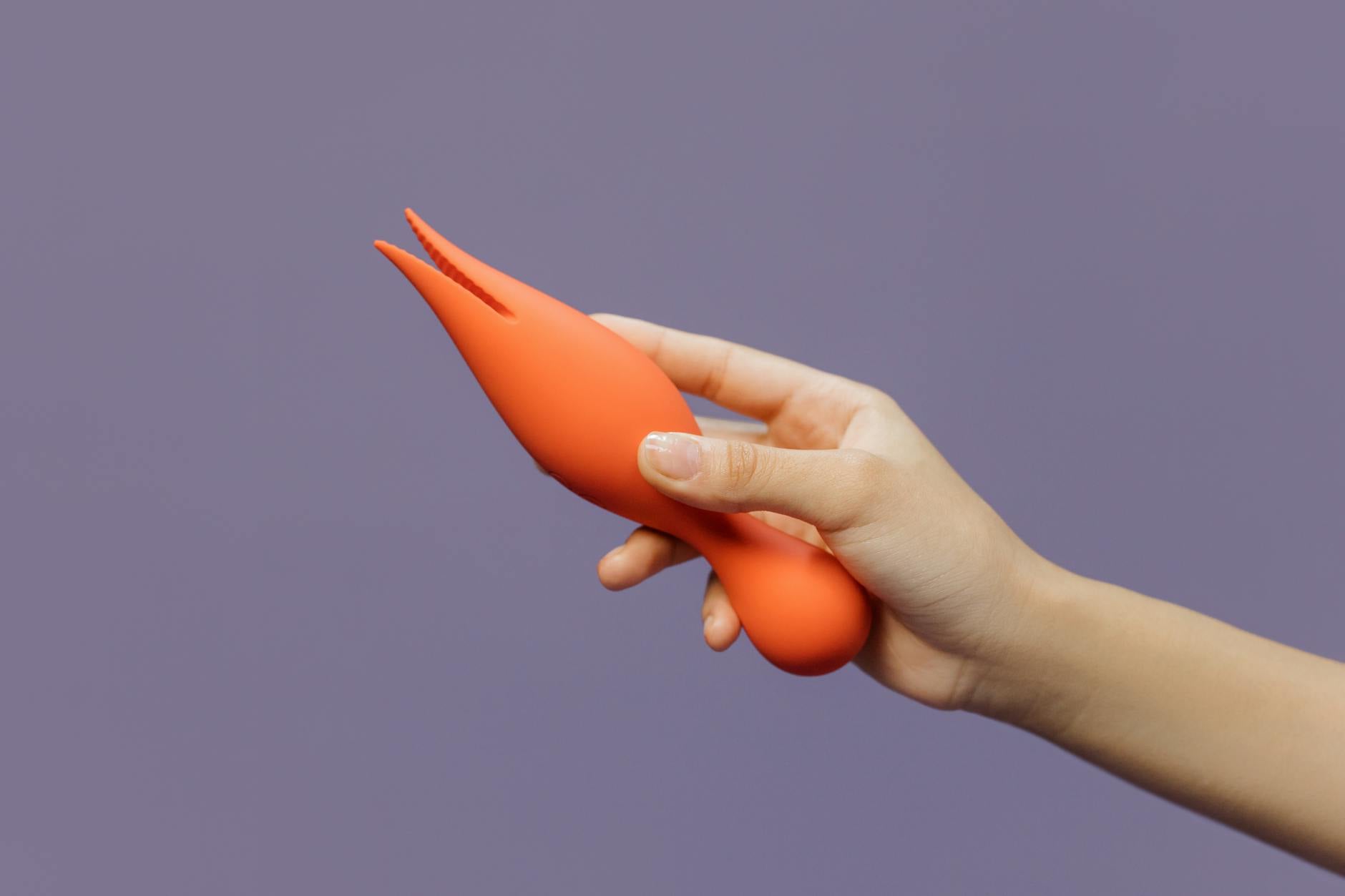
Why Your Lemon Vibrator Feels Numb When You Start New Antidepressants
The conversation that should have happened
You started a new SSRI or SNRI for depression or anxiety. Your mood stabilized. Your sleep improved. And then you tried to have sex or touch yourself, and it felt like someone had dimmed the lights on your entire nervous system.
Your clitoral vibrator, which used to feel like sensation, now feels like pressure. Orgasms either take forever or don't arrive at all. Some people describe it as numbness. Others say it's like trying to feel pleasure through a thick blanket.
Here's what no one told you at the pharmacy: this is not a you problem. This is a medication problem, and it's one of the most common sexual side effects of antidepressants.
Why antidepressants blunt sensation
SSRIs (selective serotonin reuptake inhibitors like sertraline, paroxetine, fluoxetine) and SNRIs (serotonin-norepinephrine reuptake inhibitors like venlafaxine, duloxetine) work by increasing the availability of serotonin and norepinephrine in your brain. That's great for mood regulation. But serotonin also plays a major role in sexual response.
When serotonin levels go up, particularly in the brain regions that handle arousal and orgasm, the system actually dampens down. It's the same mechanism that makes some people feel calmer and less anxious. The brain doesn't distinguish between "I want you to be less panicked" and "I want you to feel less pleasure."
Antidepressants can affect sensation in at least three ways:
Delayed or absent orgasm. The higher serotonin goes, the harder it is to reach climax. For some people, orgasms are still possible but take 30, 45, sometimes 60 minutes of continuous stimulation.
Reduced genital sensation. The nerve endings in your clitoris and vulva aren't literally numb, but the signal traveling up to your brain feels quieter. A lemon clitoral vibrator that used to feel intense now feels like a gentle hum.
Flattened arousal. You might not feel the physical signs of arousal anymore. No lubrication, no swelling, no sense of your body waking up. You can intellectually want sex. Your body doesn't get the memo.
The severity varies wildly. Some people notice nothing. Others lose sensation almost immediately and completely. Most experience something in the middle.
Why it matters that you know the timeline
The numbness isn't permanent, but it's also not instant. Understanding the timeline helps you stop blaming yourself or your partner.
For many people, sexual side effects are most intense in the first 4-12 weeks of starting the medication. Your body is still adjusting. Serotonin levels are rising. By week 8 or 12, some sensation often returns on its own as your nervous system recalibrates.
But here's the part that sucks: for about 30-40% of people on SSRIs or SNRIs long-term, the numbness doesn't fully go away. Your depression or anxiety stays managed, but you're left managing reduced sensation as a side effect you never asked for.
That's when you need strategies that work with your medication, not against it.
How a lemon vibrator reframes sensation
Regular vibrators rely on speed and intensity. Faster usually feels better. When your nervous system is muted by antidepressants, you need something that works differently.
A lemon sucker like Hello Nancy's clitoral vibrator uses pulsing suction instead of vibration alone. This has a few advantages when sensation is dampened:
The suction creates a broader stimulation pattern. Instead of targeting just the tip of the clitoris, suction works across the entire clitoral structure, including the internal parts you can't see. When direct sensation is numb, broader activation sometimes breaks through.
The pattern feels different. Suction has a rhythm and a pull to it that can feel less "muted" than traditional vibration, even at the same intensity level. Some people describe it as more present, more tangible.
You can layer sensations. With a suction-based lemon vibrator, you can add external stimulation, lubrication, or partner touch and feel them amplify rather than interrupt each other. That layering sometimes wakes up sensation that numbness had put to sleep.
I'm not saying a lemon clitoral vibrator solves antidepressant sexual side effects. But many of my clients find that when regular toys feel useless, a lemon vibrator feels like the first device that actually registers.
The practical approach to rebuilding pleasure
If you're dealing with numbness from new antidepressants, here's what actually helps:
First, talk to your prescriber. Not because they'll definitely change your medication, but because there are options. Some people switch to an SSRI that has lower sexual side effects (bupropion, for instance, is known for preserving sexual function, though it's not right for everyone). Others add a second medication that counteracts the numbness. Some reduce the dose slightly and find the sweet spot where mood improves and sensation stays.
Don't white-knuckle through the first 8-12 weeks. If you're in the early phase, your nervous system is still adjusting. Give it time before you panic. Your sensation might return partially or fully.
Extend your timeline for arousal. If you're expecting 10 minutes of foreplay to lead to orgasm like it used to, reset that expectation. Budget 30-45 minutes. Use a lemon vibrator early in the session, not as a last resort. Let your body have the full time it needs.
Use lubrication aggressively. Even if you don't feel like you need it, use it anyway. The reduced sensation means you might not notice dryness building until sex starts feeling uncomfortable. Water-based lube works best with silicone toys.
Layer sensations intentionally. Combine a lemon clitoral vibrator with your partner's touch, with internal stimulation, with sound or temperature play. When one channel is numb, multiple channels sometimes create enough signal to break through.
Check in with your mental health, not just your sex life. If the numbness is driving depression or relationship strain, that matters. But remember: your antidepressant is keeping you functional. The goal is usually not to sacrifice mental health for sensation, but to find the medication strategy that gives you the best of both.
When numbness means you need to switch
Sometimes the sexual side effects are so severe that staying on the medication costs more than it saves. That's real, and your prescriber should take it seriously.
If you've been on your current medication for 12+ weeks, the numbness hasn't improved, and it's affecting your relationship or your sense of self, talk to your doctor about alternatives. Bupropion, mirtazapine, or even dosage adjustments can sometimes help. Other times, a completely different class of antidepressant works better for you.
There's no shame in saying "this medication helped my mood but hurt my sex life enough that I need a different option." That's information your prescriber needs.
The thing about patience and pleasure
Let's be real: antidepressant sexual side effects are annoying, unfair, and rarely discussed upfront. You didn't sign up for numb sensation along with your mood improvement.
But they're also manageable. A lemon vibrator isn't a cure, but it's a tool that often works better than traditional toys when your nervous system is muted. Patience with your timeline matters. Communication with your partner and your doctor matters more.
Your pleasure doesn't have to be collateral damage in your mental health treatment. It just might look different for a while.
People also ask
How long does it take for antidepressant sexual side effects to go away?
It varies widely. Some people notice their sensation improving by week 8-12 as their body adjusts to the medication. Others see improvement around the 3-month mark. But roughly 30-40% of people on SSRIs or SNRIs experience persistent sexual side effects that don't fully resolve on their own. If you're past 12 weeks and still numb, talk to your prescriber about adjustments.
Can you use a lemon vibrator if you're on antidepressants?
Absolutely. A lemon clitoral vibrator like the Hello Nancy Lem can actually be helpful precisely because you're on antidepressants. The suction-based stimulation pattern sometimes breaks through sensation that traditional vibration can't reach. Start at lower intensity levels and give yourself patience to explore what feels like it registers.
Why do SSRIs affect sexual sensation but SNRIs sometimes don't?
SNRIs affect both serotonin and norepinephrine, which can create a different neurochemical balance than SSRIs. Norepinephrine plays a role in arousal and alertness, so some SNRIs have less impact on sexual function than pure SSRIs. But individual variation is huge. Some people on SNRIs experience zero sexual side effects; others experience them intensely. It's not the drug class alone; it's how your unique brain chemistry responds.
Is there an antidepressant that doesn't cause numbness?
Bupropion is known for preserving or even enhancing sexual function, partly because it works on dopamine and norepinephrine rather than serotonin. Mirtazapine sometimes has fewer sexual side effects than SSRIs. But the best antidepressant is the one that actually works for your depression or anxiety. If bupropion doesn't help your mood, sexual preservation doesn't matter. Talk to your prescriber about your priorities.
Can you add another medication to counteract antidepressant sexual side effects?
Yes, sometimes. Some prescribers add bupropion to an SSRI to boost dopamine and counteract numbness. Others use buspirone or other agents. These augmentation strategies work for some people and not others. It's worth discussing with your doctor if sexual side effects are significantly impacting your quality of life.
What's the difference between numbness and just lower sensation?
Numbness usually means you can't feel stimulation at all or barely feel it. Lower sensation means you can feel it, but it's muted, like the volume is turned down. Lower sensation often improves or adjusts over time. True numbness that persists beyond 12 weeks might warrant a medication conversation. Both are real and both deserve attention.
Resources
- The International Society for Sexual Medicine has evidence-based information on antidepressant sexual side effects and treatment strategies.
- If you're considering a medication change, the Depressed Anonymous community forums have real conversations from people navigating these exact trade-offs.
- For couples navigating this together, check out how to introduce a lemon vibrator with partner support at /blog/lemon-vibrators-partner-resistance-communication-strategies, and explore strategies for rebuilding intimacy at /blog/lemon-vibrator-couples-recovery-after-relationship-gap.
- If numbness is tied to body disconnection after medication started, read /blog/lemon-vibrator-when-you-feel-disconnected-from-your-body-after-trauma for grounding strategies that work alongside sensation rebuilding.