
Let's talk about the thing nobody addresses
You've been using your lemon vibrator for months. Maybe years. You know what works for you, how your body responds, what patterns hit different on different days. Then a new relationship happens, and suddenly you're wondering if you should hide it in a drawer, pretend it doesn't exist, or risk the conversation altogether.
Honestly? That silence is the real problem. Not the toy.
Why new partners freak us out about our toys
There's a weird cultural script that says introducing a vibrator means admitting your partner isn't "enough." It doesn't. That narrative makes people feel defensive on both sides. The person with the toy thinks they're being judged as needy. The new partner thinks they're being replaced.
Neither is true.
What's actually happening is that pleasure in a new relationship is complicated. You're learning someone's body and yours simultaneously. You're managing performance anxiety. You're probably not at the deepest levels of relaxation yet because you're still a little on guard. And your lemon clitoral vibrator? It's been calibrated to your specific nerve endings. Asking your partner to replicate that in week three is like asking someone to parallel park a car they've never driven.
The permission you need to give yourself first
Before you have this conversation with your partner, have it with yourself. Your pleasure is not a concession they're making you. It's not a fail state for your relationship. It's basic infrastructure.
Hello Nancy makes lemon vibrators because air suction toys work differently than traditional vibrators. They stimulate without requiring intense friction or pressure. That's useful information whether you're alone or partnered. It's not romantic or unromantic. It's just physics.
Saying "I use a lemon vibrator and it's important to me" is the same information density as "I need foreplay" or "I like this position." It's data about how your body works. Full stop.
When to introduce it (timing matters more than you think)
There's a difference between "we've been together two weeks" and "we're settling into a pattern." You don't need to pull it out on date three. You also don't need to wait until you've been together for a year.
The sweet spot is usually around the four to eight-week mark, when you've had enough sex to know you actually like each other, but before performance anxiety has calcified into habit. At this point, you're also more likely to have real conversations without heightened defensiveness.
If you've been together longer and haven't mentioned it, that's fine too. There's no statute of limitations. You're just reframing from "I've been hiding this" to "I want to tell you something about my body."
How to actually say it
This is where people get stuck. They imagine some grand reveal. You don't need that.
Pick a calm moment outside the bedroom. Not during sex, not right before. Maybe you're making dinner or sitting on the couch watching something. You're aiming for neutral, not serious.
Try something like: "Hey, I want to tell you something about how I experience pleasure. I use a lemon vibrator. It's something I've had for a while and really helps me understand my body. I wanted you to know, and I'm open to questions."
That's it. You've identified the object, given context, and opened the door. You haven't apologized. You haven't over-explained. You've stated a fact about your sexuality.
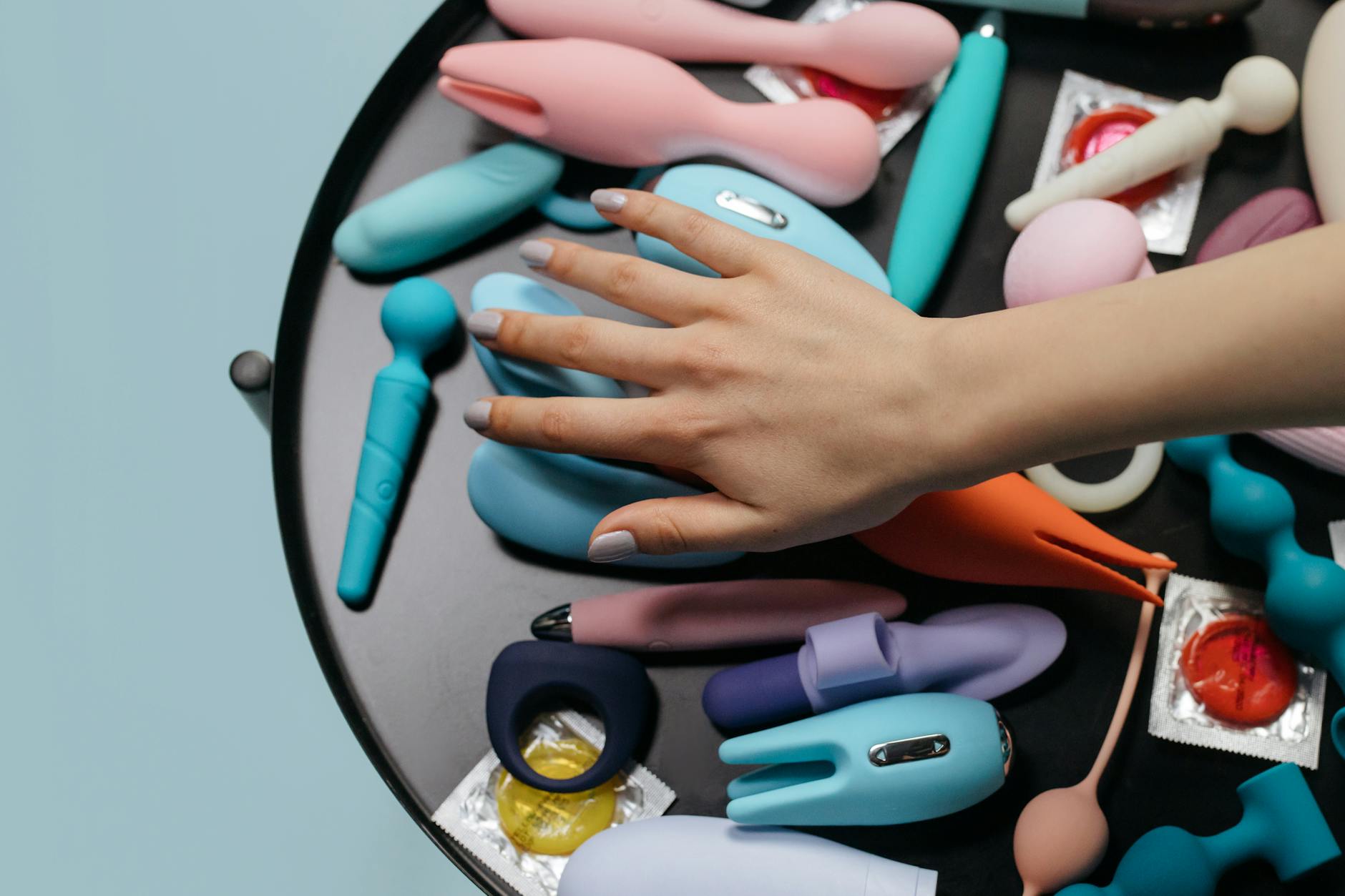
Photo by cottonbro studio on Pexels
What they might say (and how to handle it)
Your partner might ask why you need it. That's fair. The answer is: "Because my clitoris responds to suction differently than to vibration, and this helps me reach orgasm reliably. It's about me knowing my own body, not about what you can or can't do."
They might ask if they can watch. That's fine if you want that. You can also say no. "I'd like to use it alone for now, but I'm open to including you later if that feels right."
They might ask if you want them to use it on you. That's a separate conversation about comfort and boundaries. You can absolutely say "I'd like to explore that at some point, but I want to get comfortable with you in the room first."
They might get quiet. Some people need processing time. Give them space. The conversation doesn't end when you finish talking.
Integrating it into partnered pleasure
Here's what changes when you move from solo to partnered use.
Start alone while they watch. This is lower-stakes than simultaneous sex. You're demonstrating how you use it, what patterns you like, how your body responds. They get to see pleasure happen on your face. That's information. It's also intimate without being performance-heavy.
Then try it during partnered sex. Some people use their lemon vibrator while their partner is inside them. Others use it while their partner touches them elsewhere. Some take turns. There's no script here.
Set a boundary about autonomy. You probably want to be the one holding it. That keeps you in control of pressure, intensity, and timing. Make that clear up front.
Communicate about what feels good. "A little slower," "I like when you touch me here while I'm using it," "Can you try a different pattern." This is not criticism of your partner. It's collaboration.
The conversation about insecurity (yes, they might have it)
Some partners genuinely worry that a toy means they're not enough. That's real, and it's worth addressing directly.
You might say something like: "Your touch does something my vibrator can't. You bring me pleasure in ways that have nothing to do with orgasm. When I use my lemon vibrator with you, I'm not replacing you. I'm adding a layer of sensation. It's generous that you want to give me pleasure. This is me meeting my own needs so you don't have to be everything."
That's not exactly romantic language. But it's honest. And honestly? That matters more in a healthy relationship than romance does.
If they push back hard
Some partners will say no. That your vibrator makes them uncomfortable, that they don't want you using it, period.
That's information. Not about your lemon vibrator. About compatibility and control. A healthy partner respects your body's needs even if they don't fully understand them.
You don't have to argue. You can simply say: "I understand this is new for you. I'm happy to go slow. But I'm not giving this up. Let's figure out what works for both of us."
If they won't budge, that's a compatibility issue that goes deeper than toys. It might be worth exploring with a couples therapist or reconsidering the relationship altogether.
What actually happens after you introduce it
Most of the time? It becomes normal. You use it sometimes. You don't other times. Your partner gets curious. Maybe they want to help. Maybe they're happy to just hold you while you do your thing. You learn something about how you two work together.
The relief after that first conversation is usually massive. You've stopped hiding a part of yourself. Your partner knows something real about what brings you pleasure. That's not awkward. That's intimate.
FAQ: Using a Lemon Vibrator With a New Partner
What if my partner thinks I'm saying they're not good at sex?
You're not. A lemon clitoral vibrator offers air suction stimulation that doesn't depend on someone else's touch. It's not a comparison. You might also consider that how lemon vibrators help when performance pressure gets in the way could ease anxiety for both of you.
Is it weird to use my lemon vibrator if I'm in a committed relationship?
Not at all. Partnered people use vibrators constantly. Orgasm consistency matters. Your body's needs don't change because you're coupled. The only thing that changes is transparency.
Should I let my new partner use the lemon vibrator on me right away?
No. Start with them watching you use it solo. That builds comfort for both of you. Then move to them being in the room. Then, if you want, you can explore them using it on you. This progression removes the performance pressure.
What if my partner wants to use a lemon vibrator too?
That's possible. Air suction toys aren't gendered. Some partners enjoy them. If they're curious, you can get your own devices or share, depending on what feels right for you both.
How do I introduce it if we've already had sex multiple times?
Same conversation, slightly different framing. "I want to share something about my sexuality with you that I've been keeping private." The length of the relationship doesn't change the core conversation. You're just reframing from silence to honesty.
What if I'm embarrassed?
That's human. You're not broken for feeling that way. Remember: you're not asking permission. You're sharing information about your body with someone who cares about you. That takes courage. Do it anyway.
The bigger picture
Introducing a lemon vibrator to a new partner isn't really about the toy. It's about deciding that your pleasure is not a secret. That your body's needs are legitimate. That a partner worth keeping is someone who can hear "I use a vibrator" and respond with curiosity instead of defensiveness.
Most of the time, when you have this conversation with genuine confidence, your partner rises to it. They match the energy you're setting. If you apologize for your vibrator, they feel like they should be threatened by it. If you present it as information, they treat it as information.
Your lemon clitoral vibrator isn't a threat to your relationship. Silence is. So have the conversation. Your pleasure depends on it.
Resources & References
Gottman Institute. (2021). Research on couples and sexual intimacy. https://www.gottman.com/
Taormino, T. (2018). The Ultimate Guide to Sex and Disability. Cleis Press.
Emans, S. J., & Edelman, A. B. (2009). Adolescent Gynecology. Wolters Kluwer.
Nagoski, E., & Nagoski, A. (2017). Come As You Are: The Surprising New Science That Will Transform Your Sex Life. Simon & Schuster.