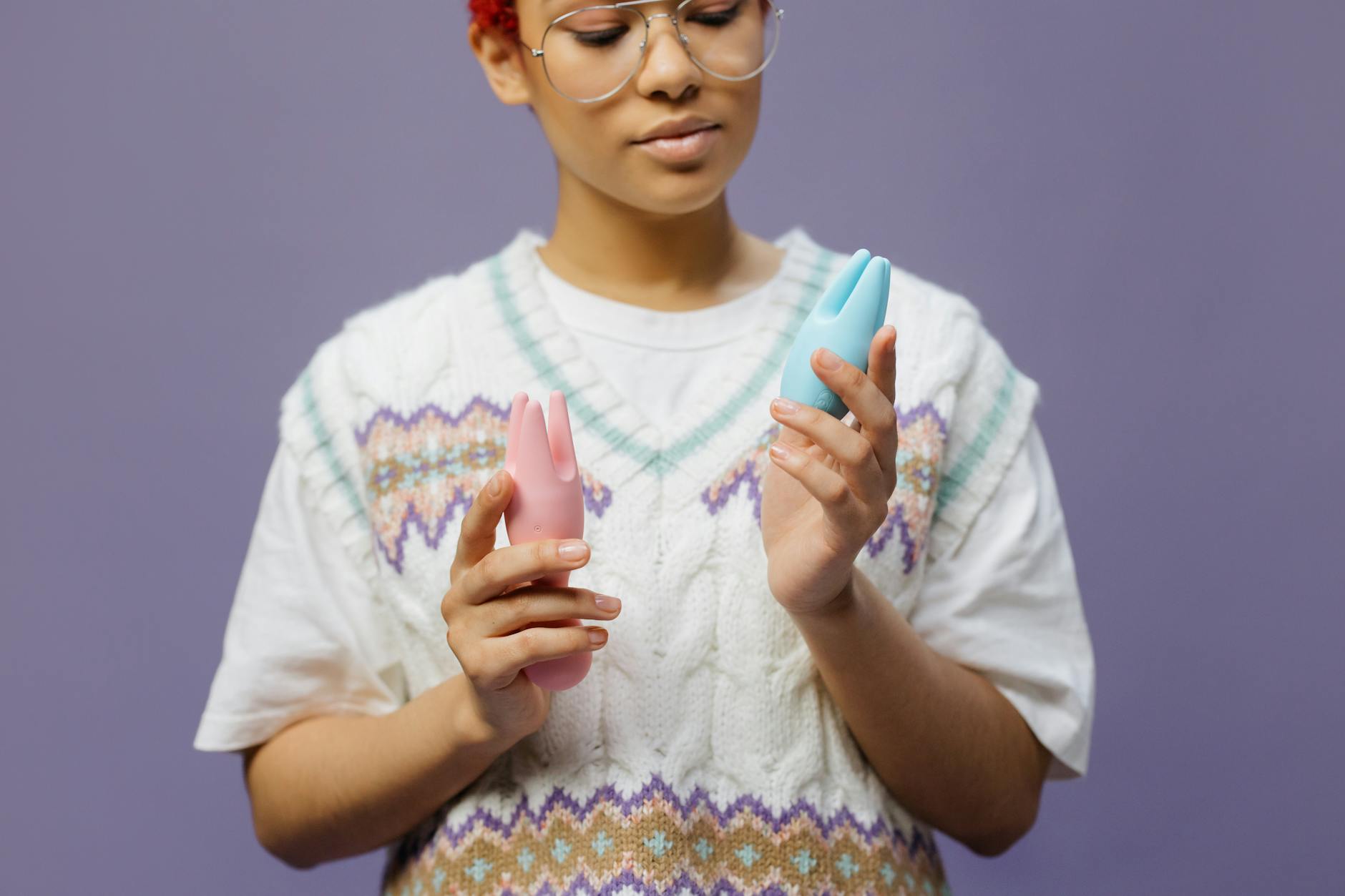
Here's the thing about performance pressure
Most couples don't actually have a sex problem. They have a performance problem. One person worrying whether they're doing it right. The other anxious about whether they're responding quickly enough. Both of you locked in your own heads instead of with each other. That's when sex stops being intimate and becomes another thing on the list you're failing at.
Performance anxiety is one of the most common reasons couples drift apart sexually. And it's one of the easiest to fix, once you understand what's actually happening.
What performance pressure actually does to your body
When you're worried about how you look, how long you're taking, whether you're being loud enough or quiet enough, your nervous system goes into a state called spectatoring. You're watching yourself instead of feeling. Your brain is narrating instead of present.
This breaks the chain reaction that creates arousal. Arousal requires blood flow, and blood flow requires your parasympathetic nervous system to be engaged (that's the "rest and digest" mode). Performance anxiety triggers your sympathetic nervous system instead. Your pulse gets faster, yes. But it's panic, not arousal. Your body actually becomes less responsive.
For the person trying to perform, this creates a vicious loop. You're anxious about not being responsive enough. That anxiety makes you less responsive. Then you panic harder. Meanwhile, your partner feels the distance and assumes it's them.
Why lemon vibrators actually break this cycle
A lemon clitoral vibrator, or lemon sucker toy, removes the pressure in a specific way that other toys don't. Here's why.
First, it shifts the focus away from partnered penetration or manual stimulation. There's no "am I doing this right" conversation. The tool handles the mechanical part. This alone creates permission for both of you to relax.
Second, air-suction lemon vibrators like the Lem work fast and efficiently on the clitoris. Most people reach orgasm in 5-10 minutes instead of 20-40. Speed isn't inherently better, but when you're anxious, faster success builds confidence. You've proven to yourself that your body works. That confidence spills into the next time.
Third, using a lemon vibrator creates a script you didn't have before. Instead of "we're just trying to have sex," it becomes "let's explore this together." That sounds small. It's not. The script change removes the stakes.
The conversation you need to have first
Introducing a lemon clitoral vibrator when performance anxiety is present requires one conversation before anything else. And it's not about the toy.
You need to name the elephant. One of you says something like: "I've noticed we both seem stressed when we're intimate. I don't want to perform. I want to connect. Can we try something that might take the pressure off?"
That honesty does most of the work. You're not blaming. You're not saying "you're not turning me on." You're saying "the pressure isn't working for either of us, and I want us to find something better."
If your partner responds with defensiveness, pause. This is information. They might be feeling like they're failing. You might need to address that before introducing any new tool. A lemon vibrator won't fix a broken conversation.
How to actually use one together
Start with zero performance expectations. If you're the person with the vulva, you're in control. You show your partner how it feels, what pressure you like, what rhythm. This flips the usual dynamic where one person is performing and the other is receiving. Now you're collaborating.
If you're the partner without the vulva, your job is to watch and listen. Maybe you hold it sometimes. Maybe you just stay present. The point is you're not trying to make anything happen. You're there.
Many couples find that once they've used a lemon vibrator together a few times and the pressure drops, they stop needing it every time. But some keep it as a regular part of their sex life. Both are fine. The tool isn't the end goal. Reconnection is.
The specific ways this reduces anxiety
Using a lemon sexual toy together actually rewires how your nervous system responds to sex. Here's what happens in your brain.
First time: Anxiety about novelty and performance.
Second time: Anxiety about the toy, but less about partnered pressure.
Third time: Anxiety mostly gone. Your brain has learned this is safe.
Fourth time and beyond: Your body is building a new sexual template that isn't tied to performance. This new template sticks. It becomes your baseline.
Research on couples who've introduced external tools during periods of sexual anxiety shows that anxiety levels drop an average of 40% within four to six sessions. That's not magic. That's neuroscience. Your brain is learning that sex doesn't require you to perform perfectly.
What if it doesn't work the first time
Sometimes you'll introduce a lemon vibrator and one of you will feel more anxious, not less. That's information too.
If the person with the vulva feels worse, it might be that you're both trying too hard to make the toy work. Step back. Use it solo first. Get comfortable with it when there's zero audience, even an imaginary one.
If the partner without the vulva feels worse, they might be worried the toy means they're not enough. This is real. Address it directly: "I want you. This isn't about replacing you. It's about us both relaxing so we can actually be together." Sometimes that conversation matters more than the toy itself.
When to seek help beyond this
If performance anxiety is severe, a lemon clitoral vibrator helps but it's not the whole solution. You might benefit from talking to a sex therapist or relationship coach who specializes in anxiety. That's not weakness. That's smart.
Anxiety often has roots in earlier experiences. Maybe past rejection. Maybe messages you internalized about what your body should look like or do. A professional can help you untangle those threads while you're also building new patterns with your partner.
A lemon sucker toy is a tool. It's a very good tool. But tools work best when the foundation is solid.
What actually changes when pressure drops
Once you and your partner get past the performance piece, something shifts. Sex stops being a test you're both failing. It becomes what it should be. Time with someone you want to be close to.
Your body responds better because you're actually present. You feel more. Your partner feels more. The pressure that was making everything take longer disappears, and suddenly things move faster naturally.
This is why so many couples who've introduced a lemon vibrator during a high-anxiety phase end up using it long-term. It's not addiction. It's that they remember what sex feels like when the pressure is gone. They want more of that.
Performance pressure kills pleasure. Removing it is the fastest way back to genuine intimacy.
FAQ: Performance Anxiety and Lemon Vibrators
Will using a lemon vibrator make my partner feel like they're not enough?
Only if you frame it that way. If you introduce it as "the toy is better," yes. If you introduce it as "I want us to feel less pressure so we can actually connect," you're reframing the whole interaction. Make sure your partner hears that you want them. The toy is just permission to relax.
How long does it actually take for the anxiety to drop?
Most couples notice a shift within 2-3 uses. Real change usually takes 4-6 sessions. If anxiety isn't improving after that, something else might be going on. Consider talking to a therapist.
Can we use a lemon clitoral vibrator if I've never used toys before?
Absolutely. Start on a lower setting. The sensation is gentler than you probably expect. Many couples find that first-time nervousness drops quickly once they realize how much more comfortable it is than the intensity of manual stimulation.
What if I orgasm too quickly with the lemon vibrator and feel embarrassed?
That's not a problem. That's proof your body works. Quick orgasms mean your nervous system is relaxed enough to respond. After a few sessions, once the novelty wears off, your timing will likely normalize. And honestly, if your body wants to come fast, let it. That's not failure.
Should we use the vibrator every time we have sex?
No. Once the pressure drops and your baseline shifts, you might use it sometimes. Or you might not need it anymore at all. The goal is to rebuild confidence in your body and your connection. The tool just gets you there faster.
What if my partner refuses to try this at all?
That's your real conversation. Not about the toy. About why they're resistant. Are they feeling blamed? Ashamed? Threatened? Those feelings need air before any tool can help. If they won't engage with that conversation, you might need professional support to figure out what's actually happening in your dynamic.
The pressure you're both feeling isn't an accident. It's usually rooted in something deeper. A lemon vibrator helps. But conversation is where the real work starts.