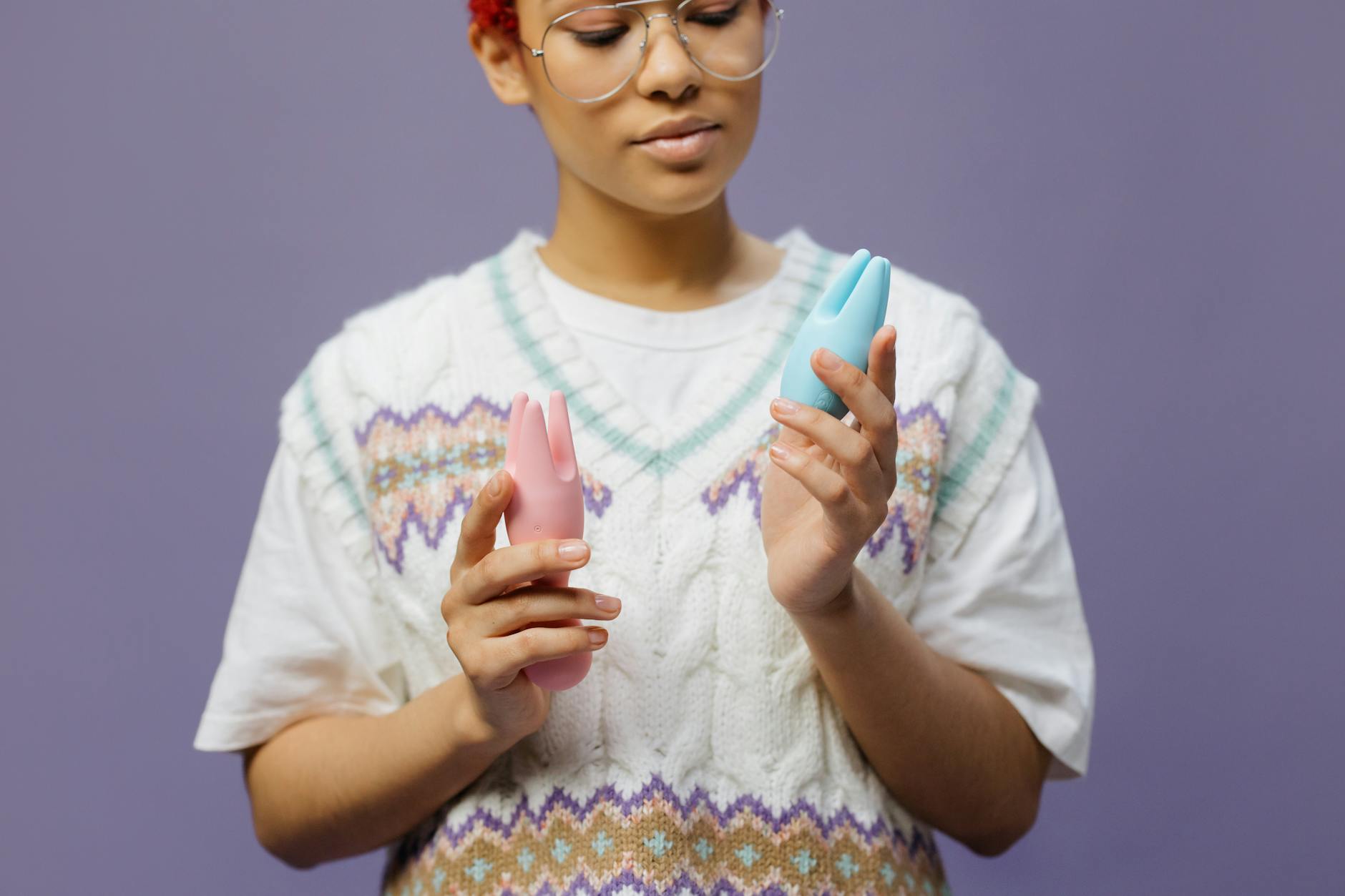
Here's the thing about sexual pressure
Performance anxiety is one of the most common reasons people stop enjoying sex, and it rarely gets talked about directly. You're worried about whether you're doing it right, whether you're taking too long, whether you're reacting the way you're supposed to. That constant internal commentary is running on loop while your body is supposed to be having fun. Spoiler: it's impossible to feel pleasure when you're simultaneously judging yourself.
The good news is that a lemon vibrator, used strategically, can help you dismantle that pressure and actually reconnect with what feels good.
Why performance pressure happens
Performance anxiety isn't really about sex. It's about control. We're taught from early on that sex is something to manage. You learn to read a partner, to calibrate your responses, to hit certain milestones in a certain order. If you grew up in an environment where your body wasn't yours (whether that was explicit or just the vibe), you learned that sex is about meeting someone else's needs.
Then there's the media layer. Porn, rom-coms, Instagram couples. All of it sells a version of sex where everything builds to a specific ending, on a specific timeline, with a specific level of enthusiasm. If your actual body doesn't cooperate with that script, you feel broken.
What's actually happening is much simpler. Your nervous system is in a state of hypervigilance. You're evaluating instead of experiencing. And until you shift out of that evaluative mode, a lemon clitoral vibrator won't help because you'll just add it to the list of things you're supposed to be doing correctly.
The disconnect between pressure and pleasure
One of the biggest insights from modern sex therapy is that pleasure requires a specific neurological state. It's called the "turn-on response," and it's essentially your parasympathetic nervous system doing its job. You need to feel safe. You need to feel permission. You need to not be thinking about whether you're thinking about the right things.
When you're under pressure, you're in your sympathetic nervous system (fight-or-flight mode). Your body is literally not available for pleasure. Blood flow goes to your extremities, your brain gets flooded with cortisol, your muscles tense up. This is the opposite of what happens during arousal.
Using a lemon vibrator while you're in performance mode is like trying to start a car when the parking brake is on. It might rumble, but it's not going anywhere. Which is why so many people with performance anxiety end up feeling broken around vibrators. The vibrator isn't the problem. The nervous system state is.
Starting with solo pleasure, without the script
The most useful thing you can do is use a lem vibrator alone, without any external expectation. No partner, no timeline, no goal.
Here's the protocol: Set aside 20-30 minutes. Not for sex. For exploration. Turn off your phone. You can put on music or keep it silent. The goal is literally just to notice what feels good in your body, no pressure to come, no performance metrics.
Start by exploring your whole body. Your forearms, your neck, your inner elbows, the backs of your thighs. This sounds unrelated to sexual pressure, but it's not. You're teaching your nervous system that touch is safe. You're also mapping where you actually feel sensation, which is wildly useful information.
Only after 10-15 minutes introduce the lemon vibrator. Start on the lowest setting. Move it slowly. The goal isn't to build toward anything. It's to feel it. Notice where it feels good, where it doesn't, where it feels overwhelming, where you want more. If thoughts come up like "am I doing this right?" or "this should feel better," just notice them and let them drift.
Reframing what a lemon vibrator is for
One reason performance anxiety gets worse with vibrators is that people assume the vibrator is supposed to deliver the orgasm. It's supposed to be effortless. And if it doesn't feel that way, the pressure amplifies.
Actually, a lemon clitoral vibrator is a tool for feeling, not a tool for achieving. The suction-based design of the lem means it works differently from other clitoral vibrators. It's not a direct pressure tool. It's more like a wave of sensation. That quality actually makes it brilliant for performance anxiety, because it forces you to be more present with what's happening rather than just chasing an endpoint.
When you're using it, the job is to stay present with the sensation. Does this pattern feel good right now? How about if I move it slightly? What happens if I slow my breathing? There's no finish line. You might come. You might not. Both are fine.
The partner conversation
If you're in a partnership, your partner needs to know what's happening. Not because you need their permission. Because the pressure you're feeling often comes from what you think they expect, whether they actually expect it or not.
A simple conversation: "I've realized I put a lot of pressure on myself during sex, and I'm trying to shift that. I might use a vibrator sometimes during solo time to remember what actually feels good to me. That's about me, not about anything you're doing or not doing."
That's it. You don't need their approval. You're just removing the secrecy, which is often the real driver of shame.
If your partner responds with insecurity, that's a separate conversation. But many partners, when they realize the pressure their partner is under, feel genuine relief. It's not on them to fix it. And it actually opens space for better partnered sex later, because you'll be able to show them what actually works instead of performing something you think should work.
What changes when you stop performing
Once you've done a few solo sessions with a lemon vibrator from a place of exploration rather than achievement, something shifts. Your nervous system starts to remember what pleasure actually feels like. Your body starts to trust that you're not going to judge it.
Then partnered sex gets interesting. You're no longer trying to hit a mark. You can actually respond to what's happening in the moment. You can ask for something different without shame. You can take longer or finish faster. You can come or not come, and neither outcome means you or your partner failed.
The vibrator doesn't disappear. You might use it with your partner. You might not. But the relationship to it changes because the relationship to your own pleasure has changed. It goes from being a performance aid to being an option, which is infinitely more powerful.
How to use a lemon vibrator if you're still feeling the pressure
If you're mid-session with a partner and the performance anxiety kicks in, pause. You don't have to push through. Using a lemon vibrator should never feel like one more obligation.
You can say: "I need a second." Breathe. Put the vibrator down if you want to. Sometimes the most important thing is remembering that you have agency. You can stop. You can slow down. You can ask for something different. You can come back to it.
Once you've practiced the solo exploration and your nervous system has started to settle, you can bring the lemon vibrator into partnered sex. But do it because you want to, not because you think you should. Use it because it feels good, not because you're trying to optimize the experience.
The real work
Honestly, the lemon vibrator is a tool, but the real work is rewiring your relationship with being watched, being vulnerable, having needs. That takes time. If performance anxiety is really severe, therapy specifically for sexual function can make a huge difference. A good sex therapist or couples therapist can help you and your partner understand where the pressure actually lives.
But in the meantime, you can start with solo time. You can practice presence. You can teach your body that pleasure isn't a performance metric. That's the foundation. Everything else builds from there.
FAQ: Performance Pressure and Pleasure
How long does it take to get over sexual performance anxiety?
There's no fixed timeline, but most people notice a shift in 3-4 weeks of consistent solo exploration. Your nervous system needs repetition to update its threat response. If you're doing one solo session a week, it'll take longer. If you're exploring a few times a week, the shift happens faster. The key is consistency, not intensity. Even 10 minutes three times a week is more useful than one marathon session and then nothing.
Can you use a lemon clitoral vibrator with a partner if you have performance anxiety?
Yes, but not immediately. Start with solo sessions first so your nervous system gets settled. Then, when you introduce it with a partner, do it in a low-pressure context. Maybe during foreplay when there's no expectation of a specific ending. Tell your partner "I'm going to use this because it feels good, not because I need it to do something specific." That distinction matters.
What if the vibrator itself causes performance pressure?
That usually means you're using it with the goal of coming. Try shifting your intention. Use it for sensation, not for results. If that doesn't work, give yourself permission to put it down for a while. The pressure you're feeling is the real thing to address, not the vibrator. Sometimes sitting with a therapist to unpack where the pressure comes from is more useful than any tool.
Is it okay to use a lemon vibrator if I don't typically have orgasms?
Completely okay. The goal of solo exploration isn't to solve anything. It's to feel what you feel. Some people come. Some people just feel a lot of good sensation. Some sessions are more intense than others. All of it is normal. The pressure to come is usually where the actual problem lives, so using a vibrator as an excuse to take the pressure off is actually brilliant.
How do I talk to my partner about this without making it weird?
Simple, direct, and matter-of-fact. "I've realized I've been putting pressure on myself during sex, and I'm working on that. Using a vibrator solo helps me remember what actually feels good." If you act like it's normal, they're more likely to receive it as normal. If you act ashamed or secretive, they'll pick up on that and get confused. You're not asking for permission. You're sharing information.
What if my partner feels threatened by me using a lemon vibrator?
That's their stuff to work on, not yours to manage. You can have a conversation: "This isn't about you. It's about me understanding my own body. I'd love your support." If they can't get there, that's a larger relationship issue, and it might be worth exploring with a couples therapist. But don't sacrifice your own healing because someone else is uncomfortable with you taking up space.
Start where you are
Performance pressure doesn't disappear overnight. But it does dissolve when you stop feeding it. A lemon vibrator can be part of that shift. Solo sessions help you remember what pleasure actually feels like. From there, everything else gets easier. You deserve to enjoy sex without constantly auditing yourself. That's not selfish. That's the whole point.
If you're ready to start, grab 20 minutes tonight. That's it. No agenda. Just you and sensation. Everything else will follow from there.
For more on building pleasure after relationship challenges, check out our guide on rebuilding pleasure after relationship trauma. And if arousal feels slow or hard to access, we have detailed strategies on when arousal takes longer to build that pair well with this work.