
Let's be real about the fear
Most people don't bring up lemon vibrators in their relationship because they're terrified their partner will hear it as "you're not enough." That's the core fear, and it makes total sense. Introducing any toy, including a lemon clitoral vibrator, can feel like criticism if it's not framed right. But here's what I've seen in my years as a couples therapist: the conversation itself, when done well, actually deepens intimacy. It signals trust. It says "I want to explore this with you."
The trick is knowing how to start.
Why the conversation matters more than the toy
I work with couples all the time who buy a vibrator in secret, hide it, use it alone, and then feel guilty. Others bring one home and drop it on the nightstand without context. Both approaches create distance instead of connection. The lemon vibrator itself is just silicone and suction technology. What matters is whether it becomes a shared experience or a symbol of something unsaid.
When you talk about it first, you're not introducing a toy. You're introducing an invitation. You're saying "I've been thinking about what would feel good for both of us, and I want to include you in that." That's fundamentally different from "I bought this because sex with you isn't working."
Timing and setting matter more than you think
Don't have this conversation during sex, right before sex, or immediately after. Don't ambush your partner when they're stressed, tired, or distracted. You want their actual attention and their calm nervous system.
The best moment is usually a quiet afternoon or evening when you're both relaxed and talking about something else. You're not announcing "we need to talk" (which activates anxiety). You're just bringing it up naturally. "Hey, I've been reading about lemon vibrators, and I'm curious about trying one together" is a lot easier to hear than "We should probably introduce toys into our sex life" with all its heavy implications.
Three ways to open the conversation
Pick the one that feels most authentic to how you and your partner communicate.
Option 1: Curiosity lead. "I've been reading about these lemon clitoral vibrators that work differently than what I expected. Apparently a lot of people have better orgasms with them. Would you be interested in exploring that together?" This frames it as information, not criticism. You're curious, not demanding.
Option 2: Desire lead. "I've been thinking about what would make sex feel even better for me, and I think trying a toy might be fun. I don't want to do this without you. Would you be open to it?" This centers your own pleasure and invites collaboration.
Option 3: Partnership lead. "I love our sex life, and I also think we could experiment more together. I found this thing called a lemon sucker, and the reviews are wild. Want to check it out with me?" This acknowledges what's good and asks for co-exploration, not rescue.
All three work because they're not defensive. They don't apologize for wanting pleasure.
What your partner might be thinking (and how to address it)
When you say "vibrator," their brain might land on one of three fears: "Does this mean I'm not enough?" or "Is this a replacement for me?" or "This feels embarrassing." These are rarely spoken out loud, which is why your language matters so much.
If they ask directly whether they're not enough, the answer is "No. This is about expanding what we already have, not fixing what's wrong." Don't over-explain. Over-explaining signals you're defensive, which suggests maybe they're right to worry.
If they seem uncomfortable, don't push. Invite them into the research instead. "I'm going to read more about how these work. Want to look at some reviews together?" Sometimes people need time to move from "startled" to "curious." Respecting that pace builds trust.
If they cite embarrassment, you can normalize it: "Yeah, talking about sex toys is weird at first. For me too. But I like you enough to be weird with you." Humor + vulnerability is a powerful combination here.
The practical part: how to frame the actual experience
Once they've said yes (and you're genuinely confident they mean it), you need to separate the toy from the pressure to perform. Here's what I tell couples: the first time you use a lemon vibrator together, the goal isn't to have the best orgasm ever. The goal is to explore together.
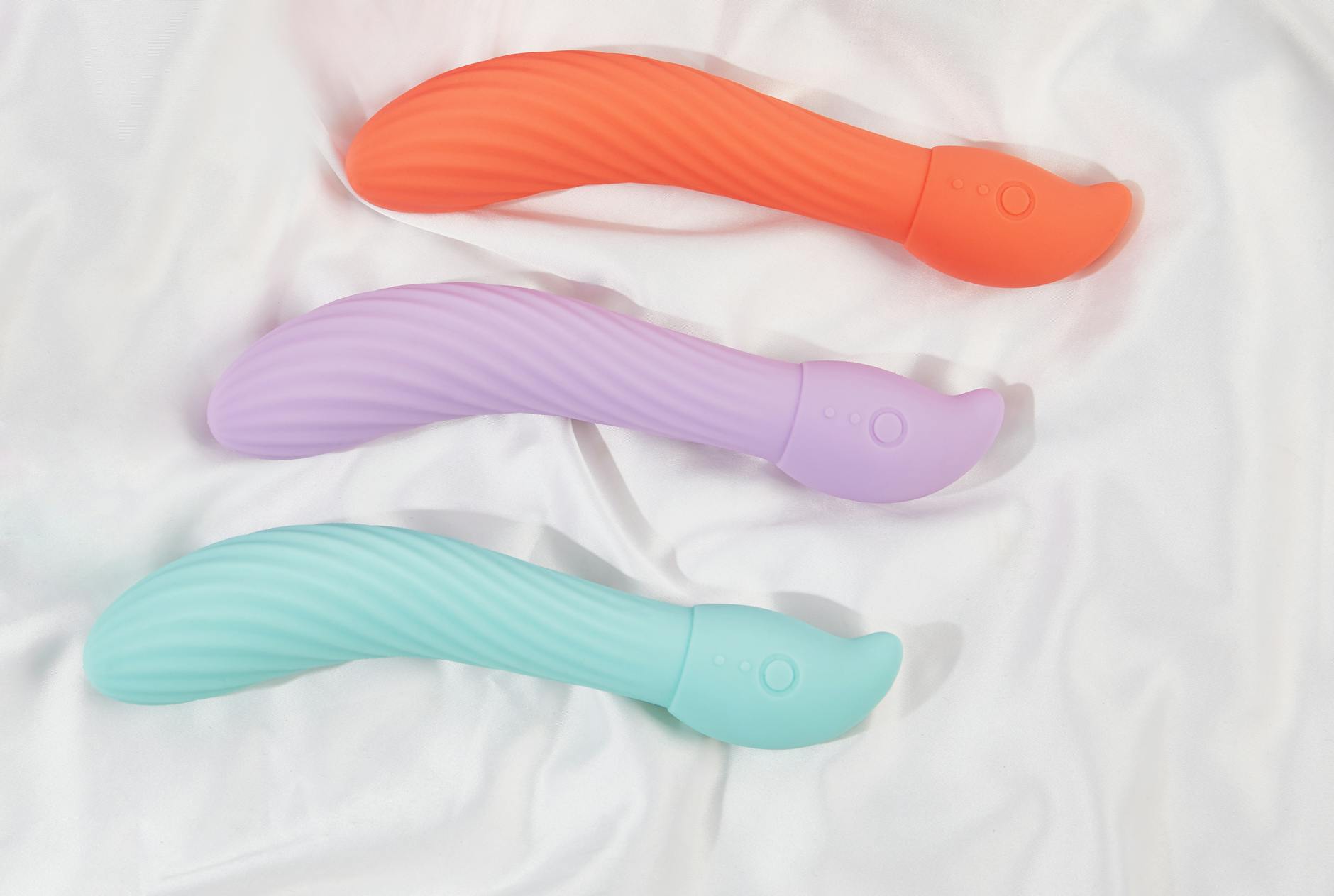
Photo by IFONNX Toys on Pexels
You might try it alone first, together in the room. You might use it as foreplay. You might just hold it, look at it, talk about it, and put it away. That's all fine. The pressure to "perform" with a toy is just as damaging as the pressure to perform without one. You're building comfort and curiosity, not chasing an outcome.
One thing that helps: let your partner control it first. Not to use on themselves necessarily, but to hold it, feel the weight, understand how it works. This shifts the dynamic from "toy is happening to me" to "we're exploring this together." That shift matters.
When your partner says no (and what to do)
Sometimes they'll say no. Maybe not right away, but after thinking about it. This is where your response determines whether you move closer together or further apart.
The worst response: "That's ridiculous" or "Everyone uses toys now" or "You're being prudish." Those responses say "Your boundaries don't matter to me."
The right response: "Okay. I hear you. That's not what I want either if you're not interested." And then you mean it. You don't bring it up again. You don't resent them. You don't secretly order one anyway.
Sometimes people need time. Sometimes they need more information. Sometimes they genuinely don't want this and that's their right. Your job is to respect that without punishing them for it. Most couples who hit this wall and handle it well actually get curious later, once the pressure is off.
What happens after you start using it
Once you've introduced a lemon clitoral vibrator, keep the conversation going. "How did that feel?" "Do you want to try it again?" "What would make this better for you?" These are relationship conversations, not toy conversations.
Some couples find that toys become a regular part of their intimate life. Some use them occasionally. Some discover that the person who wanted the toy doesn't actually want to use it, and that's fine too. The goal was never to be a "vibrator couple." The goal was to communicate honestly about desire and stay connected while doing it.
If you're navigating this as a single person exploring solo pleasure, the communication challenge is different. You might be curious about whether a lemon sucker would work better than what you're currently using. Check out our guide on using a lemon vibrator for practical tips on that front.
If you're dealing with a partner who's resistant but you're still curious about your own pleasure, you don't need permission. But you do need to think about boundaries and honesty in your relationship. That's a different conversation, and it might be worth exploring with a therapist.
The deeper work: what this opens up
Here's what I've noticed over the years. Couples who can talk about lemon vibrators can usually talk about other things they've been avoiding. Money. Time. Attention. What they actually want from each other.
The toy becomes a symbol of something bigger: the ability to be vulnerable with each other. To say "I want something different." To ask for it without shame. To respect a no without resentment.
That's the real gift. The vibrator is just the vehicle.
FAQ: The questions people actually ask
Is it normal to want to use a vibrator if my partner is enough?
Absolutely. Wanting a vibrator isn't about your partner. It's about your own body's response, pleasure capacity, and arousal patterns. People with vulvas can orgasm differently with different types of stimulation. A lemon clitoral vibrator gives you suction-based sensation that hands and partners often can't replicate. That's not a criticism of your partner. It's biology.
What if my partner thinks I'm bringing this up because I'm unhappy?
That's a conversation, not a fact. You can say directly: "I'm happy with you. I'm also curious about exploring more pleasure together. Those two things are true at the same time." Then listen to what they're actually worried about. Often it's not the toy. It's something else.
How do I introduce a lemon vibrator if we've never talked about sex toys before?
Start with information, not a proposal. Share an article. Ask if they've ever thought about it. Give them time to be curious without pressure. If they seem interested, suggest trying one together. If not, don't push. You can always circle back later.
Can a vibrator actually ruin the sensation of partnered sex?
No. Your body doesn't stop responding to your partner because you've used a vibrator. It's not like your nerve endings reset. What sometimes happens is people prefer vibrator sensation and don't prioritize partnered sex, but that's a relationship choice, not a physical consequence.
What if my partner wants to use a vibrator and I feel threatened?
That feeling is valid. You're probably hearing "I want something you can't give me," which is scary. It might be true that you can't give that exact sensation. But your partner using a lemon sucker or any toy doesn't replace what you offer. It adds. If you're feeling threatened, that's worth exploring with a couples therapist, because it usually points to something bigger.
Should we shop for a vibrator together?
It depends on your dynamic. Some couples love picking it out together. Some people feel more comfortable ordering it alone and surprising their partner. There's no right way. What matters is that both people have consented and feel safe.
The bottom line
Talking to your partner about introducing a lemon clitoral vibrator isn't about the toy. It's about creating space for honest conversation about desire. It's about saying "I trust you with what I want, and I want to explore this together."
That kind of vulnerability is how couples stay connected over time. Start small. Keep it light. Listen more than you talk. And remember: the person worth keeping is the person you can talk about pleasure with, even if it feels awkward at first.