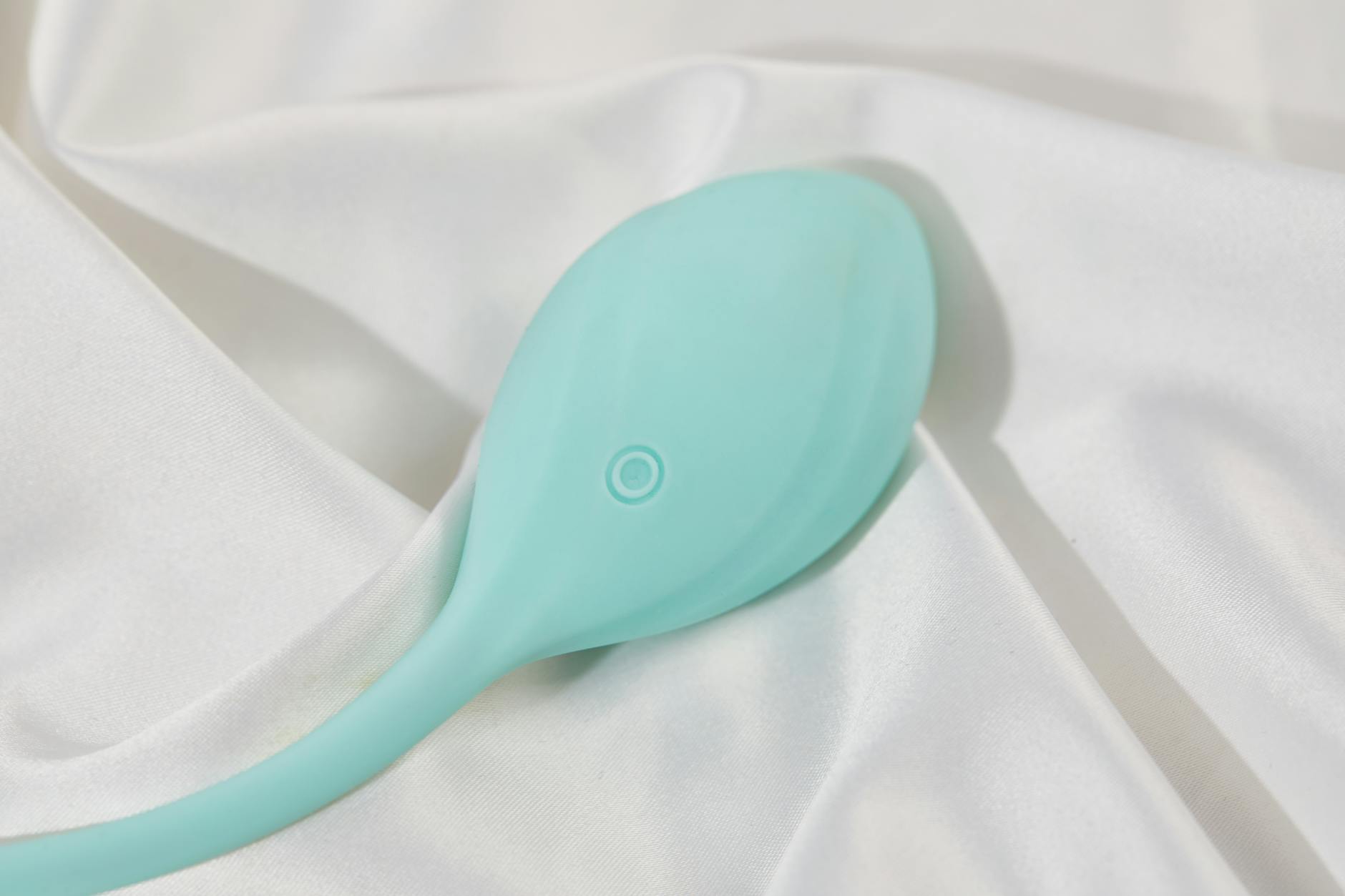
The paradox nobody talks about
You can feel everything when you're using a lemon vibrator alone. Every pattern, every intensity shift, the precise suction on the hood of your clitoris. But the moment your partner's hands, mouth, or fingers take over, the sensation flattens. It's like someone turned down the volume on nerve endings that were just firing at full capacity.
This isn't physical numbness. Your body isn't broken. What's happening is almost certainly psychological, and the good news is that it's completely reversible once you understand the mechanism.
Why your brain prioritizes lemon vibrators over touch
Here's the neuroscience part, stripped down to what actually matters. When you're alone with a toy, your brain is running a closed circuit. There's you, the sensation, and nothing else competing for attention. A lemon vibrator delivers consistent, rhythmic stimulation that your nervous system can predict and anticipate.
When a partner enters the picture, everything changes. Your brain suddenly has to process multiple inputs at once: the touch, their breathing, their reactions, what they might be thinking about your body, whether you're taking too long, whether they're enjoying it, whether this is the "right" kind of pleasure. That's cognitive overhead, and it pulls focus away from the physical sensation itself.
Add performance pressure on top—the unspoken expectation that you should be turned on by their touch, that preferring your vibrator means something is wrong with the relationship—and your nervous system goes into a protective crouch. Numbness is your brain's way of saying it doesn't feel safe to be fully present.
The role of anxiety in killing sensation
I've worked with hundreds of couples where this exact dynamic plays out. The pattern usually looks like this: you use a lemon vibrator alone, it works beautifully. Your partner wants to be involved, which you want too. But the moment they touch you, it's like someone dimmed all the lights.
That's anxiety. Not "something is wrong with your relationship" anxiety, but the specific kind that shows up when we're being observed or when we feel responsible for someone else's pleasure alongside our own. Your nervous system reads the situation as higher stakes. Higher stakes means less access to sensation.
The irony is brutal: the more you try to feel it, the more you can't. The more you worry about your partner noticing you can't feel it, the more locked down your nervous system becomes. It becomes a feedback loop.
Desire and arousal are not the same thing
Here's a distinction that changes everything. You might genuinely want your partner to touch you. You might love them, be attracted to them, and feel desire for intimacy. And simultaneously, your body might be numb to their touch.
These are not contradictory. Desire and physical sensation are controlled by different neural pathways. You can want something and not feel it at the same time. This is especially true if there's been a long pattern of sensation-seeking with toys and less exploration of partner touch.
Your nervous system gets trained. If 80 percent of your orgasmic experience comes through a lemon vibrator, your body becomes exquisitely attuned to that input and less responsive to others. It's not that you've become incapable of feeling your partner. It's that your system is calibrated to a different frequency.
The permission problem
There's often an unspoken belief underneath the numbness: "I should be able to feel this because I love them." Or: "If I can't feel my partner's touch, it means something is wrong." That belief itself kills sensation.
Permission to feel differently with different types of touch is essential. A lemon clitoral vibrator works differently than fingers or a tongue or a penis. Suction feels different than pressure. Consistent rhythm feels different than improvisation. None of these is "better." They're just different frequencies your body can learn to dance with.
The moment you stop requiring your partner's touch to feel identical to your toy, something shifts. Your nervous system relaxes. Your body becomes curious instead of defensive.
How to rebuild sensation with a partner
Start by talking about it outside the bedroom. Not as "something is wrong," but as "here's how my nervous system works, and here's what helps me be present." That conversation alone reduces shame, which is half the battle.
Then, rebuild sensation gradually with these specific moves.
Use the lemon vibrator together first. Let your partner hold it, control the intensity, observe what makes you respond. This gives them permission to understand your pleasure without the pressure of trying to recreate it with their body. It also keeps your nervous system in the "this works" state while they're present.
Take turns. Lemon vibrator for five minutes, then their hands for five. Alternate. This trains your body to switch between frequencies without judgment. You're not saying "this is better." You're saying "my body responds to different things, and all of it is valid."
Lower the cognitive load. Dim the lights, put on music if it helps, agree beforehand that you're not aiming for orgasm. You're just practicing being present. Remove the expectation, and sensation often comes flooding back.
Stay curious, not critical. If you go numb, don't tense up. Notice it like you're observing clouds passing. "There's the numbness. Okay." Resistance hardens the pattern. Gentle observation softens it.
When sensation stays flatlined
If numbness persists despite these moves, it might point to something deeper than just nervous system calibration. Relationship discord, past trauma, or a significant shift in attraction can all flatten sensation. That's not a toy problem and not a quick fix. That's work for a sex therapist or couples counselor who specializes in intimacy.
But most of the time, when someone reports that their lemon vibrator delivers sensation but their partner doesn't, it's the anxiety loop. And that loop has an exit. It just requires patience, communication, and permission to feel differently with different inputs.
The real value of exploring solo first
This is worth saying directly: there's nothing wrong with discovering your pleasure with a lemon vibrator first, alone. That's actually how nervous systems learn. You figure out what works, your body builds confidence, and then you bring that knowledge into partnership.
The mistake is assuming that solo sensation should automatically translate to partnered sensation. It doesn't have to. Your body isn't a machine with one pleasure setting. It's a complex system that responds to context, safety, arousal state, emotional connection, and about a hundred other variables.
When your partner's touch feels numb compared to your lemon vibrator, you're not broken. Your nervous system is just asking for something specific: safety, lower stakes, and permission to feel at its own pace. Give it those things, and sensation usually returns.