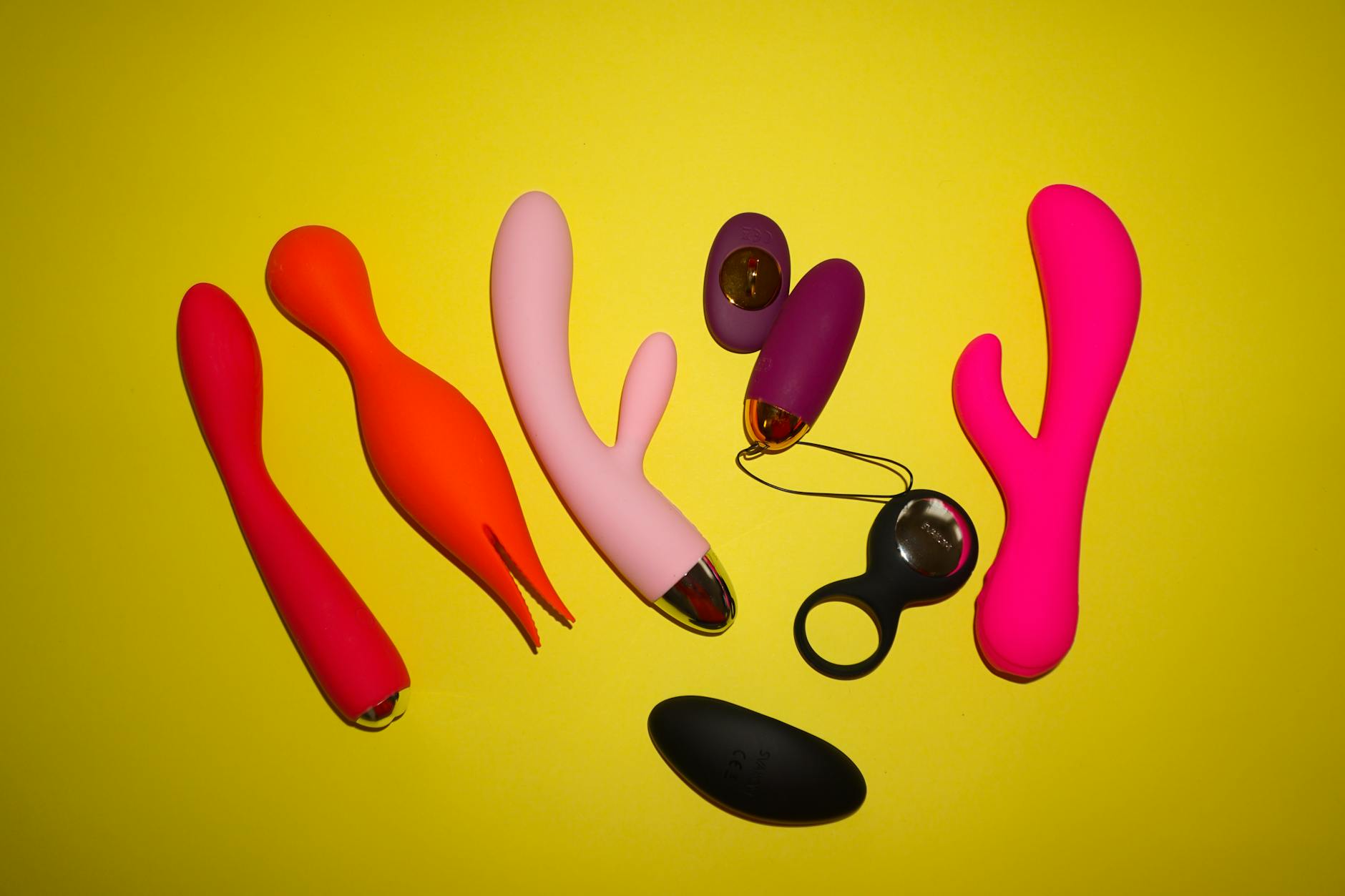
Let's talk about the gap that nobody mentions
You've found your rhythm with your lemon vibrator. The sensation is incredible, intensely focused, almost overwhelming in the best way. Then your partner touches you, and suddenly it feels like someone switched off the volume. Not bad, exactly. Just... less. Muted. Like the difference between wearing noise-canceling headphones and having someone whisper in your ear from across the room.
This isn't a sign that something's wrong with you or your partner. It's physics meeting neurology, and understanding the distinction changes how you approach touch together.
How air suction works on your nervous system
A lemon clitoral vibrator uses gentle suction and pulsing air patterns to stimulate the thousands of nerve endings in and around your clitoris. The stimulation is concentrated, rhythmic, and entirely consistent. Your nervous system learns that pattern, anticipates it, and builds arousal in a very specific neurological pathway.
When your partner's hands make contact, the stimulation type shifts completely. Friction, pressure, temperature, texture, movement variation. Your nervous system has to switch gears entirely. The familiar suction pattern vanishes. In that moment, the new sensation can feel like a step backward, not forward.
Here's the important part: your body isn't broken. The difference in sensation is real and expected.
Why the shift feels like numbness (it usually isn't)
Neurologists call this "sensory adaptation." Your clitoris has adapted to the air suction pattern, so other types of touch feel comparatively quieter. It's not that your partner's fingers are bad at their job. It's that your nervous system has gotten really, really good at one specific stimulus and hasn't recalibrated yet.
Add to that the psychological layer: if you've been relying on your lemon vibrator for consistently powerful orgasms, manual stimulation might feel slower, less predictable, or less intense. Your brain is comparing it to a gold standard you've set, not evaluating it on its own merits.
There's also the pressure piece. When a partner is touching you, there's often an unconscious expectation that you should orgasm, or reach a certain level of arousal, or "perform" readiness. That cognitive load alone dulls sensation. Your nervous system is busy managing anxiety and expectation instead of just receiving touch.
The physical side of the shift
Air suction devices create localized stimulation. They pull tissue slightly, creating pressure and suction sensation simultaneously. A partner's hands, by contrast, distribute pressure across a wider area. They can be gentle, then firmer, then gentler again. They warm up from body heat. They move in patterns your partner chooses, not the pattern you've preprogrammed.
Some of those things are limitations from a pleasure standpoint. Some are features. A lemon vibrator won't adapt to how you're feeling in real time. Your partner's hands can. A lemon vibrator provides the same sensation every time, which is wonderful for predictability but doesn't accommodate spontaneity. A partner's touch can.
The nervous system sensation isn't actually less intense. It's a different kind of intensity. Getting used to the difference takes time and intentional attention.
How to bridge the sensation gap during partnered sex
Start by being honest with your partner about what you've noticed. "When you touch me after using my vibrator, the sensation feels quieter" is useful information. It's not a critique. It's data.
Then: don't abandon the vibrator yet. Layer. Your partner uses their hands while you hold your lemon vibrator against your clitoris. The combination creates a completely new sensation profile. Your nervous system gets to experience both stimulation types at once, which often feels electric in ways neither alone achieves.
Gradually reduce the vibrator intensity as your partner's touch becomes more present. Move from pattern 5 down to pattern 3. Then from pattern 3 to pattern 1. Then alternate between your partner's touch and low-intensity vibration. This teaches your nervous system that partner touch is sufficient on its own, without having to compete with air suction intensity.
Timing matters too. If you're used to reaching orgasm with your vibrator in 5 minutes, you've trained your body for speed. When your partner is involved, slow down. Budget 20 to 30 minutes. Extended foreplay actually gives your clitoris and nervous system time to wake up to manual stimulation without feeling like something's missing.
The psychological piece you can't ignore
Some of the "numbness" isn't sensory. It's mental. If you're worried your partner feels inadequate, or if you're anxious about whether you'll be able to orgasm without your vibrator, that anxiety literally dampens physical sensation. Anxiety triggers your sympathetic nervous system, which is the fight-or-flight mode. Arousal lives in the parasympathetic nervous system, the rest-and-digest mode. You can't be in both simultaneously.
Have the conversation with your partner outside the bedroom first. "I love using my vibrator. I also love sex with you. They feel different, and that's okay. I'm not comparing you unfavorably. I'm just adjusting." Most partners are relieved by honesty. What often kills arousal is unspoken doubt.
You might also notice that if you're touching yourself with a lemon vibrator while a partner watches, you feel more aroused and present than when they're the one stimulating you. That's worth examining separately. It might not be about the sensation at all. It might be about control, visibility, or vulnerability.
When it's actually about technique, not sensation
Sometimes the issue genuinely is technique. Your partner might be pressing too firmly, moving too fast, or focusing on a slightly different area than where you actually want touch. This is fixable with communication and practice.
Guide your partner's hand to the exact spot where the sensation feels best. Show them the rhythm and pressure you prefer. Not as criticism, but as collaboration. "A little lighter here" or "Slower, I like this tempo" is information, not judgment.
A lemon clitoral vibrator gives you a clear map of your own pleasure. Use that knowledge to teach your partner. You've spent time understanding exactly what sensation works for your body. Sharing that information is one of the most intimate things you can do.
Building new arousal pathways with a partner
Your nervous system is plastic. It adapts. You can build new arousal pathways that include partner touch without requiring air suction. It just takes intention and time.
One way: use your lemon vibrator solo to reach near-orgasm (not all the way), then have your partner take over manually from that point. You're teaching your body that there are multiple routes to pleasure, not just one. After a few weeks of this, you'll notice your body responds faster to your partner's touch. You're literally rewiring your nervous system.
Another: schedule partnered sex sessions where you deliberately leave your vibrator in another room. This removes the option of falling back on it, which forces your nervous system to adapt to partner touch without the safety net. It sounds harsh, but it works. Your body will downregulate its dependence on the specific air suction sensation.
You might also find that the presence of a partner transforms everything. Solo pleasure with a lemon vibrator is your private, focused experience. Partnered sex, even without the vibrator, carries different energy. Vulnerability, presence, mutual attention. Those elements activate different pleasure circuits than solo stimulation alone.
The bottom line
Your lemon vibrator isn't ruining your ability to enjoy partner touch. It's showing you exactly what intensity and rhythm your body craves. Use that information to build better partnered sex, not to dismiss partner touch as inferior. The two can coexist beautifully once you stop comparing them and start layering them intentionally.
Frequently asked questions
Why does my clitoral sensitivity feel dulled after using an air suction toy with a partner?
Your nervous system adapts to the specific stimulus. Air suction creates focused, rhythmic pressure that's hard to replicate with fingers alone. When your partner's touch replaces that pattern, your body initially perceives less intensity because the stimulation type has changed entirely, not because anything is wrong. This is sensory adaptation, and it's temporary. Your nervous system can learn to respond to manual stimulation equally well, but it requires repetition and time.
Can I use my lemon vibrator during partnered sex to maintain sensation?
Absolutely. Layering air suction stimulation with your partner's touch often creates sensations that neither alone provides. You can hold your lemon vibrator while your partner uses their hands, fingers, or other toys. Gradually reduce the vibrator intensity as your comfort with partner touch increases. This teaches your body that both types of stimulation can coexist and that you don't need to choose between them.
Does using a lemon vibrator regularly make it harder to orgasm with a partner?
Not inherently, but it can create a preference for the specific sensation your vibrator provides. If you've trained your nervous system to respond most reliably to air suction, manual stimulation will feel different. The solution isn't to avoid your vibrator. It's to intentionally build new arousal pathways with a partner by layering stimulation, extending foreplay, and communicating clearly about what feels good. You're not losing the ability to respond to partner touch; you're expanding your capacity for multiple types of pleasure.
How long does it take for my body to adjust to partner touch after relying on a vibrator?
It varies widely, but most people notice significant shifts within 4 to 6 weeks of intentional practice. You don't need to do anything extreme. Consistent partnered touch, gradually reduced vibrator use during sex, and honest communication about sensation are usually enough. Some people adjust faster; others take longer. Age, stress levels, relationship dynamics, and your own neurology all play a role. Be patient with yourself and your partner during the transition.
Is the numb feeling during partner touch a sign my partner isn't skilled enough?
Not necessarily. The muted sensation is often about sensory adaptation and expectation setting, not technique. That said, communication helps. Guide your partner to the exact spot and rhythm that feels best, and be specific about pressure. Most partners want to know what works. If your partner is receptive to feedback and adjusts accordingly, the sensation usually improves dramatically. If they refuse to communicate or adapt, that's a different conversation worth having outside the bedroom.
Can I retrain my body to prefer partner touch over a lemon vibrator?
You don't need to pick one. The goal is flexibility: the ability to enjoy and orgasm from multiple types of stimulation. Use your lemon vibrator when you want its specific sensation. Practice manual stimulation with your partner as a separate skill. Over time, your nervous system becomes equally responsive to both. You're not replacing your vibrator's role; you're expanding your pleasure repertoire to include partner touch without feeling like a downgrade.
Final word
Lemom vibrators are designed to deliver consistent, intense clitoral stimulation. Partnered sex is designed for connection, vulnerability, and mutual presence. They're serving different functions in your life, and both matter. The moment your partner's touch starts feeling numb isn't a sign to abandon one or the other. It's an invitation to layer them thoughtfully, communicate clearly, and let your nervous system expand its capacity for pleasure. Your body is adaptable. It just needs permission and time.