Let's talk about the medication nobody warns you about
You started your antidepressant six weeks ago. The intrusive thoughts quieted. The heaviness lifted. And then you noticed something else: nothing down there feels quite the same anymore.
This is not in your head. It's actually in your brain, in the neurotransmitters that regulate both mood and arousal, and it affects roughly 40-60% of people taking SSRIs or SNRIs. Most doctors mention it as "sexual side effects" on the intake form and move on. Which is infuriating because it's actually one of the most common reasons people stop taking medications that are helping them mentally.
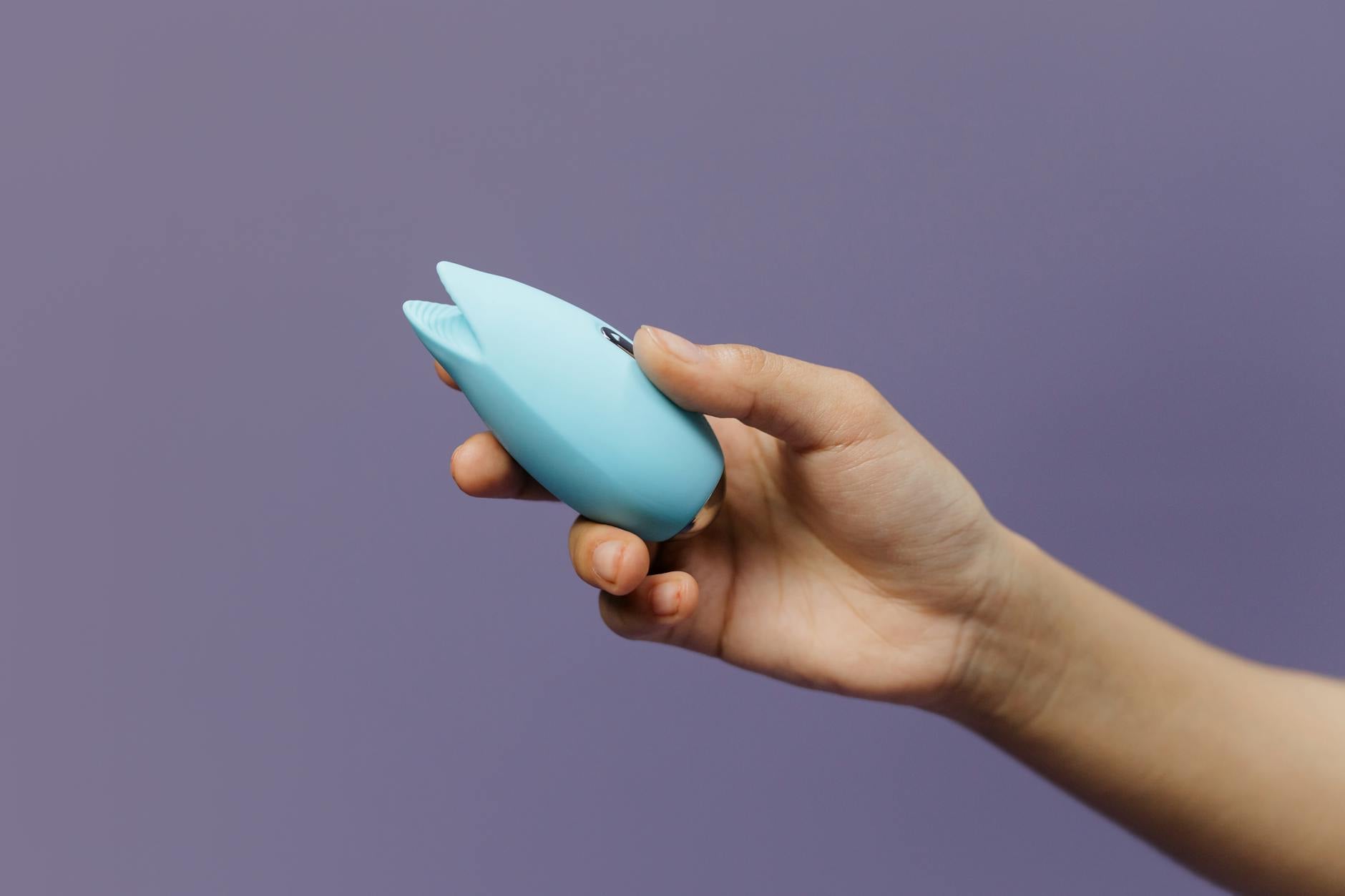
Here's what's happening, what you can do about it, and why a lemon clitoral vibrator approach might actually work better than you think.
How antidepressants change sensation at the source
SSRIs (selective serotonin reuptake inhibitors) work by keeping serotonin in your brain longer. This helps lift depression and anxiety. The problem: serotonin also regulates arousal, orgasm, and sensation in the pelvic region.
When serotonin gets too high in certain areas, it dampens dopamine. Dopamine is what creates desire, reward, and the neurological cascade that turns you on. Some people experience genital numbness. Others lose the ability to orgasm entirely. Most common: arousal feels distant, like you're watching your body from three feet away instead of living in it.
The effect is dose-dependent. Higher doses equal stronger dampening. And it typically doesn't improve on its own. Your brain adapts to the new neurochemical balance after 6-8 weeks, and then you're locked in.
That said, you have options that actually work.
Why sensation intensity matters (and changes)
Your clitoral nerves aren't broken. The pathways are still there. What's changed is the signal strength and your brain's ability to interpret sensation as arousing.
Think of it like someone turned down the volume on your body's feedback system. A traditional vibrator at setting 3 used to feel like setting 6. Now it feels like setting 1.
This is where lemon vibrators and other air-suction clitoral toys create a meaningful difference. The suction mechanism works through a completely different neurological pathway than friction-based vibration. It stimulates the Pacinian corpuscles and Meissner's corpuscles in your clitoral tissue, which are density-sensitive but don't require as much raw sensation intensity to register in your brain as arousing.
Translation: even if your baseline sensation is dampened, suction-based stimulation often feels noticeably distinct because it's arriving through different nerve fibers. Many people on antidepressants report that a lemon clitoral vibrator or similar lem vibrator creates sensation they can actually feel, when traditional vibrators feel like nothing.
The medication conversation you need to have
First: don't just stop taking your antidepressant to get your sex drive back. That's the trap. Your mental health matters more than this problem has a non-solution path.
But talk to your prescriber. Seriously. The options are real:
1. Dose adjustment. Sometimes dropping from 50mg to 37.5mg of your SSRI reduces sexual side effects without losing the mood benefit. Not always, but worth asking.
2. Timing shift. Taking your dose 12 hours before sex instead of right before can help some people. The medication is still working in your system, but the peak concentration timing shifts.
3. Medication swap. Bupropion (Wellbutrin) actually increases dopamine and has fewer sexual side effects. Mirtazapine sometimes preserves sensation better. Tricyclic antidepressants are older but may work differently for your body. Your doctor can explore this.
4. Addition therapy. Buspirone (Buspar) or bupropion can be added to your SSRI to counteract sexual side effects. It's not standard practice yet, but it's becoming more common as doctors get smarter about this issue.
If you've already tried these and you're staying on your current medication, you move to the next layer.
Why lemon adult toys bridge the gap
Here's the piece most people miss: sensation and pleasure are not the same thing. You can have reduced sensation and still experience intense pleasure if you're using the right stimulation method.
Lemon clitoral vibrators work because suction-based stimulation:
- Creates sustained pressure rather than repetitive vibration, which your numbed nerves can detect more easily.
- Activates different nerve clusters than traditional vibrators, bypassing some of the serotonin-dampened pathways.
- Builds sensation gradually, which means your brain has more time to interpret the signal as arousing instead of just "present."
- Allows you to control intensity in smaller increments than most vibrators, which matters when your baseline sensation is already lower.
If you're on an antidepressant and considering a lemon sucker or similar air-suction toy, start at the lowest setting and give yourself permission to spend 20-30 minutes exploring. This is not a problem to solve in five minutes. The goal is to let your nervous system gradually recognize the sensation as pleasurable, not to white-knuckle an orgasm.
Many people find that pairing a lemon vibrator with longer foreplay, fantasy, or partnered stimulation helps too. You're training your brain to interpret the signal as arousing again, and that takes time.
The lifestyle adjustments that compound the effect
Medication side effects don't exist in isolation. Four other factors matter:
Sleep. Antidepressants worsen some people's sleep. Sleep deprivation kills desire and sensation. If you're running on five hours, your brain literally has less capacity to register pleasure. Prioritize sleep before you blame the medication entirely.
Stress. Anxiety and antidepressants are a dual numbing effect. If you're stressed, your body stays in a sympathetic nervous system state (fight or flight), which directly suppresses arousal. Meditation, yoga, or even a 20-minute walk before sex helps.
Partner communication. If you have one, tell them what's happening. "My medication is dampening sensation, so I might need longer warm-up or a different kind of touch" reframes the conversation from "something's wrong with me" to "here's how we adapt." That shift alone can reduce the psychological numbing that piles on top of the pharmacological numbing.
Timing. Some people find sensation is better in the morning or early evening rather than late night. Your circadian rhythm affects neurotransmitter levels. Track when you feel most present and try to schedule intimacy then.
Patience with your nervous system
One more thing: rewiring your arousal response while on an antidepressant takes weeks, not days. Your brain is used to the current neurochemical baseline. You're not trying to force an orgasm. You're trying to slowly train your nervous system to recognize sensation as pleasurable again.
This is why a lemon clitoral vibrator or similar lem vibrator often works better than pushing harder with a traditional vibrator. You're working with your dampened sensation, not against it. Each time you use it, you're sending your brain a small signal that this type of stimulation is worth paying attention to. Over time, those signals compound.
Your mental health comes first. Your sexual health is still part of your health. Both are worth taking seriously.
FAQ: Antidepressants, Sensation, and Lemon Vibrators
Can I use a lemon sexual toy if I'm on multiple medications?
Yes. Air-suction vibrators and other lemon adult toys are safe to use while taking any antidepressant or other psychiatric medication. The toy doesn't interact with medication. That said, if you're on multiple medications that affect arousal (antidepressants plus anti-anxiety meds, for example), the combined dampening effect might be stronger. Talk to your doctor about whether adjusting one of them is possible.
Will the sexual side effects go away if I stay on my antidepressant longer?
Most people adapt to mood improvements within 6-8 weeks, but sexual side effects typically don't improve on their own. Your nervous system reaches a new equilibrium and stays there. That's why talking to your doctor about adjustment strategies early matters. The longer you wait, the harder it becomes to distinguish between medication side effects and psychological or relationship factors.
Do I need to try a lemon vibrator specifically, or will any clitoral vibrator work?
Air-suction vibrators like lemon clitoral vibrators tend to work better for people on antidepressants because the suction mechanism travels through different nerve pathways than traditional vibration. That said, everyone's body is different. Some people on SSRIs respond better to broader stimulation (like a wand vibrator), and some prefer lemon sucker intensity. If you're trying a lemon vibrator for the first time and sensation is already dampened, start with the lowest setting and give yourself grace if it doesn't immediately solve the problem.
Can I combine a lemon vibrator with my partner for better results?
Absolutely. In fact, partnered use often helps because your partner can manage the vibrator while you focus on other sensations and pleasure. This reduces the cognitive load of self-pleasure (which is already higher when sensation is dampened) and lets you receive stimulation without managing it. Talk about it first so there's no surprise.
What if my doctor won't adjust my medication and the side effects are really bad?
You have the right to a second opinion. If your current prescriber won't discuss dose adjustment, medication swaps, or addition therapy, find another psychiatrist or your GP and ask again. Sexual function is a legitimate medical concern, not a luxury complaint. Providers who dismiss it are not serving you well.
How long does it take to notice improvement if I switch to a lemon vibrator?
Some people notice a difference within 2-3 sessions. Others take 4-6 weeks of regular use before sensation feels noticeably different. This is normal. You're not trying to force an immediate result. You're rewiring your nervous system's interpretation of pleasure. That takes time. If you've been using a lemon clitoral vibrator consistently for 8 weeks and nothing has shifted, and you've also talked to your doctor about medication adjustment, then you might explore other factors or try a different approach.
The reality check
Antidepressants save lives. They also sometimes dampen the parts of life that make us feel most alive. That's not a moral failing on your part, and it's not a reason to feel broken.
Your body is not broken. Your neurotransmitters are just working differently right now. A lemon vibrator, a conversation with your partner, a medication adjustment, patience with yourself. Those are the tools. Start with one and add the others as it feels right.
Your mental health and your sexual health both matter. Treating them as separate problems is the real mistake.