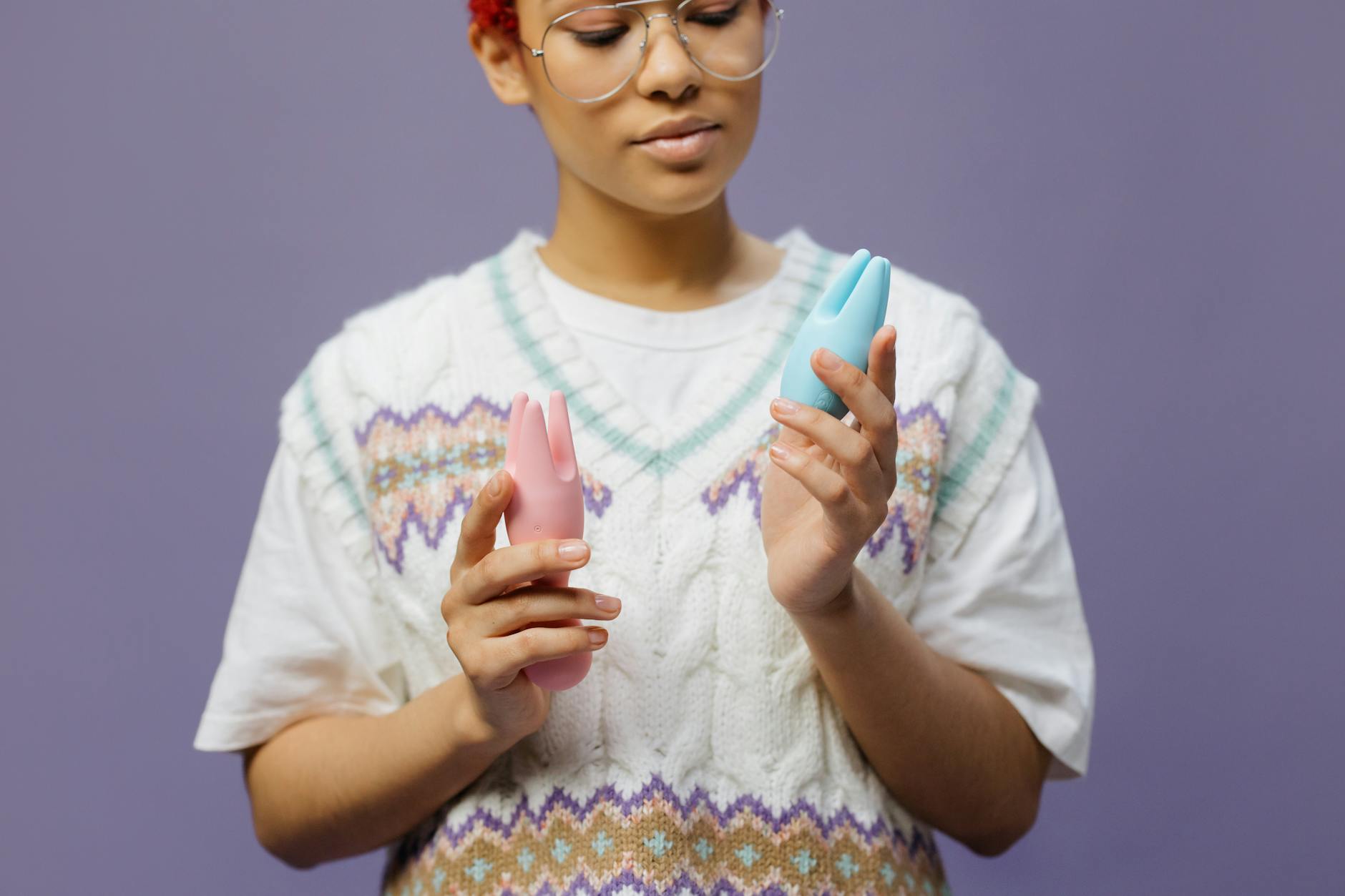
Here's the thing about hormonal sensitivity shifts
Your clitoris isn't broken. It's responding to a real change in blood flow, tissue thickness, and nerve receptor distribution. When hormones dip—whether from birth control changes, postpartum recovery, medication, or natural menstrual cycle variation—the sensation landscape literally changes. That means your favorite lemon vibrator might feel too intense, too dull, or just weird in ways you can't quite name.
The good news: this is wildly fixable. A lemon vibrator, specifically the air suction technology, can actually work better for reduced sensitivity than traditional vibrators once you know how to adjust. Let me walk you through it.
Why air suction changes the game when sensation is lower
Traditional vibrators work through direct mechanical vibration against tissue. When your clitoris is less sensitive, that vibration can feel numbing or irritating. Air suction toys like the Lemon work differently. Instead of buzzing against the tissue, they create a gentle pulse of suction that stimulates the entire clitoral network—the external bulb, the internal wings, and the nerve clusters along the shaft.
When sensitivity is reduced, this suction approach is gentler on the tissue itself but can reach deeper nerve pathways that traditional vibration might miss. It's less about intensity and more about strategic stimulation.
Start with the lowest patterns and build intentionally
Most people grab a lemon vibrator and immediately jump to patterns 4-6. When your sensitivity is compromised, that's skipping steps.
Begin with Pattern 1. Yes, it feels subtle. That's the point. Spend 3-5 minutes at Pattern 1 without moving to a higher setting. You're not trying to climax here. You're trying to wake up the nerves and assess how your body is responding today. Sensitivity fluctuates—some days are better than others, even within the same hormone cycle.
After a few minutes at Pattern 1, you may notice a shift. The initial numbness can soften. If it does, move to Pattern 2. If not, stay at Pattern 1 a bit longer. There's no timer. Your body knows when it's ready to escalate.
Angle matters more when sensitivity is lower
With reduced sensation, slight changes in positioning make enormous differences. A traditional vibrator pressed straight onto the clitoral glans might feel flat. The same toy approaching from a slight angle—45 degrees off center—can hit the nerve clusters along the side of the clitoris where sensation is often stronger.
With a lemon vibrator (air suction), this is even more dramatic. Try positioning the opening slightly off-center, toward the left or right side of the clitoral area, rather than dead-on. Many people find this creates a more awakening sensation when full-frontal feels numb. Some also prefer approaching from below the clitoris rather than above.
Don't assume the position that worked last month will work this month. Tissue and hormone changes mean re-experimenting with angle is normal and necessary.
Warm-up is not optional, it's essential
When hormones drop, blood flow to the pelvic area takes longer to increase. That translates to slower arousal, less natural lubrication, and tissue that feels numb until blood engorgement happens.
Budget 15-25 minutes of warm-up before you even turn on your lemon vibrator. That means manual touch, breathing, fantasy, sensation play with your partner, or whatever builds arousal for you. This isn't foreplay to climax. It's literally priming the tissue to receive sensation.
You'll know it's working when you feel a subtle swelling in your clitoral area, increased warmth, or a shift from numb to alive. Once that happens, introduce your lemon vibrator on the lowest pattern. That warm-up window is where the magic lives.
Lubrication helps, but not how you think
Many people assume lube solves reduced sensation. It doesn't—but it absolutely helps the lemon vibrator work better. Water-based lubricant reduces friction, so the air suction can focus purely on the suction pulse without interference from dryness.
Apply a small amount (about a teaspoon) to the opening of the toy and the clitoral area. More isn't better. Too much lube can muffle the suction sensation. You want enough to let the toy glide without pulling at tissue, not enough to create a barrier between the toy and your body.
Wait—there's also a timing component. Apply lube 30 seconds before using your lemon vibrator. If you apply it too early, it can dry out and become tacky, which defeats the purpose.
Session pacing when sensation is reduced
When everything feels numb, the temptation is to compensate by grinding harder, pressing the toy deeper, or jumping to the highest pattern. This backfires. You end up fatiguing the nerve endings further without reaching climax.
Instead, work in 10-minute intervals. Use your lemon vibrator at Pattern 1-3 for 10 minutes, then pause for 2-3 minutes. During the pause, switch to manual touch. Often, after the suction stimulation, manual touch becomes much more awakening. Your nervous system needs these micro-breaks to recalibrate.
Do 3-4 cycles of this. In a 50-minute session, you're giving your clitoris varied input and rest, which works far better than prolonged direct stimulation when sensitivity is low.
Track what changes with your cycle or medications
Reduced sensitivity rarely stays constant. It fluctuates with your hormonal cycle, medication changes, stress, sleep, and hydration. If you're noticing a pattern—like patterns 2-3 work great mid-cycle but feel numbing around ovulation—write it down.
This isn't obsessive. It's strategic. Over 2-3 cycles, you'll see the landscape. Maybe you notice that Pattern 1 works better in the luteal phase, but you can jump to Pattern 3 at ovulation. Or perhaps you realize that on high-stress days, you need 5 extra minutes of warm-up.
This information makes every session more effective because you're working with your body's current state, not against it.
When to check in with a provider
If reduced sensitivity persists for more than 3 months despite these adjustments, or if it's accompanied by pain, dryness that lube doesn't help, or loss of desire entirely, see a healthcare provider trained in sexual medicine. Sometimes reduced sensation signals a medication side effect that can be tweaked. Sometimes it's a hormone level worth checking. Sometimes it's pelvic floor tension that physical therapy can address.
You don't have to live with numb sensation. Often it's fixable. And often, once the root cause is addressed, that lemon vibrator will feel electric again.
The bigger truth about adaptation
Let's be honest: having to relearn how to use a toy you loved is frustrating. But here's what I see in my practice over and over. People who lean into this adjustment—who slow down, experiment with angles, honor the warm-up, and track patterns—often discover more nuanced, full-body pleasure than they had before. The rush to climax diminishes. The quality of sensation deepens.
A lemon vibrator with reduced sensitivity becomes less about getting to the finish line and more about the actual journey. And that's not a consolation prize. That's the real thing.