
Here's what nobody tells you about desire after children
You don't lose your libido. You lose access to it. There's a critical difference, and understanding that difference is the first step toward getting yourself back.
Parenthood creates a specific kind of sexual shutdown that has almost nothing to do with attraction and almost everything to do with nervous system regulation. Your brain is operating in permanent threat-detection mode. You're listening for sounds. You're tracking schedules. You're holding emotional labor like water in your hands, and by the time evening comes, the cup is empty.
The physiology of postpartum and parental arousal loss
If you gave birth, hormonal shifts are real. Prolactin (the milk-making hormone) actively suppresses dopamine, which drives sexual motivation. This isn't a mood problem. It's a chemical one. It persists even after weaning, even years later, because the stress of parenting keeps cortisol elevated, which keeps dopamine suppressed.
But this affects non-birthing partners too. Parental stress, sleep deprivation, and the nervous system's constant low-grade activation create the same dopamine suppression. Add in the identity shift (you're "mom" or "dad" now), the loss of privacy, the relentless decision-making, and sexual desire isn't just lower. It feels like it belongs to someone else entirely.
There's also a touch thing. Small children touch you constantly, and on purpose or not, that creates a kind of tactile saturation. Being touched out is real. Your nervous system is already receiving more physical input than it can comfortably process, so the idea of more touch, even wanted touch, can feel like too much.
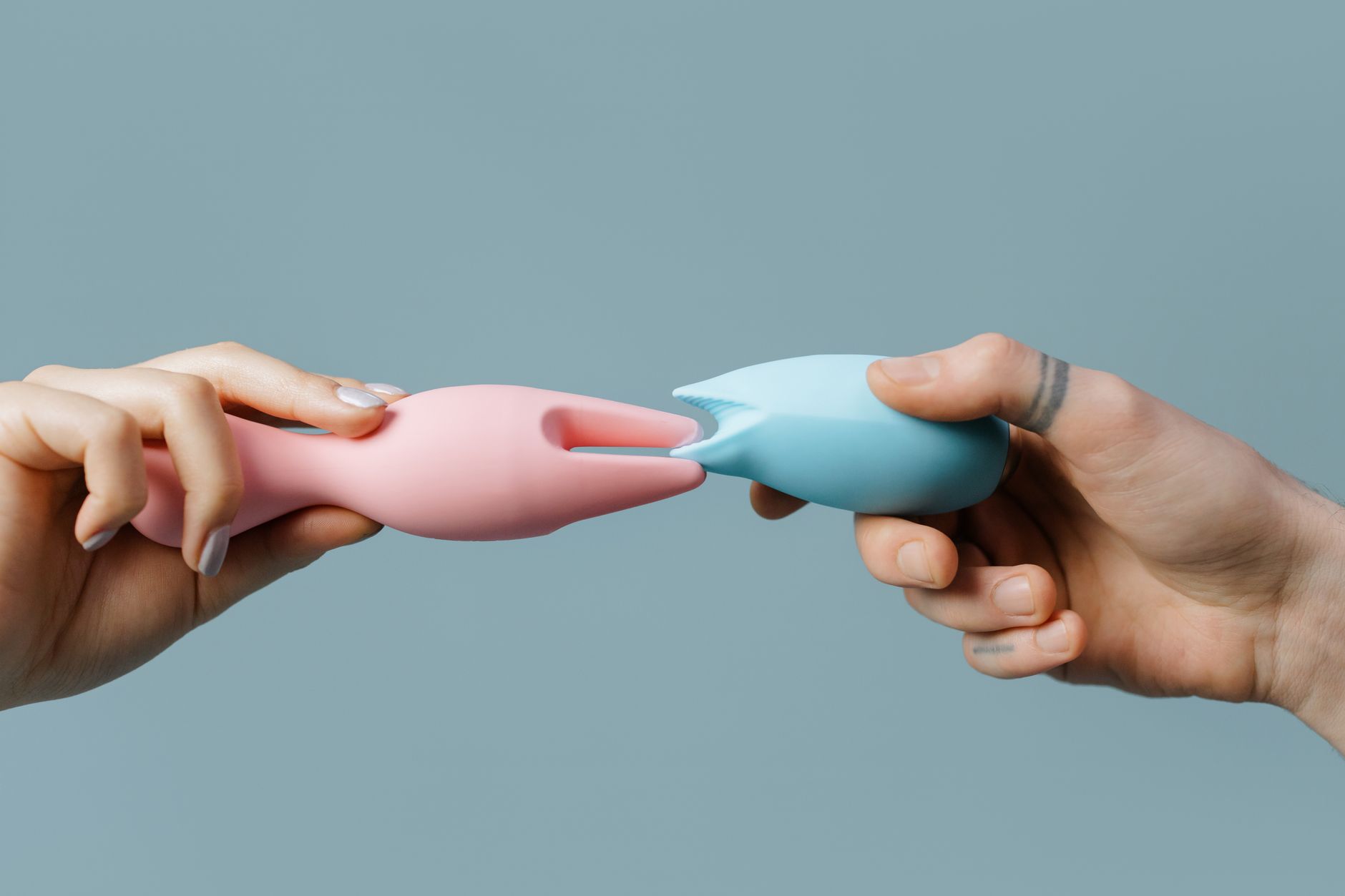
Photo by cottonbro studio on Pexels
Why suction technology matters more now
Lemon vibrators use air-suction stimulation, which is a completely different sensation pathway than traditional vibration. Here's why that matters for parental brains specifically.
Traditional vibrators demand focus. You have to angle yourself, create the right pressure, manage the intensity. Your brain is still working. A lemon clitoral vibrator using suction technology does something different. It creates a sealed contact that stimulates through gentle pressure change rather than mechanical buzzing. Your brain can actually shut off.
That might sound small. It's not. When your nervous system is running at 85% capacity just managing the household, a toy that lets you bypass the performance aspect and go directly to sensation is the difference between "I could try" and "I actually want to."
The suction sensation also feels distinct enough from partner touch that it doesn't trigger the touched-out response. Many parents find they can use a lemon vibrator in the same window they'd recoil from a partner's hand. It's not personal. It's just neurological real estate.
Timing and context matter more than you think
Don't try to resurrect desire in the margins. That's a setup for failure.
Instead, you need to create what I call a "transition ritual." This is 10-15 minutes that belongs entirely to you and is completely separate from parenting. Not a "quickie between wake-ups." A real break. This might be after kids are asleep, before they wake up, or during a nap window if you're home during the day.
The ritual doesn't have to include sex or even intention around arousal. It's just permission to exist as a body instead of as a function. Shower, lie in bed, put on music you like, and sit with yourself. Use your lemon vibrator without any goal of orgasm. The goal is sensation. The goal is reconnection.
Most parents find that when they do this consistently, arousal begins to build on its own. You're not forcing it. You're just removing enough obstacles that your body remembers it has capacity for pleasure.
The conversation you need to have with your partner
If you have a co-parent or partner, they need to understand something specific. Your loss of arousal is not about them, and it's definitely not about the relationship being broken. But avoiding the conversation because it feels fragile will make it worse.
Here's what works. Say something like: "My arousal is lower right now because my nervous system is overloaded. That's not a referendum on you or us. But I want to reclaim this part of myself, and that's going to look different than it did before. I might need more transition time. I might need to explore solo pleasure first. I might need us to rethink our timing."
Then actually rethink the timing. If you've been waiting for evening sex and you're a morning person, switch it. If Saturday nights have always been your thing and you're exhausted by Saturday, try Wednesday. If partner sex feels obligatory, skip it for a month and focus on solo reconnection. You're not rejecting your partner. You're being honest about what your body can actually access right now.
How to use your lemon vibrator in this context
Start alone. Set a timer for 20 minutes and give yourself permission to do nothing but feel sensations. Use pattern 1 or 2 on your lemon vibrator (suction vibrators have less intense patterns than traditional toys, which is helpful when you're retraining your body).
Don't aim for orgasm. That creates performance pressure, which is exactly what shut down your arousal in the first place. Just feel what it feels like to prioritize your own pleasure. Your arousal might be flat. That's fine. You're training your nervous system that pleasure is safe and that it's something you deserve.
After a few weeks of solo exploration, consider whether partnered sex feels different. It often does. You've reminded your body what activation feels like, and that memory carries over into partnered intimacy.
One practical note. If you're touched out during the day, using a lemon clitoral vibrator in the evening might feel like too much physical input. But many parents find that solo pleasure actually reduces the touched-out feeling over time. It's cathartic. It's not performed. It's just for you.
The permission you actually need
Parents (especially mothers) are taught that desire is selfish or that prioritizing pleasure means neglecting your kids. That's nonsense. A parent who has access to their own sensuality is more present, more relaxed, and more able to show up authentically. You're not taking something away from your children by reclaiming your sexuality. You're modeling that your body and your pleasure matter.
Your arousal has been waiting. It hasn't left. It's just been pushed into the background by legitimate demands and legitimate exhaustion. A lemon vibrator isn't a magic fix. But it's a tool that lets you access sensation without the cognitive load of traditional sex, and sometimes that's exactly what a parental nervous system needs to remember what desire feels like.
Start small. Stay consistent. Be patient with yourself. Your body knows how to feel pleasure. It just needs permission and the right conditions to remember.
People also ask
How long does it take to rebuild arousal after having children?
There's no universal timeline. Some people report renewed interest within a few weeks of consistent solo exploration. Others take months. The key is consistency, not speed. Your nervous system needs to learn that pleasure is safe and available, and that learning happens through repetition, not intensity. If you're using a lemon clitoral vibrator 2-3 times per week, you're likely to notice shifts in interest or sensation within 4-6 weeks. But the deeper shift, where desire feels integrated back into your identity rather than like an obligation, often takes longer.
Is it normal to feel turned off by partner touch when you're touched out from parenting?
Completely normal. Touch saturation is a real neurological phenomenon. Your nervous system has a bandwidth for touch input, and when it's filled by children's demands, there literally isn't capacity for partner touch. This doesn't mean you're losing attraction or that the relationship is breaking. It means your nervous system needs a break. Many people find that solo pleasure with a tool like a lemon vibrator actually eases the touched-out feeling because it's not demanding, not performance-based, and entirely self-directed. Your partner touch often feels less invasive once you've reclaimed pleasure on your own terms.
Can using a lemon vibrator alone help rebuild intimacy with a partner?
Yes, often. When you reconnect with your own arousal through solo play, you're training your nervous system that pleasure is available. That shifts your baseline. You might have more interest in partner sex. You might feel less performance pressure because you already know what activation feels like. You might also discover what you actually want, which makes partnered sex easier because you're not guessing or performing for them. The solo work is the foundation. The partnered work builds on that foundation.
What if I'm using a lemon vibrator and I still feel nothing?
First, give it time. You're retraining a nervous system that's been in shutdown mode. Second, check your context. Are you actually getting transition time, or are you squeezing this in between tasks? That matters hugely. Third, consider whether medication (like antidepressants) might be affecting sensation. Some medications genuinely suppress arousal, and that's worth discussing with your doctor. If none of those apply, see if a different lemon suction vibrator pattern or intensity level feels better. But most importantly, remember that numbness or flatness is not failure. It's information. Your body is telling you something about what it needs.
Should I tell my partner I'm using a lemon vibrator for solo pleasure?
That depends on your relationship. Some partners find it hot. Some feel insecure. Some don't need to know. What matters is being honest with yourself about why you're using it. If it's to reconnect with your own body and build arousal capacity, that's healthy and valuable. If it's because you're hiding from your partner or avoiding the real conversation about intimacy, that's a different problem that requires talking. In most cases, telling your partner (framed as "I want to reconnect with my body and I'm trying something that helps") leads to better outcomes than secrecy. But you know your relationship better than anyone.
Is lower arousal after children permanent?
No. With consistent attention, nervous system regulation, and sometimes with professional support, arousal returns. It doesn't always look the same as it did before children. You might have less spontaneous desire and more responsive desire (arousal that builds once you start). That's not worse. It's just different. Many people find that the arousal that returns post-children is actually richer because it's less driven by performance and more connected to genuine sensation. Using tools like a lemon vibrator can speed up that reconnection significantly.
Moving forward
Parenthood doesn't end sexuality. It interrupts it, and interruption feels like erasure when you're in the middle of it. But interruption is temporary. Your arousal is still there. It's waiting. A lemon vibrator, combined with honest timing, nervous system awareness, and permission to reclaim your own sensuality, can bridge the gap between the exhausted parent you are right now and the sensual person you still are. You don't have to choose. You get to be both.
Ready to reconnect with your body? Let's talk about what approach might work best for your situation.