Let's name what's actually happening
You've got a new partner. Things are moving toward the bedroom. And suddenly your body feels like it's running on dial-up. Your mind is doing laps: Are they judging me? Am I taking too long? Should I have shaved differently? Is this normal? What if I can't come?
That's not a sign your body is broken. That's anxiety doing what anxiety does best: hijacking your nervous system.
Why new partner anxiety kills arousal
Here's the neuroscience: when you're anxious, your sympathetic nervous system (fight-or-flight) is running the show. Arousal lives in the parasympathetic nervous system (rest-and-digest). You can't live in both places at once. So your body literally cannot build the blood flow, lubrication, and sensation that pleasure requires.
It's not about attraction or desire. You can want someone desperately and still have your body refuse to cooperate because your brain is convinced you're in danger.
Adding a partner into the equation makes it worse. Solo, you're only managing your own nervous system. With someone else, you're also unconsciously managing theirs. You're reading their breathing, watching for judgment, calibrating your responses to their tempo. That's exhausting. And it's completely normal.
The anxiety isn't a personality flaw or a sign you should bail. It's a signal that your nervous system needs a different approach.
Why a lemon clitoral vibrator helps specifically
Here's what makes a lemon vibrator different from a partner's touch: it's predictable.
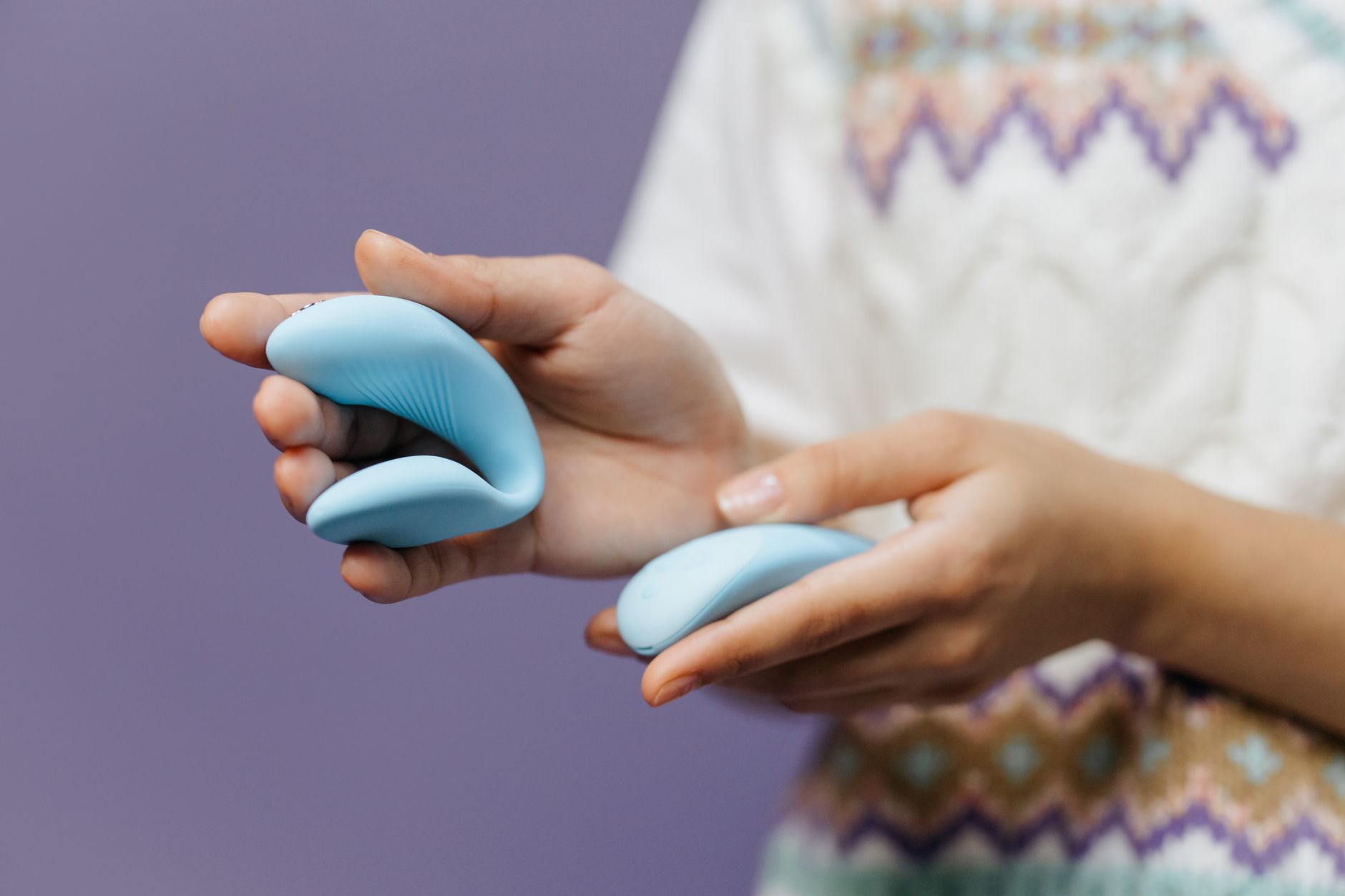
A lemon suction vibrator like the Lem uses consistent, rhythmic stimulation that doesn't change based on what someone else is doing or feeling. That consistency actually calms your nervous system. You know exactly what pattern is coming next. There's no guesswork, no reading someone's emotional state, no fear of messing up the tempo.
Second, the suction mechanism on a lemon clitoral vibrator creates broad, gentle stimulation instead of direct friction. For someone in an anxious headspace, this matters. Direct touch can feel overstimulating when your nervous system is already in overdrive. Suction feels diffused and forgiving. You can't "do it wrong."
Third, using a lemon vibrator before or during partnered sex gives you a legitimate reason to focus entirely on your own sensation first. You're not waiting for your partner to figure out what works. You're not wondering if you're "performing" well. You're literally just following what the vibrator is showing you feels good.
That reorientation to your own body is everything when anxiety is the problem.
How to use a lemon vibrator solo first
Before you bring it anywhere near partnered sex, spend time alone with it. This is not optional. Here's why: when you explore a lemon clitoral vibrator by yourself, your nervous system learns that this specific sensation is safe. You get to press pause whenever you want. You get to speed up or slow down on your own timeline. There's zero performance pressure.
Start with the lowest intensity setting on the Lem. Nancy's lemon vibrator has a gentle ramp-up that doesn't assault your system. Spend a few sessions just experimenting. What pattern feels calming? Which one builds sensation without anxiety spiking? You're basically training your nervous system to recognize this tool as something that helps you, not something that adds more pressure.
Do this solo work a few times before bringing it into partnered space. This foundation is what lets you actually relax with a partner nearby.
Introducing it with your partner
The conversation matters more than the tool. Something like: "Hey, I get in my head a bit when we're together. I want to try using a vibrator on my own while we're intimate. It helps me relax and feel my own sensation. That okay with you?" Most partners are relieved you've named the thing instead of them trying to guess.
The first time, you might use the lemon vibrator while they're just present. Not touching you. Not watching intensely. Just existing in the room. That's enough. Your nervous system learns: okay, I can still feel pleasure even when someone else is here.
Next iteration, they might touch you while you use it. Or be inside you while you use it externally. You're gradually layering in their presence without it forcing you back into anxiety mode.
The key is that you're still the one in control of your own sensation. The lemon suction vibrator is your anchor. You're not waiting for them to figure out what turns you on. You're showing them.
The specific settings that help with anxiety
Patterns 2 and 3 on most lemon vibrators feel the most soothing for people managing anxiety. They're rhythmic without being urgent. Pulse patterns work better than straight vibration because there's a breath-like quality to them.
If you're in your head, lower intensity first, then choose rhythm. The strongest setting won't help if your nervous system is still in overdrive. Start slow, stay there for a few minutes, and let your body actually register what's happening.
Many people with anxiety find that 8-10 minutes of buildup with a lemon vibrator before partnered touch helps them cross the threshold from anxious to aroused. It's like warming up before exercise. Your body needs time to transition nervous systems.
What happens after
Once you've achieved arousal with a lemon clitoral vibrator, even if it takes time, your nervous system now has proof: okay, pleasure is still possible with this person. That's the breakthrough. The next time might be slightly easier because your brain isn't fighting as hard against the possibility.
You might find you need the vibrator every time for a while. You might find you need it less frequently over time. Both are normal. Anxiety doesn't disappear overnight. But using a lemon vibrator gives you a reliable tool that works regardless of whether your partner is having a good day, feeling insecure, or is slightly off their game.
Sex with a new partner will always have some nervous energy. That's part of why it matters. But when anxiety crosses from "slight jitters" into "my body won't cooperate," a lemon suction vibrator is one of the few tools that actually helps your nervous system downshift instead of asking you to just "relax" (which, as we know, is impossible).
FAQ
Does using a vibrator with anxiety mean I'm not attracted to my partner?
Absolutely not. Anxiety and attraction are completely separate systems. People have shown up for partners they're wildly attracted to while their nervous systems are screaming about danger. Anxiety is about your past, your nervous system regulation, and sometimes just the vulnerability of being new with someone. A lemon vibrator doesn't contradict attraction. It supports your body's ability to actually feel it.
Will my new partner feel hurt if I bring a vibrator into sex?
Some initial surprise, maybe. Hurt, usually not, especially if you frame it as a tool that helps you relax rather than something he's missing. Most partners actually feel relieved. It takes pressure off them to be the sole source of your pleasure, and it often makes the experience better for both of you because you're actually present instead of in your head.
How long does it usually take before anxiety stops blocking arousal?
It varies wildly. Some people need a lemon vibrator for a few weeks, then move away from it. Others keep one in the rotation long-term because they love how it feels. There's no timeline where you "should" be over this by now. Your nervous system learns at its own pace. The Lem or another lemon clitoral vibrator just accelerates that learning.
Can I use a lemon vibrator if I'm on antidepressants that affect sensation?
Yes. Antidepressants often numb sensation, which can feel like anxiety is worse because you're fighting even harder to feel anything. A lemon vibrator's broad suction stimulation can actually cut through that numbness better than other toys. You might need to experiment with intensity settings, but the mechanism itself is gentler on medication-affected sensation.
Should I hide the vibrator or keep it visible?
That's up to you and your partner's comfort level. Keeping a lemon vibrator in a drawer you can access easily means less anxiety about fetching it (you don't want to kill the mood running around looking for it). Some partners like knowing it's there. Some prefer not thinking about it until the moment arrives. Whatever reduces friction is the right call.
What if my partner wants to use the vibrator on me but that makes me more anxious?
Then don't. At least not at first. Control is huge when anxiety is the issue. You using the vibrator on yourself keeps you in the driver's seat. Partner-operated tools come later, once you've already proven to your nervous system that pleasure is possible with them in the room. Start solo, then together, then partner-led. That progression respects where your system actually is.
The bigger picture
Anxiety about pleasure with a new partner is not a sign something is wrong with you. It's a sign you're human, you care, and your nervous system is trying to protect you. A lemon vibrator is a tool that helps your body remember what's possible when your mind is trying to keep you safe.
Your pleasure matters. Your comfort matters more than being "easy" or "low-maintenance." Any partner worth staying with will appreciate you naming what you need and finding a way to get there together.
If you're in the thick of this right now, start solo. Get comfortable with your lemon clitoral vibrator on your own terms. Then slowly invite your partner in. Your nervous system will shift. It might take weeks. It might take months. But tools like lemon vibrators exist exactly because this is real and common and actually solvable.
You don't have to white-knuckle your way through new relationship anxiety. You can use a lemon vibrator instead.