Let's name the thing nobody talks about
You want sex more often than your partner does. Maybe it's a big gap. Maybe it's subtle. Either way, you've probably started tracking their initiation patterns, wondering if it's about you, about them, about the relationship, or about something else entirely. The math is exhausting, and the sting is real.
Here's what I see in my practice: desire mismatch is one of the most common relationship friction points, and it's almost never about not loving each other. It's usually about stress, bandwidth, hormones, medication, work pressure, or just having different baseline sex drives. And it's fixable. Not by forcing your partner to want sex more, but by removing the pressure cooker that mismatched initiation creates for both of you.
A lemon clitoral vibrator can be part of that solution. Not as a replacement for partnered sex, but as a release valve that keeps you connected to your own pleasure while your partner stays exactly where they are.
Why the pressure is worse than the mismatch itself
When you initiate more, two things happen. First, rejection starts to sting differently. It's not just "not tonight." It becomes evidence: maybe they don't want me, maybe I'm annoying, maybe I'm asking for too much. Second, you stop initiating naturally. You start strategizing. You test the waters. You check their mood. You become a pleasure detective instead of just a person who wants to have sex.
Your partner feels this energy. They feel you reading them, waiting, hoping. That's not sexy. It's not their fault. It's the system breaking down.
Using a lemon vibrator for solo pleasure decouples your sexual well-being from your partner's daily bandwidth. Your orgasm doesn't depend on them. Your pleasure is not contingent on their mood swing or their work deadline. This is the part that actually matters: once you're not waiting for them to want you, the entire dynamic softens. When they do initiate, it lands differently. It feels like connection instead of relief.
How to frame this with your partner (the conversation part)
Don't lead with "I'm going to use a vibrator because you don't want me enough." That's not the message. The message is: "I want to take care of my own pleasure more directly. This isn't about you not being enough. It's about me not putting all my sexual energy into one channel."
Most partners are relieved to hear this. They're usually carrying guilt about the mismatch too. They may feel pressure to perform, or confused about why their desire doesn't match yours, or worried they're letting you down. Knowing you have another outlet actually gives them permission to be honest about their own baseline.
If your partner is uncomfortable with you using a lemon vibrator solo, that's worth exploring separately. It usually means they have anxiety about what it represents, not about the vibrator itself. A therapist can help sort that. But for most couples, this conversation opens a door instead of closing one.
The practical setup: using a lemon vibrator when he or she isn't in the mood
Timing matters. You don't want to use your lemon clitoral vibrator right after they've turned you down. That's too raw. Wait a few days. Then, when you have privacy and you're actually turned on, spend time with yourself the way you'd spend time with a partner.
With a lemon vibrator or other clitoral massager, start with lower patterns. The suction sensation is different from traditional vibration. It builds slowly. Let yourself feel aroused first. Don't rush to the finish line. Notice what your body actually wants. Does this pattern feel better on the left or the right? Do you want more pressure or less? What makes you pause and breathe?
This is the part that actually repairs the mismatch issue. You're learning what turns you on independent of your partner's presence. You're building a sexual self that doesn't need permission. That confidence changes everything about how you show up in partnered sex later.
Most people find that solo pleasure with a good tool like a lemon vibrator takes 15 to 25 minutes. It's not rushed. It's not a substitute for partnered sex. It's a separate, complete experience that belongs to you.
The conversation after solo pleasure (optional but powerful)
You don't have to tell your partner every time. But if you want to deepen intimacy, some couples find it helpful to share. "I used my lemon vibrator last night and it was really good" is a simple sentence that says: I'm taking care of myself, I'm still interested in pleasure, I'm not resentful, and I'm giving you space to be where you are.
Some partners want to know the details. Some don't. Some want to watch sometimes. Let that evolve. The point is that you're removing shame and secrecy, which are the real killers in mismatched-desire situations.
When to use it and when to suggest partnered alternatives
If your partner initiates, say yes. Not every time, but often. Your solo pleasure practice isn't supposed to replace sex with them. It's supposed to replace the desperation and the keeping-score.
Sometimes, though, you'll notice your partner becoming more interested once the pressure lifts. This isn't magic. It's just what happens when someone knows you're not resenting them for not wanting you. They relax. They become more interested in pleasure generally. There's real data on this. Couples who reduce performance pressure often find their desire naturally converges a bit.
In the meantime, your lemon clitoral vibrator is not a consolation prize. It's a tool for your own sexual autonomy. That's worth protecting and celebrating.
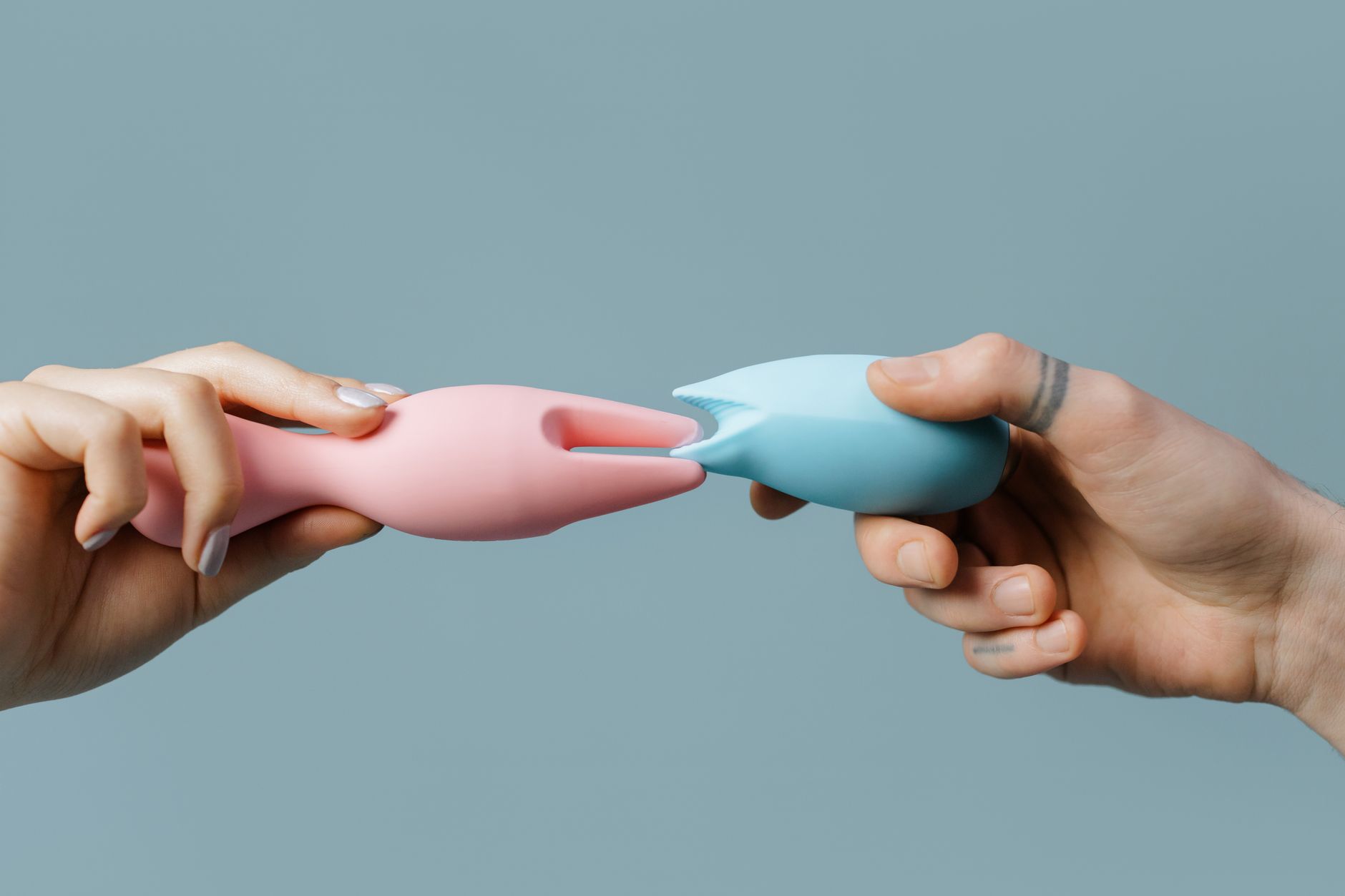
Photo by cottonbro studio on Pexels
The longer view: how this actually strengthens your relationship
Mismatched desire ends marriages because it becomes a symbol of everything else wrong. "You don't want me" turns into "you don't respect me, you don't care about me, we're incompatible." But desire mismatch is usually just a mismatch. It's not a referendum on the relationship.
When you stop making your partner's initiation the barometer of your self-worth, the whole dynamic shifts. You're more relaxed. You're not resentful. You're not tracking. You're actually happier. And people want to be intimate with happier, less resentful partners.
Several couples I work with have told me that introducing solo pleasure actually improved their sex life because it gave them permission to want different things at different times. One partner used a lemon vibrator on nights when they wanted release but their partner was asleep or working. The other partner sometimes watched, sometimes just knew it was happening and felt relieved they didn't have to perform. Over time, they had more partnered sex, not less, because the pressure was gone.
Your lemon sexual toy is not a relationship band-aid. But it is a way of saying: I'm taking responsibility for my own pleasure. I'm not going to resent you for having a different rhythm. And I'm staying connected to what feels good to me. That's actually the foundation of a strong sex life.
FAQ: What people actually ask
Is it normal to want sex more often than your partner?
Yes. Desire discrepancy is one of the most common issues I see in long-term relationships. It can be caused by stress, medication, hormones, different baseline drives, or phases of life. It doesn't mean anyone is broken or the relationship is failing.
Will using a lemon vibrator make my partner less interested in having sex with me?
No. The opposite is usually true. When you remove the pressure of being the only source of your partner's sexual satisfaction, they often relax into intimacy more. The anxiety that creates mismatched desire often lifts a little.
What if my partner feels threatened by me using a lemon clitoral vibrator?
That's worth a conversation, ideally with a therapist. It usually indicates anxiety about what the vibrator represents (threat to manhood, fear of being replaced, worry about what you're imagining) rather than actual discomfort with the object. Some partners are threatened by solo pleasure because they haven't had permission to think of their partner as a sexual being independent of them. That's something to work through together.
How often should I use a lemon vibrator if my partner isn't initiating?
As often as you want, without resentment. If you're using it because you're angry at your partner, that's worth noticing. If you're using it because it feels good and you deserve pleasure, use it. The frequency will probably shift over time as your relationship evolves.
Can we use a lemon vibrator together if my partner initiates less?
Absolutely. Some couples find that using a clitoral vibrator during partnered sex takes pressure off performance and actually makes both partners more comfortable. If your partner is worried about lasting long enough or whether you'll finish, introducing a lemon vibrator can help you both relax into pleasure instead of anxiety.
What if we have very different baseline sex drives and this doesn't fix it?
Then you probably need to talk to a therapist who specializes in desire issues. Solo pleasure tools like a lemon vibrator can help bridge the gap, but they're not a complete solution if the drive difference is really stark. Sometimes couples need support to figure out what desire mismatch actually means in their relationship and whether they can live with it happily. That's not a failure. That's honesty.
You deserve pleasure that doesn't depend on someone else's mood
Let me be clear: wanting sex more than your partner isn't a character flaw. It doesn't make you needy or demanding. And it's not something you have to white-knuckle through in silence or resentment. A lemon vibrator gives you access to your own pleasure without waiting. That's not settling. That's resourcefulness.
If you want to explore what's actually driving the mismatch in your relationship, or if the gap feels genuinely incompatible, reach out to talk through it. But in the meantime, your pleasure is worth taking seriously on your own terms.