Let's talk about what actually happens to your libido after 35
Here's the thing nobody tells you: your libido doesn't decrease after 35. It transforms. And honestly, that transformation is less "goodbye to sex" and more "hello to a different version of desire." Most of what you've heard about sex drive declining with age falls into two camps. Either someone's catastrophizing ("It's all downhill from here") or being absurdly cheerful ("Nothing changes, you're fine!"). Both miss what's really going on.
The science is clear, but it's also more nuanced than any clickbait headline wants to admit. Yes, your hormones shift. Yes, your body responds differently. But the desire part? That's more complicated, and frankly, more interesting than anyone lets on.
What actually changes in your brain and body
After 35, testosterone gradually decreases. This matters because testosterone fuels spontaneous desire in everyone, not just people with higher baseline testosterone. It's responsible for that "I want this right now" feeling that might have been easier to access at 25.
Estrogen patterns also start to shift, especially in your late 30s heading toward perimenopause. This affects tissue elasticity, natural lubrication, and how quickly your nervous system registers pleasure. Your pelvic floor muscles, which are critical to sensation and orgasm intensity, also respond to hormonal changes.
But here's what doesn't change: your capacity for pleasure. Your clitoral nerve density stays exactly the same. Your brain's reward system doesn't downgrade. The architecture of desire is still there. What changes is the access route.
Why your desire might feel scattered or slower to arrive
Three things happen simultaneously after 35, and they're worth naming separately.
First, spontaneous desire gets quieter. That spontaneous "I want sex right now" feeling often requires higher baseline testosterone. When testosterone drops, you're less likely to feel desire just walking through your day. This isn't dysfunction. It's neurochemistry.
Second, your body needs more runway. Arousal takes longer to build because tissue sensitivity changes slightly and your nervous system is processing more stress (career peaks, family demands, maybe aging parents). You're not broken. You're busy, and your body is responding to that accurately.
Third, context matters more. After 35, external factors start mattering wildly more to desire than they did at 25. Relationship dynamics, stress levels, how seen you feel by your partner, whether you're managing a chronic health condition. At 25, horniness could override almost anything. At 35 and beyond, your desire is more discerning. It wants context to feel safe.
Why a lemon clitoral vibrator helps navigate this shift
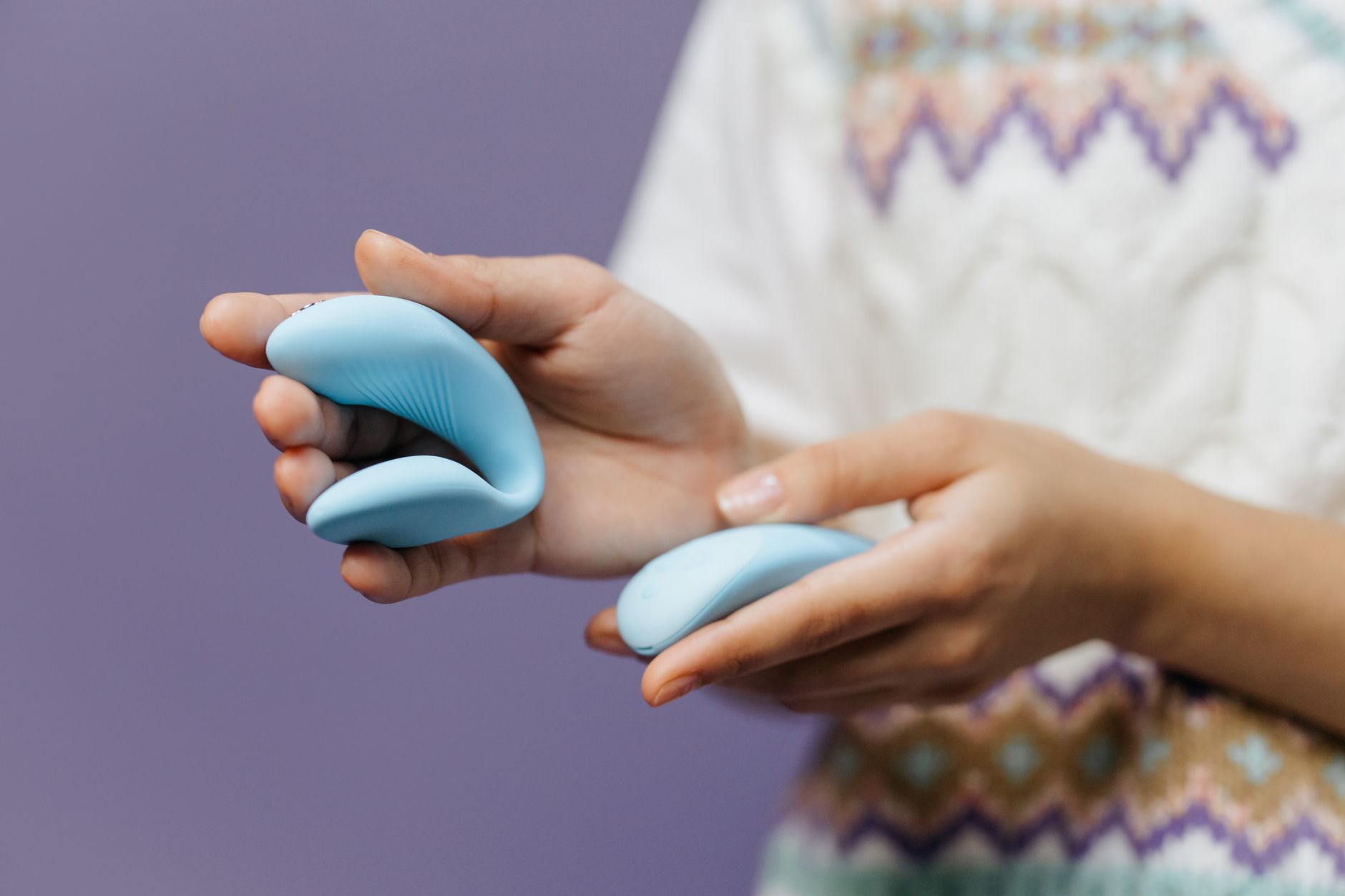
A tool like the lemon vibrator works specifically because it bypasses the waiting period. You don't need spontaneous desire to build. You can create focused, intentional pleasure in 10 minutes instead of spending 45 minutes trying to work yourself up.
The suction-based design of the Lem means you're not relying on friction or pressure, which can feel too intense as tissue sensitivity shifts. The air-pulse technology bypasses the arousal buildup entirely and speaks directly to your nerve endings. For people noticing that their previous go-to technique feels different after 35, this change is often a relief.
More importantly, using a lemon sexual toy gives you agency over the process. You're not waiting for spontaneous desire to appear. You're choosing pleasure deliberately. That distinction shifts everything psychologically, especially if you've internalized the narrative that your sex drive is supposed to feel effortless.
How to recalibrate your pleasure routine
Four practical adjustments that work well after 35.
Extend your warm-up time. Your body isn't slow. It's thorough. Budget 15 to 20 minutes for your nervous system to transition from "work and stress" to "this is safe and pleasurable." That might mean five minutes of deliberate breathing, five minutes of light touch, then five minutes with your lemon vibrator before increasing intensity. This isn't a step you're missing. This is your nervous system asking for what it needs.
Start lower and work up. Most lemon clitoral vibrators have multiple patterns and intensity levels. You don't need the highest setting. Patterns 1 and 2 on the Lem often feel more satisfying after 35 because they provide sustained sensation without overwhelming the nervous system. Your preference might shift entirely from what felt good at 28.
Build in transition time. If you're going from work stress directly into pleasure, your parasympathetic nervous system hasn't switched on yet. A five-minute shower, changing clothes, or even just putting your phone in another room signals to your body that this time is different. Your nervous system is literal. Treat this shift seriously, and your desire will meet you there.
Connect pleasure to choice, not spontaneity. After 35, a lot of satisfaction comes from deciding "I'm going to take 15 minutes for myself tonight" and following through. This is not less sexy than spontaneous desire. It's actually often more intense because you're showing up fully present rather than waiting for something to hijack your attention.
The role of your partner in this shift
If you're in a relationship, your partner might not understand that this change doesn't mean you're less attracted to them. Desire after 35 is often more relational and intentional, less hormonal and automatic. That's actually deeper, but it can feel like a loss if nobody explains what's happening.
When you're using a lemon vibrator solo, that's an opportunity to learn what your body wants at this new life stage. When you bring that knowledge back to your partner, you're not asking them to solve a problem. You're offering them a map. Many couples find that using a lemon clitoral vibrator together actually deepens connection because both people are focused on sensation and presence instead of performing for the other.
The conversation isn't "my libido is broken." The conversation is "my desire works differently now, and here's what feels good."
When hormonal changes warrant professional attention
If your libido has completely flatlined and nothing's shifting it, that's worth a conversation with your doctor. Sometimes this signals low thyroid function, vitamin deficiency, or medication side effects that are worth addressing. Sometimes it's depression or anxiety showing up quietly as desire loss.
But if your desire is shifting rather than disappearing. If you're noticing it takes longer to warm up but you still get there. If you feel satisfied when you take time for it but you're just less likely to initiate spontaneously. That's not a problem. That's a normal evolution.
The pleasure that comes after the shift
Here's what I've seen with hundreds of clients: the majority of people who navigate this shift intentionally find their pleasure becomes richer, not smaller. You know your body better. You're less interested in performing and more interested in feeling. You understand what actually works instead of what you thought was supposed to work. You're pickier about your time, which means you're less likely to spend it on partners or scenarios that don't serve you.
Using lemon adult toys during this transition isn't settling. It's meeting yourself where you actually are instead of where you think you're supposed to be. Your libido after 35 isn't a downgrade. It's a redirect.
Frequently asked questions
How long does it take for desire to change noticeably after 35?
For most people, the shift starts gradually around 35 to 37 and becomes more apparent by 40. But everyone's timeline is different. Some people feel it by 38, others don't notice real changes until their mid-40s. Stress, relationship status, health status, and baseline hormones all affect the timeline. The point is that it's not sudden. You'll probably feel it arriving before you fully understand what's happening.
Can a lemon clitoral vibrator actually increase libido, or does it just work around low desire?
A lemon vibrator doesn't increase testosterone or reset your hormones, so it won't reverse the underlying shift. But it does something just as valuable: it shows your nervous system that pleasure is accessible and worth your time. That reminder alone often shifts how you approach your own pleasure. You start prioritizing it differently. You notice desire more when it arrives. The vibrator is the tool. The real work is recalibrating what you're looking for.
Is it normal that I'm less interested in spontaneous sex now but still enjoy it when I make time for it?
Completely normal. This is actually the most common pattern after 35. You're trading spontaneous desire for intentional pleasure, which honestly tends to feel more satisfying because you're showing up present instead of distracted. Your body isn't declining. It's setting boundaries and asking for what it needs.
Should I tell my partner about using a lemon vibrator if my libido is changing?
That depends on your relationship dynamic and communication style. If you usually talk about pleasure and curiosity, yeah, this is a natural conversation. If you're more private about solo pleasure, that's fine too. What matters is that you're reclaiming agency over your own sexuality instead of seeing it as something your partner is responsible for fixing. That clarity benefits the relationship either way.
Does using a lemon sexual toy regularly train your body to only respond to toys?
No. Your body doesn't "train" that way. If anything, learning what intensity and pattern actually work for you can enhance partner sex because you know what to ask for. You're not replacing one thing with another. You're adding information.
What if my partner's libido is high and mine is shifting lower?
This is one of the most common tension points after 35. The answer isn't for you to force desire you don't have or for your partner to suppress theirs. It's finding a rhythm that works for both of you. Sometimes a lemon clitoral vibrator becomes a bridge. Sometimes the answer is separating your partner's need for frequent sex from your need for quality over quantity. Sometimes it's both. The real work is honest conversation about what desire actually means to each person. If you need help navigating this, how to use a lemon vibrator when your partner wants more frequent intimacy covers this in depth.
What comes next
Your libido after 35 isn't a failure of the system. It's a pivot. Your desire isn't going anywhere. It's just asking for a different approach. Using a lemon vibrator, taking time for intentional pleasure, being honest about what your body needs now instead of what it needed 10 years ago. These aren't compromises. They're evolutions.
If you're navigating this shift and feeling stuck or uncertain, reaching out to talk through what's happening for you personally makes sense. Every person's experience is genuinely different. Get in touch, and we can explore what reclaiming your pleasure actually means for you right now.