Here's what scattered arousal actually is
Let's be real. Between career turbulence, aging parents, relationship renegotiation, financial pressure, and the general sense that your body is no longer on your side, your brain has basically moved into crisis management mode. Arousal requires presence. It requires bandwidth. And right now, you're running on fumes.
Scattered arousal during midlife transitions is not a libido problem. It's an attention problem. Your desire is there, but it's fractured across a dozen competing concerns. The good news: a lemon vibrator like the Lem is specifically designed to pull that scattered arousal into one focused point, which is exactly what your nervous system needs right now.
I've worked with hundreds of people navigating major life changes, and this pattern shows up constantly. The arousal is real. The problem is that nothing is holding it long enough to build.
Why your nervous system is working against you right now
When you're in a major transition, your parasympathetic nervous system (the relaxation response) is basically on layaway. You're operating from your sympathetic system, the one designed for "get this done, manage that, fix this." Arousal needs parasympathetic activation. You need to feel safe and resourced to access real desire.
Adding to this, midlife transitions often stack. Career shift plus relationship change plus aging body plus identity questions all landing at once. Your brain's threat detection system is cranked to eleven. Arousal gets treated like a luxury, a distraction from the real work of holding your life together.
The problem deepens when you try to force it. You recognize you want to want sex, so you create pressure to perform. And pressure is the fastest way to keep arousal scattered and elusive.
How a lemon vibrator helps anchor scattered attention
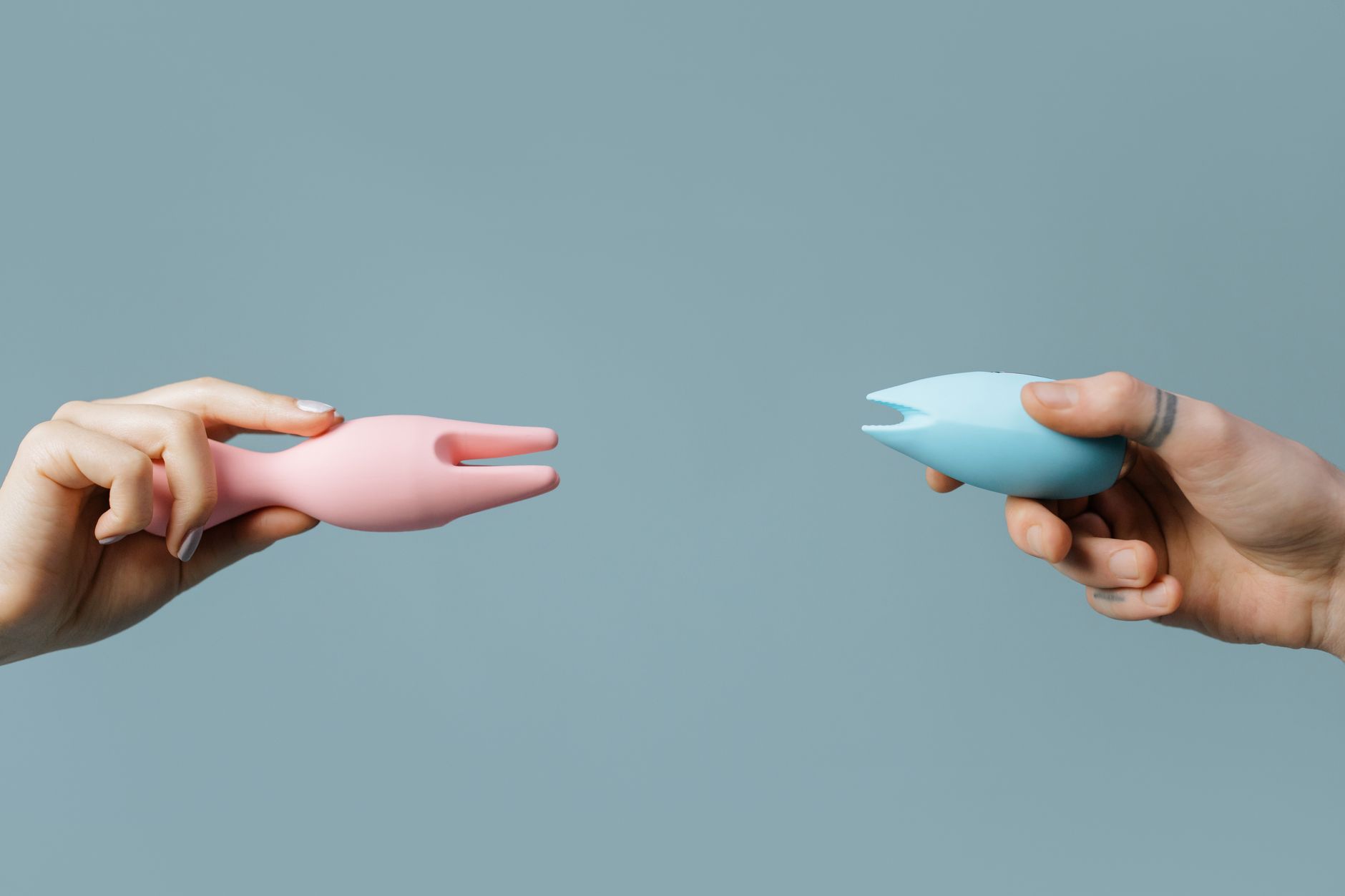
Here's where a lemon sexual toy becomes useful: it forces singularity. When you're using the Lem or another quality lemon clitoral vibrator, you're creating a focal point that's specific enough to interrupt the scattered-ness, but broad enough (thanks to the suction-pulse technology) that it doesn't require laser-focused intensity.
Think of it this way. If you're trying to build arousal through thought or touch alone, you're competing with your brain's crisis mode. The work is all internal. But when you introduce a focused external stimulus, you're literally giving your nervous system permission to downshift. You're saying "here is something specific to attend to," and that permission is often enough to quiet some of the background noise.
The Lem's suction-pulse design is particularly effective during transitions because it doesn't require you to be already aroused to feel something. You can start with low stimulation, and the sensation builds arousal gradually. You're not chasing a feeling that isn't there. You're creating conditions for it to emerge.
The three-step protocol for scattered desire
Step 1: Create a dedicated window. This is non-negotiable. Not "whenever you feel like it." A specific 20-minute block where you're off email, off your phone's notifications, off the mental to-do list. This isn't self-indulgence. This is nervous system medicine. Your brain needs to know this time is protected so it can actually relax into it.
Start small. Twenty minutes, twice a week. Not because that's the "right" amount, but because consistency matters more than duration when you're rebuilding attention capacity.
Step 2: Don't start with the vibrator. Start with your body. Two minutes of breathing, maybe some light touch on your collarbone or forearms. Somewhere that feels good but not sexual. This signals to your nervous system that this time is about sensation, not performance. Your scattered brain needs permission to settle first.
Step 3: Introduce the lemon vibrator on a low pattern. Start with Pattern 1 or 2 on the Lem. Give yourself five to ten minutes of gentle stimulation before you go higher. The goal is not to rush to orgasm. The goal is to notice what it feels like when one thing has your full attention.
Many people find that the first few sessions don't feel dramatically different. That's fine. You're training your nervous system to recognize that presence is safe. Arousal follows attention, not the other way around.
What scattered arousal looks like during major transitions
Scattered arousal has specific patterns. You might notice:
You start getting aroused and then suddenly think about a work project, your aging mother, or whether the car's due for maintenance. Your mind literally yanks the attention away mid-sensation.
You feel arousal building, but it feels thin. Not quite strong enough to commit to. So you keep escalating the intensity on the vibrator, chasing something that's already there but fragmented.
You can have an orgasm, but it feels disconnected from the rest of your body. The sensation is localized instead of full-system.
You notice you're "performing" arousal for yourself, watching yourself instead of inhabiting the sensation.
If any of these sound familiar, you're not broken. You're experiencing a neurological response to fragmentation. The lemon clitoral vibrator works because it's a tool that actually works with fragmented attention instead of against it. It doesn't ask you to think yourself into arousal. It gives you something specific to feel.
Partnered sex during scattered-arousal periods
If you have a partner, one conversation that matters: acknowledge that you're in a transition. Don't let scattered arousal become a relationship problem because neither of you understands it's neurological, not relational.
Here's a concrete move: consider solo time with the lemon vibrator as part of your intimacy work, not separate from it. You're rebuilding your relationship with sensation in isolation. That work strengthens everything else.
If you're having partnered sex during this time, go slower. Let your partner know that your arousal needs longer runway right now. That's not a failure. That's information. The people who do best during transitions are the ones whose partners see slowing down as intimacy, not a problem to solve.
You might also find that using a lemon vibrator together, if that's comfortable, actually helps your partner understand what's happening in your body. It's a tangible way to communicate needs that gets muddy in words.
The role of self-compassion in scattered arousal
Honestly though. The biggest shift I see people make during midlife transitions is internal. Scattered arousal often comes wrapped in shame. "Why can't I just be present? Why is sex taking so much effort? What's wrong with me?"
Nothing's wrong with you. You're navigating a major life transition and your nervous system is trying to keep you upright. Arousal is a luxury good that requires safety and presence. When those are in short supply, desire scatters.
Using a lemon vibrator is not "cheating" your way to arousal. It's a tool. The real work is permission. Permission to slow down. Permission to take 20 minutes that's entirely yours. Permission to notice that building arousal during a fragmented period is harder and that's completely normal.
When you use the Lem or another lemon sexual toy with that mindset, it becomes less about achieving an orgasm and more about teaching your nervous system that presence is possible. That's the shift that matters.
Practical adjustments as you rebuild
A few tactical things that help with scattered arousal specifically:
Use lube even if you don't think you need it. It lowers the activation energy for pleasure and takes friction out of the equation so you can focus on sensation.
Avoid scheduling sex right after high-stress periods. The cortisol from stress doesn't clear immediately. Give yourself a buffer. Take a walk, listen to something you love, settle first.
Notice patterns in your scattered-ness. Is it worse on certain days of the week? After certain types of work? When your partner is in the room? When you're alone? Information is useful.
Start keeping a small note about what helps. Did the Lem feel better at a particular pattern? Did the 20-minute window work better at morning or night? Your body will tell you what it needs if you pay attention.
Consider whether underlying anxiety or depression is playing a role. Scattered arousal can also be a symptom of something worth talking to a therapist about. A lemon vibrator is a tool, but it's not a substitute for care when you're going through something big.
What happens once arousal re-anchors
Most people find that after about four to six weeks of consistent, pressure-free time with a lemon clitoral vibrator, something shifts. Arousal starts to feel less scattered. It becomes easier to pull into focus. The fragmentation softens.
That doesn't mean the transition ends or the life pressure disappears. It means your nervous system has learned that presence is recoverable. That alone is a massive gain.
When arousal re-anchors, many people naturally want more frequency, more intensity, more exploration. You'll feel the difference. And by then, you're not fighting scattered attention anymore. You're working with a system that remembers how to focus.
People also ask
Is scattered arousal during midlife transitions permanent?
No. It's a response to genuine life stress and nervous system dysregulation. It shifts when conditions change and when you actively rebuild your capacity for presence. A lemon vibrator during this period isn't treating a permanent problem. It's a bridge tool that helps you practice focus while other things are in flux.
Can I use a lemon vibrator if I feel numb down there during a transition?
Yes, actually. The Lem's suction-pulse design is effective even when sensation feels muted because it stimulates in a way that doesn't depend on baseline sensitivity. If your clitoral area feels less responsive than usual, start on a lower pattern and give yourself longer warm-up time. Numbness during transitions is usually temporary, but a quality vibrator helps wake things up without force.
Should I be using a lemon sexual toy alone or with my partner during this time?
Both have value. Alone time with the vibrator helps you rebuild your individual relationship with pleasure without the pressure of performing for someone else. Partnered time helps you stay connected even when arousal is scattered. If I had to pick one, I'd prioritize solo time during heavy transition periods, then bring the vibrator into shared space once you feel more anchored.
How long does it usually take for scattered arousal to feel more focused?
Three to six weeks of consistent practice, if you're using the tool right (protected time, low pressure, regular use). Some people notice shifts faster. Others take longer, especially if the underlying transition is still active. The timeline matters less than consistency. Show up regularly, even when it feels like nothing's changing.
What if I use the lemon vibrator and still feel fragmented?
Then something else might be going on. Scattered arousal sometimes masks depression, anxiety, or unresolved relationship stuff. A vibrator is a tool, not a cure-all. If you've given it an honest try and you're still feeling completely disconnected, a conversation with a therapist or your doctor is worth having. Sometimes what looks like scattered arousal is actually a signal that you need support beyond what a toy can offer.
Can a lemon vibrator help if my partner's arousal is scattered too?
Not directly for them, but it can help communication. If you're both in a transition and both feeling scattered, using a vibrator together (or talking about it together) can normalize what's happening. It shifts the frame from "something's wrong with us" to "we're both navigating something and here's a tool that helps." That reframe often matters more than the vibrator itself.
The bottom line
Scattered arousal during a major midlife transition is a neurological response to life pressure, not a personal failure. Your nervous system is doing exactly what it's designed to do when things feel unsafe and fragmented.
A lemon clitoral vibrator like the Lem works during this period because it creates a focal point specific enough to interrupt the scattered-ness and broad enough to feel good without requiring perfect presence. You're not chasing arousal that isn't there. You're creating conditions for it to emerge.
The real work is permission. Permission to take 20 minutes that's entirely yours. Permission to slow down. Permission to use a tool that helps. That's what builds the capacity to feel present again, and presence is where real arousal lives.