
Pleasure after trauma is not the same as pleasure before it. That's okay.
Let's be real: orgasm after sexual trauma feels like reclaiming territory that was taken from you. For many survivors, the idea of intentional pleasure feels dangerous, unfamiliar, or even impossible. Your nervous system learned to protect you by shutting down sensation. That was smart. That kept you alive. But now you're ready to slowly, carefully teach your body that pleasure can be safe again.
This post is for survivors who are ready to explore orgasm in a way that honors their pace, their boundaries, and their body's unique needs. A lemon vibrator, with its gentle suction and gradual intensity, can be a powerful tool for this reclamation. But only if you approach it with intention and self-compassion.
Why lemon vibrators work for trauma recovery
Traditional vibrators often require direct pressure and consistent intensity. For many survivors, that feels invasive or triggers the nervous system. A lemon clitoral vibrator works differently. Instead of vibration, it uses air-pulse suction technology to stimulate the clitoris without the sensation of being touched directly. For trauma survivors, this distance matters. You're in control. You choose the speed. You can pause anytime.
The suction sensation also tends to feel more diffuse and less demanding than traditional vibration. It stimulates a wider nerve cluster across the clitoris rather than one intense point. Many survivors report that this feels less triggering, more exploratory, and easier to stay present with. When your nervous system has been through trauma, subtle and graduated stimulation lets you build sensation gradually, without overwhelm.
Before you start: the internal work
Before you even unbox a lemon vibrator, get clear on your readiness. This isn't about rushing. It's about honesty. Ask yourself these questions:
Am I doing this for me, or because I feel like I should? Reclaiming pleasure after trauma should never feel obligatory. If you're exploring orgasm because you think your partner expects it, or because you "should" be healed by now, pause. You're not ready yet, and that's fine. The work can wait until your internal motivation is solid.
Do I have a trauma therapist or counselor I can talk to? Ideally, yes. If you don't, that's not a barrier, but having professional support makes this journey safer. A therapist who specializes in trauma or somatic (body-based) healing can help you navigate triggers and grounding techniques if they arise.
Can I create a safe physical space? You'll need privacy, time, and a space where you feel genuinely secure. Not rushed. Not listening for footsteps. Your nervous system needs to know you won't be interrupted.
If you can answer yes to the second and third questions, you're ready to begin.
Setting up your first session
Treat this like an appointment with yourself. Not casual. Not multi-tasking. Dedicated time where your only job is to listen to your body.
Start in the afternoon or early evening, not late at night when exhaustion can make you less present. You want alertness and choice. Set a timer for 30 minutes, but don't watch the clock. The timer just gives you permission to take that much time without guilt. Longer sessions come later.
Before you touch the lemon vibrator, ground yourself. Lie down or sit in a comfortable position. Take five slow breaths. Notice five things you can see, four you can touch, three you can hear, two you can smell, one you can taste. This is the 5-4-3-2-1 grounding technique. It brings your nervous system back into the present moment and out of trauma memory.
Then slowly explore your body with your hands alone. Your arms, your legs, your chest. Get reacquainted with sensation that feels safe. This isn't foreplay. It's an audit of what your body already trusts. Take 5 to 10 minutes here.
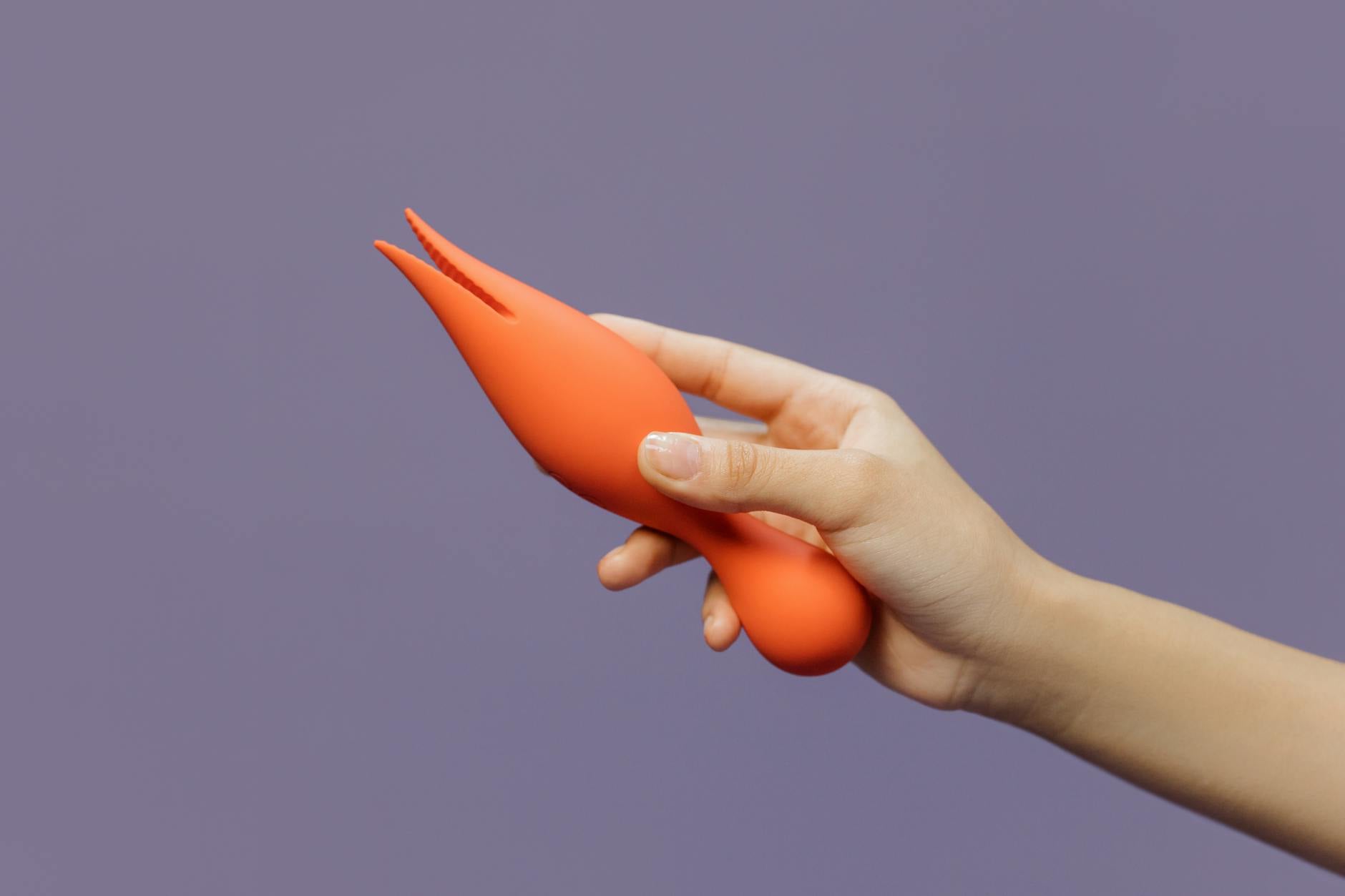
Photo by cottonbro studio on Pexels
Your first contact with the lemon vibrator
Don't go straight to your genitals. I know that sounds odd, but it matters. Your clitoris has trauma memories. Your vulva might feel unsafe. You're teaching your body a new language, so start somewhere neutral.
Turn the lemon vibrator on at pattern 1 (the lowest suction setting). Touch it to your forearm. Just feel it. Get curious. There's no right response. You might feel tingling, warmth, mild discomfort, or nothing much. All of these are normal. The goal isn't pleasure yet. The goal is familiarity.
Move it to your inner wrist, your collarbone, your hipbone. Give yourself 10 to 15 minutes to explore what this sensation feels like on neutral territory. If at any point it feels scary or wrong, stop. You're learning your own thresholds. That information is valuable.
When you're ready, move the lemon vibrator to the inner thigh. This is closer to your genitals but not yet on them. Hover it there for a minute. Notice what comes up emotionally. Curiosity? Fear? Numbness? Just observe it without judgment. Your nervous system is speaking. Listen.
Moving toward the clitoris
This is where patience becomes crucial. Trauma survivors often have what's called "sexual anesthesia," where the genital region feels numb or dissociated. This is protective. Your body literally shut down sensation to survive. Rebuilding it takes time.
When you're ready, move the lemon vibrator to the outer labia. Still not directly on the clitoris. Feel the sensation. Breathe. Some survivors find it helpful to narrate internally: "I'm safe. This is my body. I'm in control." Others need silence. You know what you need.
Stay here for a few minutes. If you feel grounded and present, move to the clitoral hood, the tissue that covers the clitoris. This is less sensitive and less triggering than direct clitoral contact. Use pattern 1 or 2, the lowest settings. The lemon vibrator is designed to feel gentle here. You're not chasing an orgasm. You're building tolerance and recognition that pleasure can be safe.
Direct clitoral stimulation comes next, but only if you've felt genuinely safe through the previous steps. Move the lemon vibrator directly onto the clitoris. You might feel a surge of sensation. You might feel nothing. Both are okay. Start with pattern 1. You can increase intensity later. Right now, you're just introducing the possibility.
What to do if a trigger emerges
You're doing this work and suddenly you feel panicky, dissociated, or flooded with memory. Your nervous system is signaling that it needs a break. This is not failure. This is information.
Stop immediately. Turn off the lemon vibrator. Ground yourself using the 5-4-3-2-1 technique again. Drink water. Move your body. Shake your arms and legs. Physical movement helps discharge the nervous system activation.
Talk to your therapist about what came up. There's no rush to try again tomorrow. Trauma recovery moves in cycles, not in a straight line. You might need three sessions before you move from the outer labia to the clitoris. You might need a month. This is completely normal and expected.
Building intensity gradually
Once you've had a few sessions where you felt safe, you can slowly experiment with higher intensity patterns on the lemon vibrator. Move from pattern 1 to pattern 2. Not because you need to, but because you're curious. There's a big difference between being pushed toward intensity and choosing it.
Many trauma survivors find that the gentlest patterns of the lemon clitoral vibrator deliver the most reliable pleasure recovery. You're not looking for intensity. You're looking for consistency and control. The gentle suction of the lemon vibrator lets you build arousal without feeling forced.
Orgasm might happen. It might not. Both outcomes are success. You're teaching your nervous system that touch is safe again. That's the real work.
After your session
After using the lemon vibrator, rest for 10 to 15 minutes. Don't jump up and get on with your day. Your nervous system just did something brave. Honor that. Lie down. Drink water. Journal if you want. Notice what you're feeling without judgment.
Many survivors feel emotional after pleasure work. Relief, grief, anger, joy, or confusion. All of it is normal. You've spent months or years protecting yourself by shutting down sensation. Reopening that door wakes up a lot of feelings. That's healing in motion.
If you feel numb or dissociated after, that's also normal. Your body might need a slower pace. You haven't done anything wrong. You've just learned something important about your own recovery timeline.
Managing expectations and partner communication
If you're in a relationship, your partner doesn't need to know about this journey unless you want them to. This is your pleasure. Your body. Your timeline. But if you do choose to share, be clear: "I'm doing this for me, at my own pace. I don't need your involvement or approval." How to Introduce a Lemon Vibrator When Your Partner Resists Toys has more strategies for those conversations.
Honestly, many survivors find that solo pleasure work with a lemon vibrator is deeply healing precisely because it's solitary. You're not performing. You're not managing someone else's feelings or desires. You're just reconnecting with your own body's capacity for joy. That's powerful work on its own.
What success looks like
Success is not having an orgasm. Success is showing up for yourself. Success is tolerating sensation that your nervous system previously rejected. Success is spending 30 minutes in your own body without dissociation. Success is using a lemon vibrator once and then putting it away, knowing you can return to it when you're ready.
If an orgasm happens, beautiful. If it doesn't, that's not a failure. The real victory is reclaiming the right to pursue pleasure without shame or force. You've survived something terrible. Now you get to slowly, carefully, courageously teach yourself that your body can feel good again. That's the work. That's enough.
FAQ: Pleasure recovery with a lemon vibrator
Is it normal to feel nothing when using a lemon clitoral vibrator after trauma?
Completely normal. Trauma causes sexual anesthesia, where the genital region feels numb or disconnected. Your body shut down sensation to protect you during the assault. Rebuilding sensation takes time, often weeks or months. Start with lower intensity settings on the lemon vibrator and spend time on neutral body areas first. Numbness isn't a sign you're broken. It's a sign your nervous system is still protecting itself. Patience and consistency rebuild sensation gradually.
Can I use a lemon vibrator if I have PTSD flashbacks during sex?
Yes, but with care. Flashbacks happen when the nervous system perceives threat. A lemon vibrator can actually help because you control every element: speed, pressure, when to stop. Many survivors find the gentleness and the sense of complete control makes flashbacks less likely. If flashbacks do occur, stop immediately and ground yourself. Work with a trauma therapist on grounding techniques before beginning. You might also use a lemon vibrator solo first, before ever introducing it with a partner.
How long does it take to have an orgasm after sexual trauma?
There's no timeline. Some survivors experience orgasm within weeks of starting pleasure work. Others take months. Some never experience traditional orgasm but discover other forms of pleasure. The goal isn't orgasm. The goal is rebuilding trust in your body. Focus on consistency, not outcomes. Use the lemon vibrator weekly if it feels good. If you haven't felt any pleasure progression after 3 months, check in with a trauma therapist. Sometimes the barrier is neurological, sometimes psychological, sometimes both.
Should I tell my therapist I'm using a lemon vibrator for trauma recovery?
If you have a trauma therapist or somatic therapist, yes. They need the full picture of your healing journey. They can help you distinguish between healing discomfort and triggering discomfort. They can teach you grounding techniques to use during sessions. They might suggest pacing adjustments. A good therapist won't shame you for this work. They'll support it.
What if I feel guilty or ashamed using a lemon vibrator after trauma?
That's a trauma response, not a character flaw. Trauma teaches us that pleasure is dangerous, selfish, or wrong. Using a lemon vibrator is actually an act of resistance and self-care. You're telling your body: "You deserve to feel good. You are safe." That guilt will ease as you repeat the experience and prove to your nervous system that pleasure doesn't lead to harm. Be gentle with yourself. Shame is the enemy of healing.
Can a lemon vibrator trigger me or cause retraumatization?
It's possible, but rare. The design of the lemon vibrator, with its gentle suction and user control, makes it less triggering than many sex toys. Start slow. Use the lowest settings first. Stop immediately if you feel scared or dissociated. Work with a therapist who can help you process any triggers that arise. Retraumatization isn't caused by the tool. It's caused by moving too fast or without adequate grounding. Slow down, breathe, and let your nervous system lead.
Your body deserves this
Reclaiming pleasure after sexual trauma is not frivolous. It's an act of profound self-respect. Your body survived something awful. Now it gets to slowly, carefully discover that sensation can be safe. That joy can live in the same nerves that carried pain. That you have agency, choice, and the right to feel good on your own terms.
A lemon vibrator is just a tool. The real work is your nervous system learning to trust again. Take your time. Breathe deeply. Listen to what your body tells you. And remember: healing is not linear, and neither is pleasure. Both happen in cycles, at their own pace. You're doing this right.