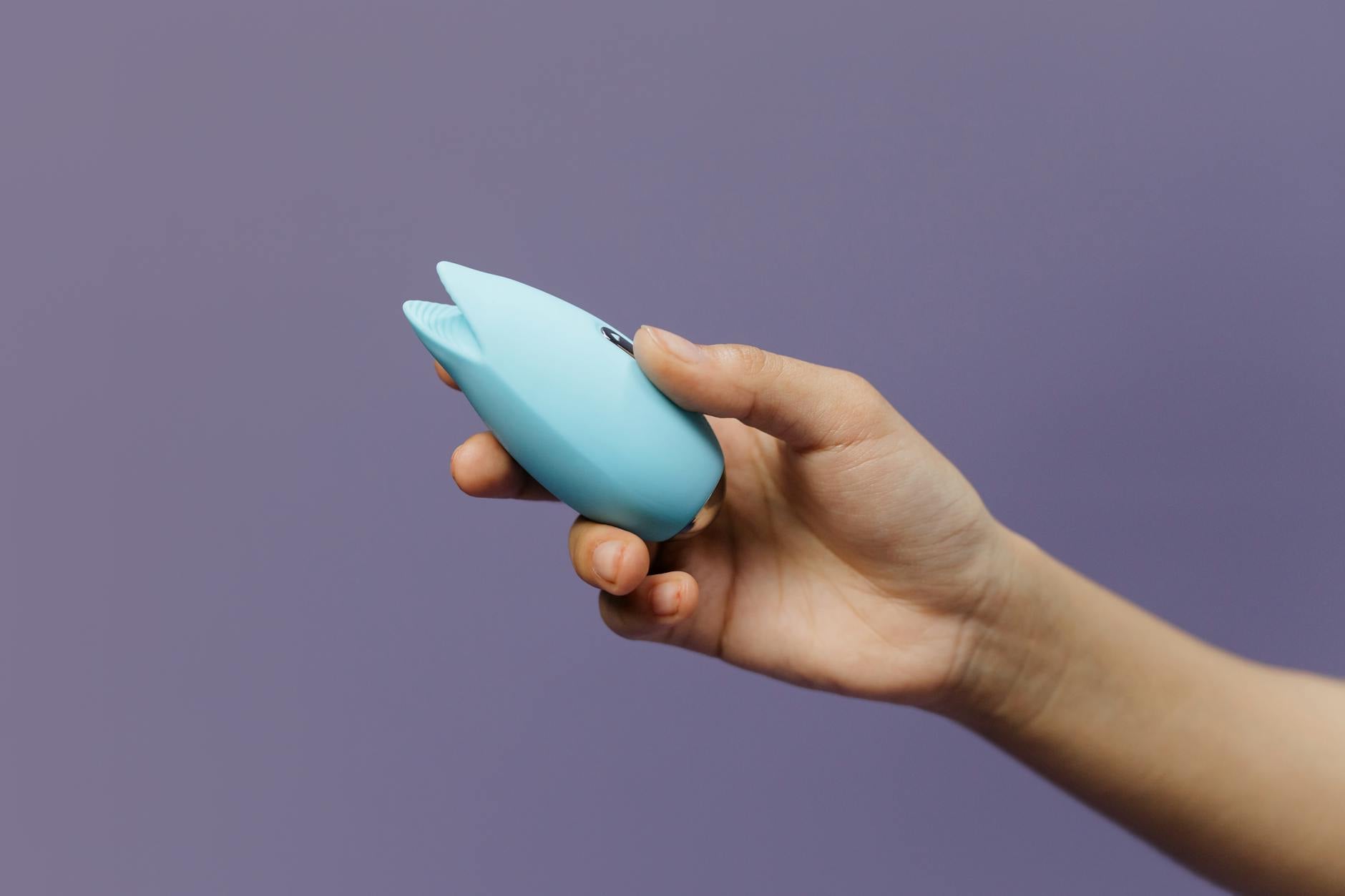
Let's start with the obvious part
You're not broken for wanting solo pleasure. That's the thing nobody tells you when guilt shows up, which is that guilt and desire don't actually cancel each other out. You can want something and feel weird about it at the same time. Both feelings are real. Both deserve attention.
Here's what happens in my therapy room almost weekly: someone comes in talking about their relationship, and buried three layers deep in the conversation is this quiet shame about solo time. They don't mention it for weeks. When they finally do, they're often shocked to hear that their partner uses toys, too, and has also felt guilty, and that the guilt itself is the thing worth unpacking, not the pleasure.
That's where a lemon clitoral vibrator enters the picture differently than you might think.
Where guilt actually comes from
It's rarely about the act itself. It's almost always about three things operating at once: cultural messaging, relational anxiety, and attention deficit.
Cultural messaging is the easiest to name. If you grew up in a household where masturbation wasn't discussed, or was framed as something men did but women didn't, or was lumped in with other private shame, that becomes your baseline. Pleasure becomes something you sneak, something that's a little dirty, something you should probably hide. That's not your fault. That's conditioning.
Relational anxiety is trickier. If you're partnered, there's often an unspoken rule that solo pleasure might mean something's wrong in the relationship. That your partner should be enough. That if you're using toys, you're admitting some failure. None of that is true, and also, I get why you feel it.
Attention deficit is the weirdest one. When you don't have permission to focus on your own pleasure, when it lives in the margins of your day, you can't actually settle into it. You're half present, half guilty, half watching the door. You can't be both present and checking over your shoulder. Presence is what actually makes solo pleasure good.
Why a lemon vibrator changes this dynamic
Here's the practical part: lemon suction vibrators work fast. Suction-based stimulation bypasses a lot of the anxiety that friction-based toys don't.
With traditional vibrators, you're managing pressure, angle, and speed. You're still performing, in a sense, even when you're alone. Your brain is engaged in the technical part of the experience. With a lemon clitoral vibrator, the suction does the work. You choose the pattern, hit the button, and the toy handles the rest. Your job is just to be present.
That sounds simple. It's radical.
When anxiety is sitting in your chest saying "this is selfish" or "you should be doing something more productive," a tool that requires less effort from you means more brain space to actually argue back. You're not distracted by logistics. You can actually notice pleasure happening instead of performing it.
The permission piece
Let me be direct about this: solo pleasure is not cheating on your partner. It's not a referendum on your relationship. It's not a betrayal, a replacement, or a substitute. It's maintenance.
Your body deserves to know what it feels like when it's fully stimulated, fully attended to, fully prioritized. That knowledge doesn't go away when your partner is in the room. It makes you a better, more confident, more present person in partnered sex. Study after study shows this. People who have solo pleasure tend to communicate better about what they want with partners.
So here's what I tell my clients: using a lemon vibrator for solo pleasure isn't something you need to hide from your partner, and it's also not something you need their permission for. It's yours. Full stop.
If your partner would react negatively to knowing you use a lemon clitoral vibrator, that's information. That's worth a conversation about what they're actually afraid of. Usually it's not the toy. It's fear you're not interested in them anymore, or that they're failing you somehow. Those are real fears. They're not true, but they're worth naming.
Getting started without the mental overhead
Four practical steps to make this easier:
1. Stop framing it as illicit. Solo time is maintenance. You wouldn't feel guilty about brushing your teeth or taking a shower. Reframe this in your head as self-care, because it is. Your nervous system deserves pleasure. That's not negotiable.
2. Make a dedicated time and space. Not sneaky time. Actual time. Twenty minutes on a Tuesday evening after work. Thirty minutes on a Sunday morning. Make it routine. Routine takes the planning anxiety out of it. You're not squeezing this in. You're scheduling it, like you would a walk or a cup of tea alone.
3. Leave your phone in another room. This one's non-negotiable. Guilt loves to pull you away right when you're settling in. The second you feel resistance, your brain will offer you seventeen reasons to check email. Don't let it.
4. Start with lower settings on your lemon vibrator. Pattern 1 or 2 on a lemon clitoral vibrator is honestly all most people need. The temptation when you're feeling guilty is to rush through it, to get the experience done fast so you can stop feeling weird. Slow down. Use the lowest setting. Stay present for at least ten minutes. Presence is what kills guilt, not speed.
What pleasure actually does to guilt
This is the part they don't teach you in health class: the more consistently you experience solo pleasure, the less guilt you feel. Not because the guilt disappears, but because your brain starts to reclassify the experience. Guilt is a signal that something is wrong. When you repeat an experience and nothing goes wrong, your nervous system eventually gets the message that it's safe.
This is why people who use tools like lemon vibrators regularly stop feeling weird about it. It's not because they talked themselves out of shame. It's because they rewired their baseline.
After a few weeks of solo time with zero consequences, the message shifts from "this is dangerous" to "this is normal." Your nervous system doesn't lie, but it does learn.
When guilt is actually worth listening to
One caveat: some guilt is worth paying attention to. If you feel guilty about solo pleasure because you're neglecting a partner who's expressed feeling disconnected, that's different. That's not guilt telling you to hide. That's guilt telling you that something in the relationship needs attention.
The fix isn't to stop using a lemon clitoral vibrator. The fix is usually to talk to your partner about what you both need. Sometimes that's more time together. Sometimes it's less pressure on partnered sex. Sometimes it's both people using toys together. All of those are conversations you can have.
But guilt that's just pure conditioning, that's just "women shouldn't enjoy their own bodies," that's the guilt worth ignoring.
The real thing that changes
When you stop fighting your own pleasure, something shifts. Not just in your body. In your whole nervous system. You spend less energy managing shame. You have more capacity to be present in your relationship, your work, your life. Solo pleasure isn't selfish. It's the opposite. It's the thing that gives you permission to take up space.
A lemon clitoral vibrator is just a tool. The real work is deciding that your pleasure matters, that you deserve to feel good, and that you're willing to stop apologizing for that. The vibrator just makes it easier to actually mean it.
People also ask
How often should I use a lemon vibrator for solo pleasure without feeling obsessed?
Daily solo pleasure is completely normal and healthy. There's no magic number where it becomes "too much." The only concern would be if solo pleasure is replacing sleep, work, or relational time, and honestly, that's rare. Most people find a rhythm that works and naturally stick to it. Two to four times a week is common, but daily is fine. If you're worried about frequency, the question to ask yourself is whether it's interfering with your actual life. For most people, it's not.
Will my partner think I don't want them if I use a lemon vibrator solo?
Not unless you make it weird by hiding it or framing it as a replacement. When you normalize solo pleasure as part of your routine, partners usually get it. If your partner does react badly, it's usually because they feel insecure, not because the toy is actually a problem. That's a conversation about security and reassurance, not about whether you should stop.
Should I tell my partner I'm using a lemon clitoral vibrator for solo pleasure?
That depends on your relationship and your comfort level. There's no rule that says you have to share everything. If you're partnered and live together, practical transparency usually makes life easier. "I'm taking twenty minutes for myself" is different from hiding it. But if you prefer privacy around solo pleasure, that's also okay. You don't owe anyone access to your solo time.
Does using a lemon suction vibrator actually reduce guilty feelings over time?
Yes, because repetition rewires your nervous system. Every time you use a lemon vibrator for solo pleasure and nothing bad happens, your brain files it under "safe." After a few weeks of consistent use, the association between solo pleasure and shame starts to dissolve. Not because you talked yourself out of it, but because your body learned a new pattern.
Can guilt about solo pleasure be a sign of deeper relationship problems?
Sometimes. If you feel guilty specifically because you've explicitly agreed not to use toys, or because your partner has told you they don't want you to, that's relational information worth examining. But guilt that's just conditioning, that comes from nothing your partner has actually said, is usually just internalized messaging. Those are different problems with different solutions.
What if I feel guilty even after I start using a lemon vibrator regularly?
That's normal, especially at first. Guilt doesn't disappear overnight. But it should soften after a few weeks of consistent, consequence-free solo pleasure. If it stays sharp, it might be worth talking to a therapist about where the guilt is actually anchored. Sometimes guilt isn't about the pleasure itself, but about other things like control, safety, or permission.
The bottom line
Your body deserves attention. Your pleasure matters. A lemon clitoral vibrator doesn't make that true, but it does make it easier to actually live like you believe it. Start small. Set a dedicated time. Choose lower settings. Stay present. Let your nervous system learn that solo pleasure is safe, normal, and something you deserve.
The guilt isn't your fault, but it's not your destiny either. You can change it. You can feel good about feeling good. That's not selfish. That's freedom.