Let's be real about what infidelity does to desire
Infidelity doesn't just hurt your heart. It hijacks your body's ability to trust pleasure. Your nervous system has been flagged. Your partner's touch, which used to feel safe, now carries ambiguity. And your own body, the one place you should feel sovereign, can start to feel like a crime scene for someone else's betrayal.
This is not weakness. This is biology. Trauma lives in the nervous system, and sexual betrayal is a specific flavor of trauma that makes reconnecting with desire feel impossible, reckless, or tinged with shame.
Here's what matters: desire can come back. But it won't come back on someone else's timeline, and it almost never comes back through the exact same door it left.
The neurobiology of betrayal and shut-down
When your partner has been unfaithful, your brain categorizes their touch as a threat. This is not pathological. This is protective. The anterior insula (the part of your brain that processes disgust and threat) lights up when you're near someone who has betrayed you. At the same time, your prefrontal cortex, which handles rational decision-making and pleasure, dims.
This creates a painful bind: you may intellectually want to reconnect with your partner or with pleasure itself, but your body is running a different program. Desire shuts down as a protective mechanism.
Recovery isn't about forcing yourself back into arousal. It's about gradually retraining your nervous system to feel safe again. And that requires separation of three things that are usually tangled together:
Your relationship (whether you stay or leave). Your relationship to your partner's body (whether touch feels safe). Your relationship to your own pleasure (which belongs entirely to you).
Why solo pleasure is not the same as couple pleasure
Many people think rebuilding desire after infidelity means working on couple intimacy. That's backward. You need to rebuild your capacity for pleasure in isolation first.
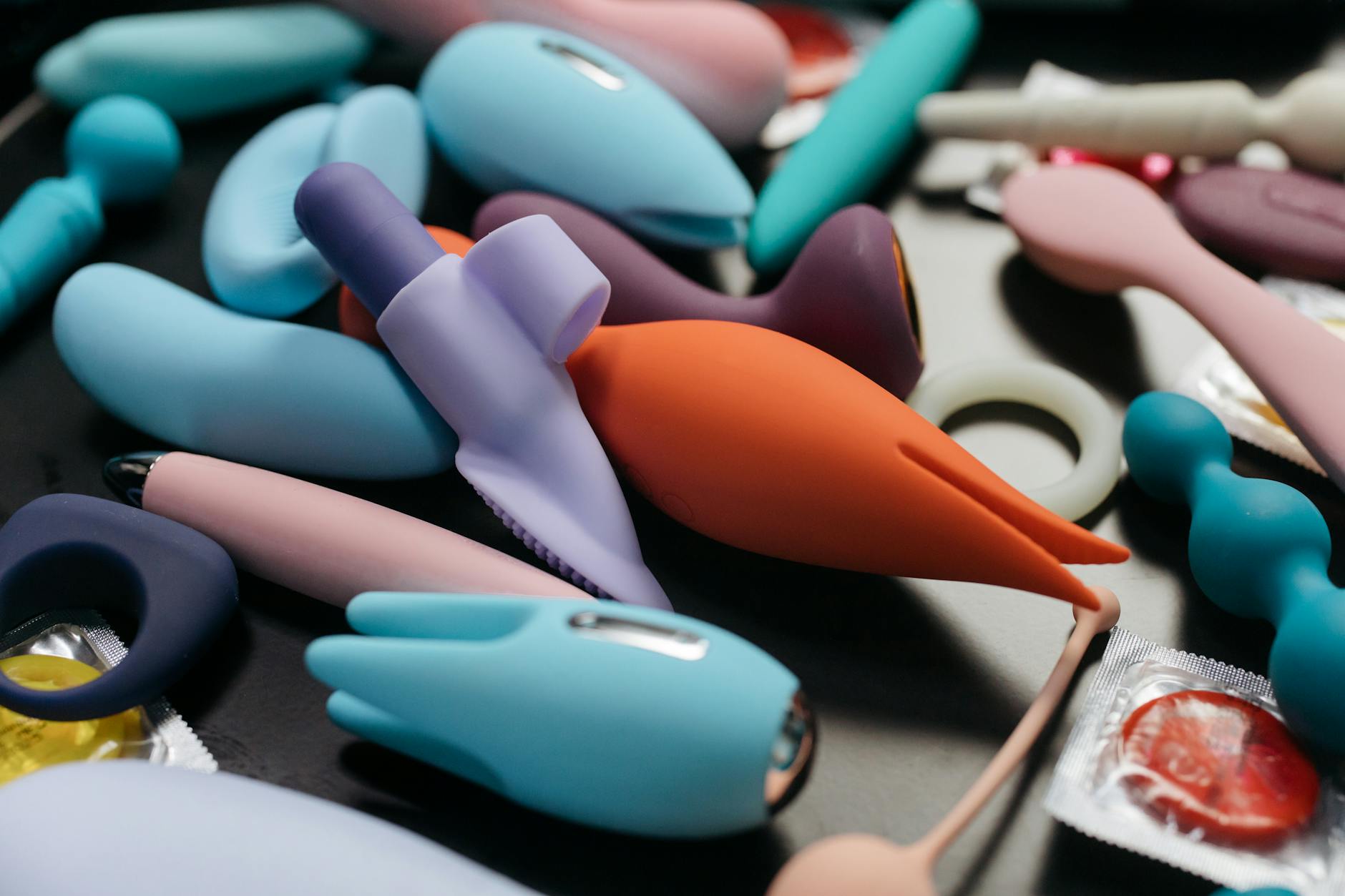
When you use a lemon clitoral vibrator alone, you're not fixing a broken relationship or proving you've forgiven anyone. You're sending your nervous system a specific signal: my pleasure is mine. It's not contingent on someone else's loyalty. It's not proof of anything. It's just sensation, just your body, just for you.
This matters because post-betrayal, many people swing between two extremes: either complete sexual shutdown (which feels safe but narrows your life) or jumping back into couple intimacy too fast (which often leads to more hurt). Solo pleasure is the bridge. It rebuilds your internal sense of safety without requiring trust from someone else.
Start with low stimulation. A lemon vibrator's suction technology is gentler than direct vibration, which makes it easier on a nervous system that's still in protection mode. Begin with patterns 1 or 2, no pressure to orgasm. Some sessions will feel dead inside. That's normal. You're teaching your body that pleasure can exist separate from vulnerability to someone else.
The decision about your relationship is separate
Let's untangle this: rebuilding your capacity for solo pleasure is not the same as deciding whether to stay with your partner.
Some people rebuild desire and decide to leave anyway, because they remember what it felt like to want their own body, and that solo connection shows them they don't need to stay in a partnership that harmed them. Others rebuild desire and choose to work on the relationship. Both choices are valid.
What's not valid: staying in a relationship primarily because you're too shut down to imagine life outside it. That's not commitment. That's immobility dressed up as choice.
If you're rebuilding desire while in the relationship, here are the non-negotiables:
Your partner acknowledges the specific harm. "I'm sorry you're upset" is not an acknowledgment. "I violated your trust by having sex with someone else, and I understand that damages your sense of safety with me" is.
They're willing to go to therapy. Individual therapy for them (to understand the infidelity), and couples therapy for you both. This is not optional.
They understand that physical intimacy may not return for months. You're not withholding. You're healing. There's a difference.
You have clear boundaries about what you need to feel safe again. This might be transparent phone access, honesty about where they're going, or a commitment to rebuild trust through consistent actions, not words.
How to use solo pleasure as part of your healing
Think of this in phases.
Phase one is exploration without pressure. Use your lemon vibrator once or twice a week in a space where you feel completely alone and safe. No goal of orgasm. Just notice sensation. Notice where you feel numb. Notice where you still have sensation. This takes about 2-3 weeks.
Phase two is re-sensitization. Increase use to 3-4 times a week. Play with different patterns. Notice which ones feel good. Some people find that higher intensities feel safer because they're more focused and predictable than low-level sensation. Others find that lower intensities feel less invasive. Your body will tell you.
Phase three is reconnection with desire. This is when you might start to feel genuine arousal, not just sensation. This can take months. Don't rush it. If you're at week three and not feeling arousal, that's completely normal. Your nervous system is still recalibrating.
Throughout this process, keep a simple journal: Which pattern felt best? What time of day did I feel safest? Did I feel any emotions afterward (sadness, anger, relief, numbness)? This isn't therapy homework. It's data collection. You're learning your own body's preferences after someone else has fractured your sense of it.
If you decide to rebuild couple intimacy
Let's say you decide to stay and work on the relationship. That's where it gets complicated, because your body might not cooperate with your head.
Start with non-sexual touch. Hands, shoulders, conversation. Your nervous system needs to relearn that your partner's hands aren't a threat. This might take weeks or months. Don't skip this step just because you intellectually trust them again.
When you do resume sexual contact, go slower than you think you need to. If you used to enjoy twenty minutes of foreplay, try starting with five. If you used to be comfortable with certain positions, consider switching positions entirely. Novelty actually helps because your brain has fewer negative associations with new touch patterns.
And here's what most couples miss: your partner needs to rebuild your desire, not just request it. They need to ask what you need. They need to listen. They need to prove, through action, that they understand you're not withholding pleasure as punishment. You're legitimately healing.
If you reach a point (weeks or months in) where physical intimacy with your partner still feels impossible, that's data too. That might mean you need more time. It might mean individual therapy to process the betrayal. It might mean the relationship can't be repaired. All of those are okay.
What guilt and shame are trying to tell you
Most people who've been cheated on experience a specific flavor of shame: the sense that they weren't enough, which is why their partner looked elsewhere.
This is completely false, and it's worth naming directly. Your partner's infidelity is about their choices, their impulses, their relationship to honesty, and their own issues. It is not about you not being enough.
But that false belief will try to convince you that rebuilding pleasure is selfish, or that you don't deserve to enjoy your body. It's a lie your nervous system tells when it's been hurt. Calling it out matters.
You deserve to feel pleasure. Not as proof of forgiveness. Not as a gift to your partner. Just because you're a person with a body, and your body deserves to feel good.
When professional support is non-negotiable
If any of these are true, don't try to navigate this alone:
You're having intrusive thoughts about your partner and the affair multiple times a day. You experience panic or dissociation during sexual contact. You're using substances to numb the pain or to engage sexually. You're having thoughts of harming yourself. Your partner is not acknowledging the harm or is being dismissive.
These are signs you need a trauma-informed therapist, not a self-help guide. Infidelity recovery often requires professional support to untangle the specific wounds and rebuild safety in your nervous system.
The truth about moving forward
Healing from infidelity is not a straight line. Some days you'll feel ready to reconnect. Other days, you'll want nothing to do with your partner or with pleasure itself. Both are normal.
Your timeline is yours alone. People will push you to "get over it" faster. Ignore them. It takes as long as it takes. Some relationships heal in six months. Some take years. Some don't heal because they shouldn't.
What matters is that you rebuild your relationship with your own pleasure first. Once you know you can feel good in your own body, independent of someone else's loyalty, the choice of whether to stay becomes clear. You're choosing from a place of wholeness, not from a place of fear.
Frequently asked questions
How long does it take to rebuild desire after infidelity?
There's no universal timeline. The research suggests most couples who rebuild after infidelity see meaningful improvement in 1-2 years if both partners are committed to the work. Solo pleasure recovery (reconnecting with your own body) often happens faster, sometimes in 3-6 months. But some nervous systems take longer, especially if the infidelity was a repeated pattern rather than a single incident. Be honest with yourself about what you need and resist pressure to move faster than feels genuine.
Can I use a lemon vibrator if I'm triggered by my partner's touch?
Yes, absolutely. In fact, this is one of the most important uses for solo pleasure tools during infidelity recovery. Using a lemon clitoral vibrator in a space where you're completely alone helps rebuild your nervous system's capacity for pleasure without the complication of trust or safety with another person. It's one of the clearest ways to separate your own pleasure from your relationship.
What if my partner wants to resume sexual intimacy but I'm not ready?
Your readiness timeline is not negotiable. If your partner is pressuring you, that's a separate problem that needs to be addressed in couples therapy or by a professional. Healthy recovery requires both partners understanding that forced or rushed intimacy re-traumatizes you. You're not punishing them by not being ready. You're protecting your nervous system.
Is it selfish to rebuild pleasure through solo use of tools like lemon vibrators?
No. This is the opposite of selfish. Rebuilding your capacity for pleasure is foundational healing. It's not a distraction from couple work. It's the prerequisite for couple work. If you're shut down, you can't authentically reconnect with anyone. Taking time to explore what feels good on your own is actually the most generous thing you can do for your relationship, because it means any future intimacy comes from genuine reconnection, not obligation.
What if I want to leave but I'm afraid to be alone?
That's understandable, and it's a signal that rebuilding solo pleasure and self-connection is urgent. When you reconnect with your own body and your capacity for pleasure independent of a partner, the fear of being alone often diminishes. You start to remember that you're a complete person. You deserve to feel good. And sometimes, that clarity makes the decision to leave easier, because you're not leaving from a place of deprivation. You're leaving to protect yourself.
Can couple therapy fix this if the infidelity keeps happening?
Not if your partner isn't genuinely committed to changing. Therapy is a tool. It only works if both people are willing to use it. If infidelity is a pattern, that's a sign that your partner has deeper issues that they need to address individually first. You cannot therapy your way into safety with someone who keeps betraying you. At some point, the question shifts from "Can we fix this?" to "Should I stay?" That distinction matters.
The path forward is yours
Infidelity shatters something that felt solid. Your body knows it. Your nervous system remembers it. Rebuilding pleasure and trust is slow work that requires patience with yourself, clear boundaries with your partner, and professional support when you need it.
But pleasure can come back. Desire can return. And most importantly, your body can feel like yours again. Start with solo exploration. Rebuild your internal sense of safety. Then decide, from that place of wholeness, what comes next.
If you're navigating this and feeling stuck, reach out. You don't have to figure this out alone.